Blue House calls Ukraine’s claim that South Korea supplied oil to Russia ‘factually incorrect and inappropriate’
- Input
- 2026-10-07 19:57:07
- Updated
- 2026-10-07 19:57:07
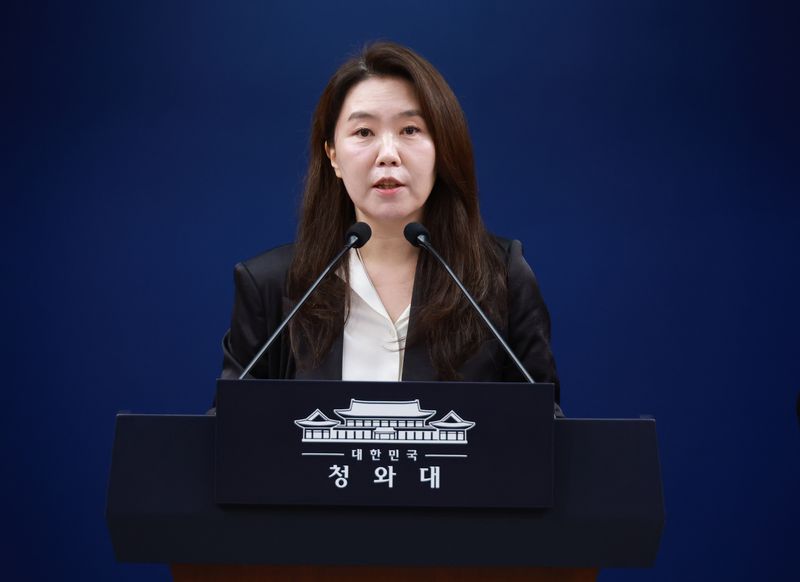
[Financial News] On the 7th, the Blue House rebutted criticism of the South Korean government by Ukraine’s presidential office, which cited foreign media reports claiming that South Korea had supplied petroleum products to Russia, saying the claim was “factually incorrect and inappropriate.” It called on Ukraine to refrain from public remarks that distort South Korea’s related policies without sufficient fact-checking or could undermine its international credibility.
Kang Yoo-jung, the Blue House’s senior presidential spokesperson, said in a written briefing that day, “Since Russia’s invasion of Ukraine, our government has worked closely with the international community and consistently implemented sanctions against Russia and export controls,” adding, “There has been no change in our government’s fundamental position.”
She added, “The government has clearly explained this position in response to recent reports, including those by The Guardian, about shipments of petroleum products from South Korea to Russia.”
In particular, Kang criticized the public remarks by an official from Ukraine’s presidential office, who cited a report by The Guardian and referred to individual transactions whose key facts—including the parties involved, the origin of the goods and the final purchaser—had not been verified. “The claim that South Korea helped Russia ease fuel shortages and mitigate the effects of lost refining capacity, thereby acting contrary to its existing sanctions policy toward Russia, is factually incorrect and inappropriate,” she said.
She also stressed, “The government is currently closely checking the facts and matters related to export controls through the relevant agencies, and will take necessary measures if any problems are confirmed. We hope Ukraine, too, will refrain from public remarks that distort the Republic of Korea’s related policies without sufficient fact-checking or could undermine its international credibility.”
An official from the Blue House’s National Security Office also explained that, since the outbreak of the Russia-Ukraine war, the government has fully prohibited exports of strategic goods to Russia and designated 1,402 items that could be diverted to military use as subject to case-by-case authorization, which it monitors.
The official also stressed that refined petroleum products such as diesel and aviation fuel are not covered by current export controls on Russia, and that there was no confirmation that Korean-made diesel or other such products had been exported to Russia.
An official from the National Security Office said that, according to trade statistics, no diesel, gasoline, jet fuel or other such products had been exported from South Korea to Russia through customs procedures from last year through August this year. The official added that the relevant authorities would establish the facts, including whether destinations had been falsely declared, and determine whether domestic laws had been violated.
The British newspaper The Guardian previously reported that, according to its analysis of port records and vessel-tracking data, seven tankers made 14 trips in July and August, loading at least 176,000 tonnes of petroleum products at several South Korean ports, including Ulsan and Yeosu, and transporting them to Russia’s Far East, including Vladivostok. Vladyslav Vlasiuk, an adviser on sanctions to the Ukrainian presidential office, cited the report in a Facebook post and said, “This stands in stark contrast to South Korea’s sanctions policy toward Russia.”
[email protected] Choi Jong-geun Reporter