They said they would replace the 20-year-old 119 system—but it’s missing from next year’s budget proposal [2026 parliamentary audit]
- Input
- 2026-10-07 16:46:09
- Updated
- 2026-10-07 16:46:09
[Financial News] The project to build a “Next-Generation 119 Integrated System,” which would bring together nationwide the 119 emergency call-taking and dispatch system that has been in use for 20 years, has not been included in next year’s government budget proposal, it was pointed out. The plan was to begin building the system next year so it could efficiently handle the flood of calls during major disasters and dispatch the nearest firefighting resources regardless of city and provincial boundaries.
At a National Assembly Security and Public Administration Committee audit of the National Fire Agency on the 7th, Democratic Party of Korea lawmaker Lim Ho-seon said, “The 119 emergency call-taking and dispatch system currently in use was developed in 2006 and has been in use for 20 years,” and called for funding to build the next-generation integrated system to be included in next year’s budget.
The Next-Generation 119 Integrated System project would combine into one system the 119 call-taking and dispatch systems currently operated separately by each city and province. It was planned to be built over three years, from 2027 to 2029, at a cost of 259.8 billion won.
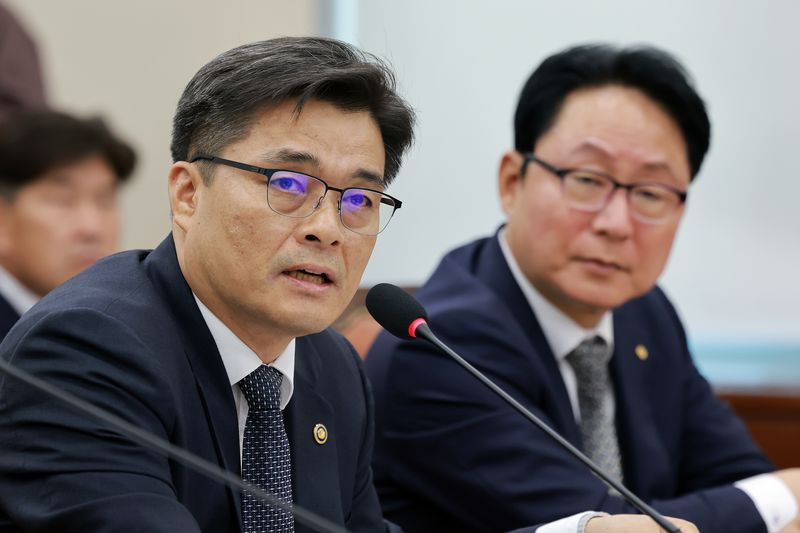
In response, National Fire Agency Commissioner Choi Yong-cheol said, “The preliminary procedures, including a review of the total project cost by the National Information Society Agency (NIA), were originally scheduled to be completed by September but were delayed, so the related funding was not included in the next year’s budget proposal submitted by the government to the National Assembly.” He added, “Although it was not included in the government’s budget proposal, I will work to ensure the project can move forward through an increase to the budget by the National Assembly.”
At the audit, it was also pointed out that the limitations of the current 119 response system could persist if construction of the next-generation system is delayed. Because the systems are currently divided by city and province, rapid response can be hindered when calls pour in at once during a major disaster or an incident occurs near a city or provincial boundary.
Commissioner Choi explained that once the integrated system is in place, it will be possible to receive all the calls coming in at once during a major disaster simultaneously, classify them by urgency and set dispatch priorities. He also said the system would make it possible to dispatch the nearest firefighting resources regardless of city and provincial boundaries. Another advantage he cited was that the integrated system would allow the establishment of a disaster recovery (DR) system to prepare for the call system being incapacitated by a fire or equipment failure.
Citing his constituency of Jincheon and Eumseong in North Chungcheong Province as an example, Rep. Lim said, “There are places where it takes 20 to 30 minutes, even though we could respond in five to 10 minutes if the nearest firefighting unit were dispatched. This isn’t a matter of five or 10 minutes; it’s a matter of life and death.” He added, “Building the integrated system would also reduce maintenance and repair costs incurred by each city and province,” and urged officials to “make every effort to ensure it is included in next year’s budget.” Commissioner Choi replied, “I will do that.”
[email protected] Lee Bo-mi Reporter