Chuncheon Mayor Yuk Dong-han marks 100 days in office: “Turning the foundations laid during the eighth popularly elected administration into tangible results”
- Input
- 2026-10-07 16:18:33
- Updated
- 2026-10-07 16:18:33
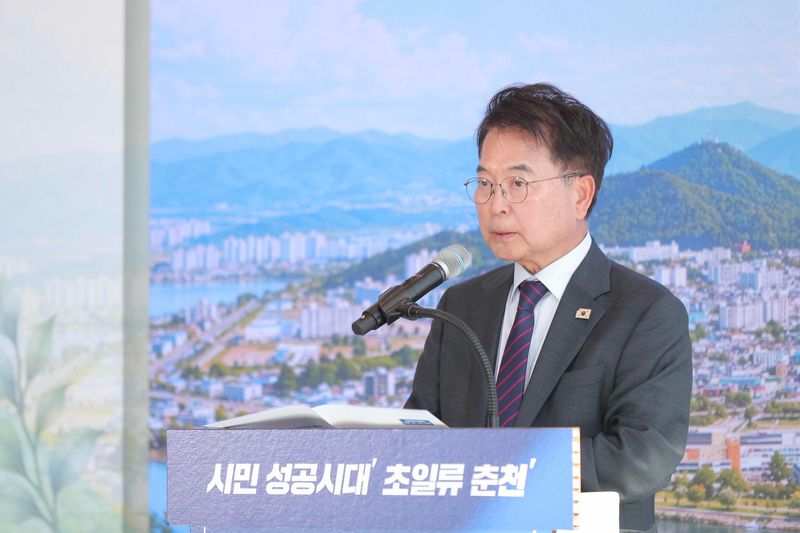
【Financial News, Chuncheon—Kim Gi-seop】Chuncheon Mayor Yuk Dong-han said, marking his 100th day in office during the ninth popularly elected administration, that he would turn the foundations laid during the eighth administration—from attracting businesses and expanding transport networks to providing comprehensive care—into results residents can feel in their daily lives.
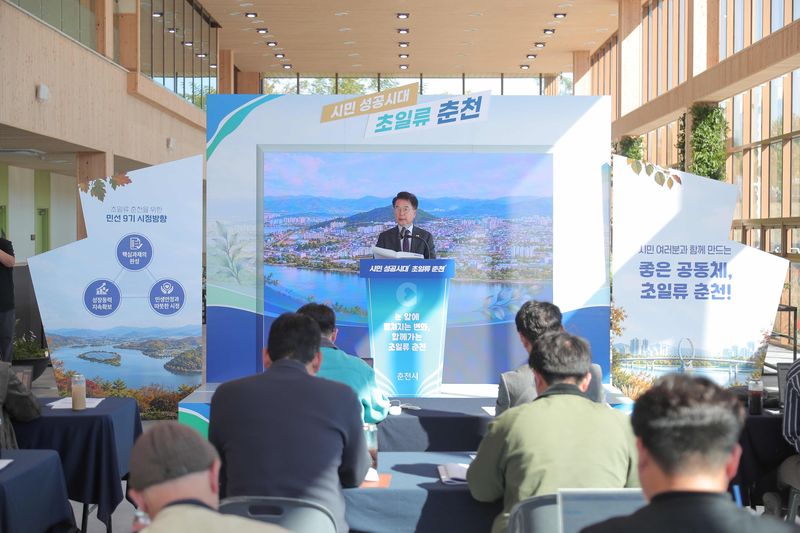
Mayor Yuk held a press conference marking his 100th day in office at the National Garden Materials Center, which began trial operations this month, and outlined the city’s policy direction, focusing on the economy and care. He expressed his determination to turn projects prepared at the site where the future of garden city Chuncheon first came into view into changes in residents’ lives.
The flagship economic initiative is the Hydrothermal Energy Convergence Cluster. After consulting with the Ministry of Land, Infrastructure and Transport and other relevant bodies, the city changed the method for selecting tenant companies from a lottery to negotiated contracts. Its plan is to assess companies comprehensively on their ability to carry out investments, business plans, job creation and contributions to the local community, laying the groundwork for eco-friendly data centers, the AI industry and local businesses to grow together.
The city will combine its experience hosting last month’s World Taekwondo Poomsae Championships, attended by about 2,000 people from 85 countries, with the World Taekwondo headquarters, scheduled for completion in June 2028, to attract international events. It aims to turn visitors’ stays into spending on accommodation, dining and tourism, and is also moving ahead with plans for a multipurpose gymnasium, as the city lacks competition facilities suited to the scale of international events.
The city is also preparing for the second round of public institution relocations. Last August, it enacted an ordinance on attracting and supporting public institutions and launched a working-level consultative body. It will draw up a support plan and form an attraction committee by the end of the fourth quarter this year. Developments including Business Innovation Park, the Camp Page Urban Regeneration Innovation District and the Chuncheon Station area will expand spaces for industry, housing and culture. The city will also link research, talent development and business investment by establishing the Gangwon Institute of Science and Technology and attracting the headquarters of an R&D Special Zone.
The city is also accelerating transport network expansion. Following the start of construction on the Second Gyeongchun National Route and the passage of the preliminary feasibility study for the Seomyeon–Sinbuk bypass, adjustments to the road’s length and bridge design for Soyang 8 Bridge cut the total project cost by 33 billion won. The city is proceeding with the necessary steps, aiming to begin construction in 2027. In the old downtown, it is pursuing spatial reorganization alongside short-term projects such as improving pedestrian conditions and revitalizing vacant spaces. The implementation plan for the Ribbon Project, which connects the station area, the Urban Regeneration Innovation District and Bonguisan, will be unveiled at a public briefing in December. The city will also work with universities and businesses to expand employment and startup opportunities for young people, building on the Youth Policy Promotion Team and the Basic Ordinance on Population Strategy.
In the area of care, the city will enhance Chuncheon-style integrated care so residents can get information on health, housing, mobility and meal services with a single phone call, without having to visit multiple agencies. It is also pursuing welfare infrastructure for each neighborhood, including the Southeast Regional Complex Welfare Center, as well as construction of a new public health center. The city will strengthen support for traditional markets, small businesses and small and medium-sized enterprises, while continuing field-based administration that proactively seeks out households in crisis.
The city plans to extend to other areas its experience of reducing suicide deaths by 12.4% last year—a larger decline than the nationwide figure of 4.9% and Gangwon Special Self-Governing Province’s 8.1%. It will also pursue improvements to everyday culture by expanding the use of reusable containers at funeral halls and festival venues, and now on Nami Island, while promoting garden culture centered on the Lakeside Local Garden, which is 25% complete.
Mayor Yuk said, “Over the past 100 days, I have seen that we can change even difficult problems if we work together with residents as one,” adding, “I will create good jobs through the Hydrothermal Energy Cluster and look after our neighbors with care they can access with a single phone call, turning the foundations laid during the eighth popularly elected administration into results residents can feel.”
[email protected] Kim Gi-seop Reporter