Counterfeits cashing in on K-beauty’s popularity proliferate... Cosmetics industry steps up its response
- Input
- 2026-10-11 12:48:50
- Updated
- 2026-10-11 12:48:50
[Financial News] Cosmetics companies are stepping up their efforts to combat counterfeit products. Concerns are growing that the rise in fakes amid K-beauty’s growing popularity could erode brand trust and harm consumers.
According to industry sources on the 11th, APR plans to set up a dedicated intellectual property team soon. The need for a separate team has grown as the legal department’s workload has increased with the rise in counterfeit-related issues. Major K-beauty companies, including Amorepacific Corporation, LG Household & Health Care, and Goodai Global, also have dedicated intellectual property teams.
K-beauty companies are stepping up their response to counterfeits because sales of fake cosmetics are continuing to rise. As K-beauty grows in popularity, more imitation products are appearing that either copy genuine packaging outright or subtly alter brand names.
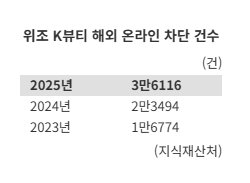
According to the Ministry of Intellectual Property, 36,116 counterfeit K-beauty cosmetic listings were blocked on overseas online platforms last year, up 54% from the previous year. Based on OECD figures, the value of counterfeit goods that infringed Korean companies’ intellectual property rights in 2024 was $9.7 billion, with cosmetics accounting for 10%. Cosmetics ranked third, after electronics and textiles and apparel.
Companies are focusing on detecting counterfeits. Amorepacific Corporation works with a specialist counterfeit-detection firm, uses AI-based monitoring, and checks domestic and overseas platforms for the distribution of fake products.
Goodai Global has taken steps to respond at each stage of distribution. It works with local Chinese investigative specialists and law enforcement authorities to trace and crack down on manufacturers. At the customs clearance stage, it registers its trademarks with customs authorities in 30 countries and checks suspicious goods. On online sales channels, it conducts real-time monitoring through AI firms. LG Household & Health Care also monitors online and offline channels at home and abroad, checks for counterfeit products, and reports them to the relevant authorities.
However, some say monitoring alone has limits as a fundamental solution, since new channels often emerge even after sales channels for fake cosmetics are shut down following reports. According to Korea Customs Service statistics, 98% of counterfeit K-brand goods detected at customs clearance last year were made in China. Cosmetics accounted for 36% of the counterfeit goods, the largest share. Amorepacific Corporation certifies authorized retailers and encourages consumers to use its official online store to minimize consumer harm.
An industry official said, “As counterfeit manufacturing technology in China advances, imitations that resemble genuine products keep increasing,” adding, “Companies’ efforts alone have limits, so fundamental measures, such as cracking down on counterfeit manufacturers, are needed.”
[email protected] Kang Myeong-yeon Reporter