“Knew of the outage the day before but left it unaddressed” ... Sharp criticism over rolling admissions system outage
- Input
- 2026-10-07 15:44:10
- Updated
- 2026-10-07 15:44:10
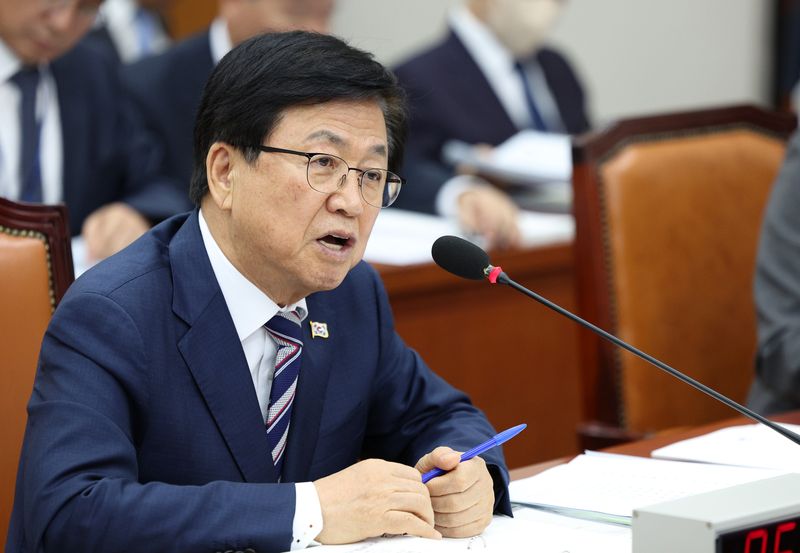
[Financial News] At a parliamentary audit held by the National Assembly’s Education Committee on the 7th, lawmakers from both the ruling and opposition parties and the committee chair focused sharp criticism and demands for explanations on the Ministry of Education, the agency under audit, over the recent “outage in the college early admissions application system” (the early admissions outage). As specific evidence exposed the government’s and the contractor’s failure to manage the system in advance, including leaving a server problem from the day before the incident unaddressed, flaws in the response manual and plans to transition to a public application system emerged as key issues.
■ Jang Dong-hyeok exposes early admissions outage as a “foreseeable man-made disaster” ... “They left the outage the day before unaddressed and did no advance checks”
People Power Party lawmaker Jang Dong-hyeok analyzed additional reports and investigation findings submitted by the Ministry of Education and persistently pressed the contractor, Uway Apply, over its serious negligence in system management and the ministry over its inadequate oversight.
Rep. Jang Dong-hyeok said, “After changing the server operating system (OSD), the contractor conducted no compatibility checks or load tests whatsoever.” He added, “More seriously, a similar outage had already occurred on September 10, before the September 11 application deadline, but they took no appropriate action and left it unaddressed, leading to another large-scale system outage the next day.”
Rep. Jang continued, “They could easily have recognized the likelihood of an incident, yet made no preparations in advance and are now shifting all the blame to the contractor after the outage occurred.” He added forcefully, “All applicants and their parents were affected. Going home immediately after the incident and then claiming to have fulfilled the duty of care is deceiving the public.”
■ Kim Hee-jung warns against taking measures outside the manual ... “Clarify the goal for transitioning to a public application system”
Committee Chair Kim Hee-jung, who presided over the audit, also sternly criticized the Ministry of Education’s inadequate response and flaws in its application of the manual.
Chair Kim Hee-jung criticized the ministry for reporting without distinguishing between extending the hours on the day itself and accepting applications on an additional date the following day. “Extending the hours on the same day and adding another date are completely different actions,” she said. “The Ministry of Education claims it acted according to the existing manual, but the manual said nothing at all about adding a date. The ministry did something that was not even in the manual.” She also called for specific guidelines for emergencies, including nationwide alerts and school-level contact systems.
Chair Kim also strongly urged the ministry to clarify its level of commitment and its goals regarding the “transition to a public application system” described in its report. “Make clear whether you intend to move away from an oligopoly of private contractors and shift, as early as next year, to a public application system for which the Ministry of Education takes direct responsibility,” she said.
Criticism from committee members of both parties continued. Reform Party lawmaker Lee Ju-young pointed to the tangible harm applicants suffered from leaks of competition-ratio information and its sharing on social media during the extended application period. Park Beom-kye of the Democratic Party of Korea called for a comprehensive plan for the upcoming regular admissions round and a risk-management plan so applicants and their parents could feel reassured.
■ Minister Choi Kyo-jin: “I deeply regret our shortcomings ... We will revise the manual for regular admissions and pursue a transition to a public system”
In response to criticism from lawmakers of both parties and the committee chair, Education Minister Choi Kyo-jin bowed his head and said, “I feel a profound sense of responsibility for what happened, and I am so sorry to the public, applicants and their parents that I have no words to express it.”
On the controversy over leaving work, Minister Choi said, “I was not even aware of the outage at the site until I received a verbal briefing at 6:43 p.m. that day.” He added, “Despite the contractor’s defensive stance, we will conduct an extended special investigation with the Korean Council for University Education and outside experts, establish the cause clearly and hold those responsible to account.”
Responding to the chair’s criticism, he said, “We will revise the manual to draw a strict distinction between extending the hours and adding another date.” He added, “For the upcoming regular admissions round, we will thoroughly overhaul the manual, including changing how acceptance rates are disclosed by time slot and revising the random-number system, and prepare to ensure not a single error occurs.” He also said, “To overcome the limitations of the oligopoly among private contractors, we will pursue a full transition, as early as next year, to a ‘public application system’ for which the government and the Ministry of Education take direct responsibility.”
[email protected] Kim Man-gi Reporter