‘Be cautious near danger zones’... University of Seoul undergraduates present paper at world’s leading AI conference
- Input
- 2026-10-07 15:27:40
- Updated
- 2026-10-07 15:27:40
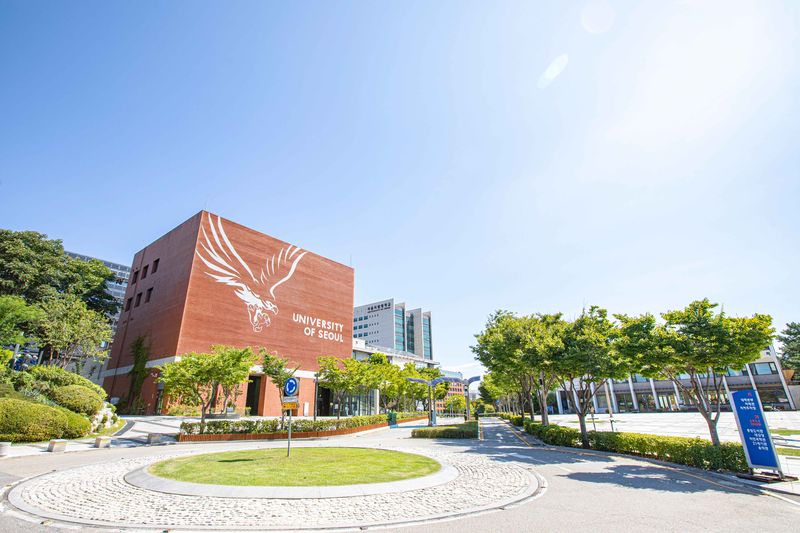
The University of Seoul announced on the 7th that a research paper by a team led by Professor Go Sang-gi of its Department of Artificial Intelligence had been accepted to the main track of the Conference on Neural Information Processing Systems (NeurIPS 2026), the most prestigious conference in artificial intelligence. Around 30,000 papers were submitted to this year’s NeurIPS main track, and only 25.7% of them were selected for acceptance.
The study explored technology for improving safety during reinforcement learning, the process by which artificial intelligence learns on its own. To increase processing speed, conventional reinforcement-learning AI has used an approach in which it repeats a selected action unchanged for a set period. However, early in training, when the AI’s judgment is still imperfect, this approach can cause accidents: even near hazards such as cliffs or obstacles, the AI may blindly repeat its previous action for too long.
The team developed ‘RARe,’ a technology that adjusts how long an action is repeated according to the level of risk in a situation. In safe, flat areas, it maintains the same action for longer to speed up learning and decision-making; as it approaches a hazardous area, it shortens the action repetition interval, enabling more precise control of the situation.
Tests showed that the team’s proposed technology achieved high learning efficiency while avoiding hazards more accurately than existing AI control methods.
This student-led study was conducted under Professor Go Sang-gi’s supervision by undergraduate researchers Park Hyun-woo (first author) and Eom Jun-hyeok (second author), together with master’s student Seong Baek-ryun (co-author), who jointly proposed a new idea and validated it through experiments. The team expects the AI technology developed in this study to be applicable in fields requiring a high level of safety, such as improving the ability of self-driving cars to respond to hazards and safely controlling the work of industrial robots.
[email protected] Kim Man-gi Reporter