Song Hyeong-gon, chair of the Jeonnam-Gwangju Integrated Special City Council: “We will be a council that takes the lead in changing the region’s future and citizens’ lives”
- Input
- 2026-10-07 15:51:47
- Updated
- 2026-10-07 15:51:47
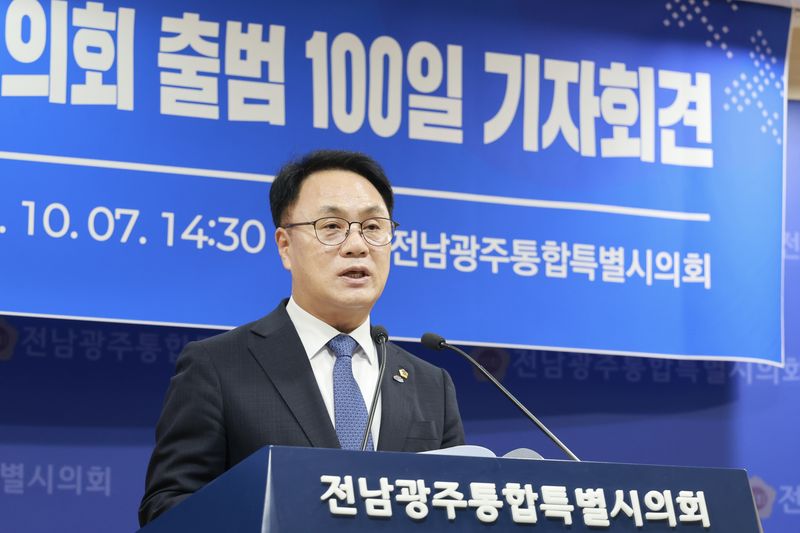
【Financial News | Jeonnam-Gwangju = Hwang Tae-jong】Song Hyeong-gon, chair of the Jeonnam-Gwangju Integrated Special City Council, said on the 7th, “We will exercise checks and oversight even more thoroughly and boldly take the lead in changing the region’s future and citizens’ lives.”
Chair Song Hyeong-gon made the remarks at a press conference marking the council’s 100th day since its launch, held that day at its Muan office. “The past 100 days have been a time to bring two different councils together as one and establish a new system of council governance for the integrated special city,” he said.
The Jeonnam-Gwangju Integrated Special City Council will mark 100 days since its launch on the 8th. After holding its first plenary session at 12:05 a.m. on July 1 and officially launching, it focused on combining the organizations and systems of the two regional councils—the former Gwangju Metropolitan City Council and the Jeollanam-do Provincial Council—and establishing a new system of council governance. It completed its organizational setup just three days after opening, laying the groundwork for its legislative activities.
It then began actively exercising oversight of the integrated city administration, handling 155 agenda items at its second extraordinary session before closely reviewing key issues, including the settlement of accounts, a supplementary budget bill and an organizational restructuring plan, at its regular session in September.
In particular, after closely examining fiscal soundness and the viability of projects, it rejected the initial proposal for a local bond issuance plan that exceeded the statutory limit by 27.1 billion won, then approved a revised proposal, firmly asserting its oversight of fiscal management. It also formed a special committee for confirmation hearings on two candidates for deputy mayor for political affairs and set the process in motion.
The council also actively addressed emerging future industries and local issues following the integration. As its first agenda item, it unanimously passed the ‘Ordinance on Support for Strategic Investment in Global Semiconductors in the Jeonnam-Gwangju Integrated Special City.’ Song Hyeong-gon was the lead sponsor, and all 91 sitting members took part in proposing it. The ordinance was praised for laying the institutional groundwork for fostering the semiconductor industry.
The council also activated various special committees to bring mid- and long-term issues that the integrated special city needs to address—including a dedicated framework for a basic society, mutually beneficial development in dam basins and youth policy—into public discussion at the council level and work toward solutions.
On the issue of establishing a national medical school, it continued council-level discussions on balanced healthcare development while seeking solutions that would allow the eastern and western regions to prosper together rather than compete. It also continued to convey local concerns to the government and the National Assembly on key issues, including relocating public institutions to provincial areas and securing national government funding.
The council also reviewed the special act in its entirety, led by its 12 committees, and identified 82 institutional reform tasks in areas including finance, industry, transportation, agriculture and fisheries, the environment and welfare. Key proposals include a substantive guarantee of financial support totaling 20 trillion won, priority designation of a semiconductor cluster, special provisions for metropolitan bus operations, and exemptions from preliminary feasibility studies for public health and medical institutions and local medical centers.
It also expanded external cooperation, establishing cooperative frameworks with the Jeju Special Self-Governing Provincial Council and the Sejong Special Self-Governing City Council, among others. It continued to call for stronger powers and a greater role for local councils through forums on enacting a Local Council Act and recommendations to the central government.
Chair Song Hyeong-gon emphasized, “Through our first administrative audit and review of the 2027 main budget, we will closely examine the integrated city administration as a whole and turn the institutional foundations laid in the early days of our launch into policy outcomes that citizens can feel.”
[email protected] Hwang Tae-jong Reporter