Timer-activated ignition device dismantled before a fire broke out... Supreme Court: “The arson had already begun”
- Input
- 2026-10-07 15:22:40
- Updated
- 2026-10-07 15:22:40
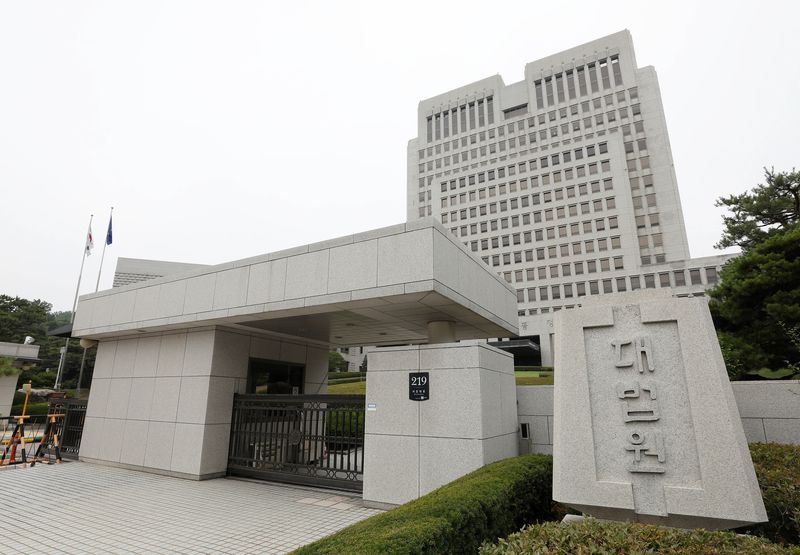
Legal sources said on the 7th that the Supreme Court’s Second Division, with Justice Eom Sang-pil as the justice in charge, on the 10th of last month upheld a lower-court ruling sentencing A to life in prison and ordering him to wear an electronic tracking device for 20 years. A had been indicted on charges of murder, attempted murder, attempted arson of an occupied building, and violating the Firearms and Explosives Act.
On the night of July 20 last year, during his birthday party at his son’s home in Yeonsu District, Incheon, A went outside and returned with a homemade firearm he had stowed in his car. When his son and daughter-in-law came to the door after he rang the doorbell, he fired twice at his son, killing him. He then tried to kill his daughter-in-law and grandchildren, who were in the living room, as well as a cohabitant of his son’s household who fled down the stairs, but the attempts failed after his daughter-in-law called the police.
A was indicted while in custody for a sexual assault crime in 1998 and later divorced, but maintained a de facto marital relationship with his former wife until they ended it around 2015. He then lived alone in an apartment in Dobong District, Seoul, receiving about 3.2 million won a month from his former wife and son. However, it emerged that he had been receiving duplicate living-expense payments of 6.4 million won a month from August 2021 to September 2023, and the support was cut off in November 2023. Investigators found that A had become deluded into believing his former wife and son had deceived and isolated him, and had decided to kill his son’s family.
The day before the attack, A installed ignition devices made from nichrome wire and matches in nine places inside his home in a 19-household apartment building in Dobong District. He laid cotton batting and 34 liters of thinner nearby. Using timer outlets, he set the devices to activate simultaneously when electricity flowed through them 19 hours later. He intended to erase traces of his former wife and son having lived together. The police special operations team dismantled the devices at around 4:17 a.m. on July 21 last year, before they were scheduled to activate.
The issue was whether installing the devices, which were dismantled before a fire started, could be punished as attempted arson. The commencement of a crime means the stage at which a person actually begins committing it. A person can be punished for an attempt only if the crime has reached that stage; if the conduct remains at the preparatory stage, only the much more lightly punished offense of preparation for arson applies. Attempted arson of an occupied building carries life imprisonment or a prison term of at least three years, while preparation for arson is punishable by up to five years in prison.
At his second trial, A argued, “I only installed the ignition devices; I did not set fire to any intermediary material or bring it to a state where it could catch fire and continue burning.” However, both the first and second trials found that he had begun committing the crime.
The Supreme Court set out criteria for determining whether using an automatic ignition device constitutes arson. The panel stated, “If an offender, intending to burn down a building or other structure, installs an ignition device and completes the settings needed for it to operate, thereby creating an objective condition in which ignition can occur automatically after a certain period of time, without any further action, and lead to the target catching fire, then, absent special circumstances, the offender should be deemed to have begun committing arson.” It added that whether the crime had reached the attempt stage must be determined by considering the offender’s intent and method, the circumstances at the scene, the device’s structure and function, and the ignition conditions set.
The court also rejected A’s claim that he had no intention of killing the other victims besides his son. The panel said, “There was no error in misconstruing the legal principles concerning intent to kill.” It also rejected his argument that the life sentence was too harsh, saying it “cannot be said to be grossly unfair.”
[email protected] Kim Dong-gyu Reporter