Hanyang University develops technology that eliminates the need for repeat surgery to replace batteries
- Input
- 2026-10-07 15:04:49
- Updated
- 2026-10-07 15:04:49
[Financial News] Patients who had to undergo another operation to replace the batteries in implanted medical devices such as pacemakers are expected to see their burden greatly reduced.
Hanyang University said on the 7th that a research team led by Professor Yoo Hyung-seok of the Department of Biomedical Engineering at its Radio Research Center had developed technology that uses only radio waves transmitted from outside the body to power implanted medical devices and exchange health data in real time.
Existing implantable medical devices require batteries, which makes the devices larger and means patients need additional surgery to replace the batteries when they run out. The research team applied a wireless power transfer method that efficiently delivers electromagnetic fields into body tissue, enabling devices to operate without a separate battery.
In experiments inside pig muscle tissue, the team successfully powered a low-power communications module solely with energy received wirelessly, without a battery, and transmitted real-time signals to an external tablet. Power transfer efficiency reached a maximum of 2.24% at a depth of 55 mm in a human-mimicking environment.
The team also completed electromagnetic safety testing for potential use inside the body. Analysis using a human phantom confirmed that exposure standards were met, and the team simulated MRI scanning environments at 1.5 T and 3.0 T to assess changes in electromagnetic absorption around the antenna and its safety.
The study is significant because it lays the technical groundwork for reducing implantable medical devices' reliance on batteries and developing real-time patient monitoring technology based on the Internet of Medical Things (IoMT).
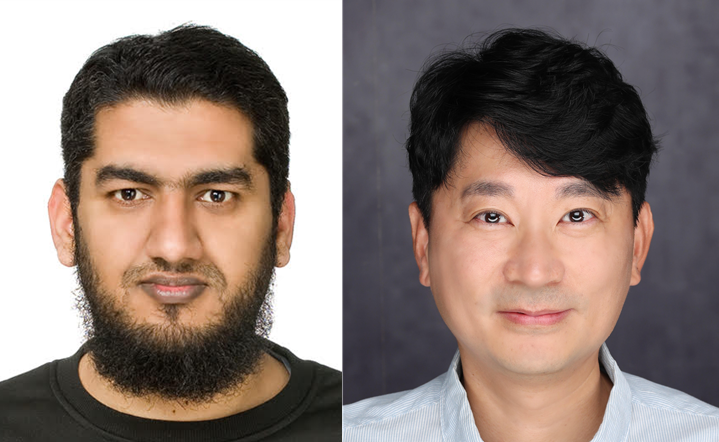
Supported by the Institute for Information and Communications Technology Planning and Evaluation (IITP), the study's findings were published online in the October issue of the international journal 'IEEE Internet of Things Journal.' Naeem Abbas of Hanyang University participated as the first author, and Professor Yoo Hyung-seok as the corresponding author.
[email protected] Kim Man-ki Reporter