“10 million won for a first child, with an extra 3 million won each for the second and third” ... ‘Child Welcome Grant’ overhauled
- Input
- 2026-10-07 15:02:18
- Updated
- 2026-10-07 15:02:18
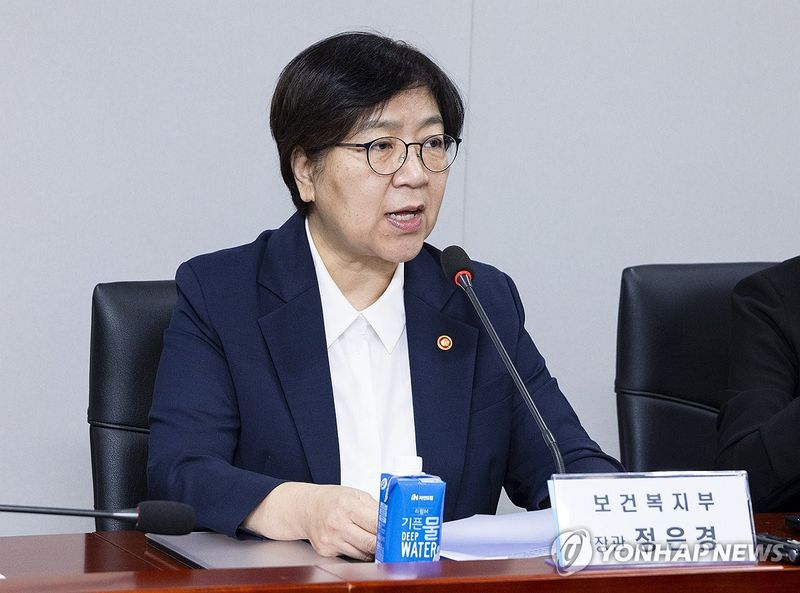
[Financial News] The government will introduce a ‘Child Welcome Grant’ to address low birth rates and ease the burden of raising children. The move aims to streamline complex cash benefit programs, including the existing First Meeting Voucher and Parental Benefit.
On the 7th, Health and Welfare Minister Jeong Eun-kyeong said in the opening remarks at the ministry’s parliamentary audit by the National Assembly’s Health and Welfare Committee, “As demographic changes continue, diverse policy needs are emerging across social security, including care, healthcare and pensions.” She added, “We will further strengthen the social safety net and ensure that community-based integrated care takes root on the ground.”
In the subsequent briefing on the ministry’s work, Kim Guk-il, director general of planning and coordination at the Ministry of Health and Welfare, gave a detailed explanation of the childcare support system. “We will streamline benefits by reorganizing the existing First Meeting Voucher, Parental Benefit and Child Allowance into the Child Welcome Grant and Child Basic Allowance,” Kim said, explaining the policy overhaul.
Under the revamped ‘Child Welcome Grant,’ families will receive 10 million won for a first child, 12 million won for a second, and 15 million won for a third or subsequent child, with larger families receiving more support. An additional 5 million won will be provided in priority areas, including regions at risk of population decline.
The ministry also plans to reorganize the income security system to support low-income households and strengthen income security in old age. To that end, it will implement a system of state responsibility for caring for people with developmental disabilities and institutionalize telemedicine. For community-based integrated care, it plans to expand the linked services from the current 30 types across four areas to 60 types by 2030.
Kim added, “We aim to build a regionally self-sufficient healthcare system by developing national university hospitals into key regional hubs for essential medical care on a par with Seoul’s ‘Big Five.’ Through the Special Account for Essential Regional Healthcare, we will support the design and implementation of tailored projects that take local healthcare conditions into account, and provide support to expand staffing and infrastructure to strengthen the capacity of hub public hospitals.”
[email protected] Kim Hee-seon Reporter