Min Hyung-bae, Jeonnam-Gwangju Special Mayor: “Welcome the successful fifth launch of Nuri... Jeonnam-Gwangju will lead the way to becoming a space powerhouse”
- Input
- 2026-10-07 14:37:03
- Updated
- 2026-10-07 14:37:03
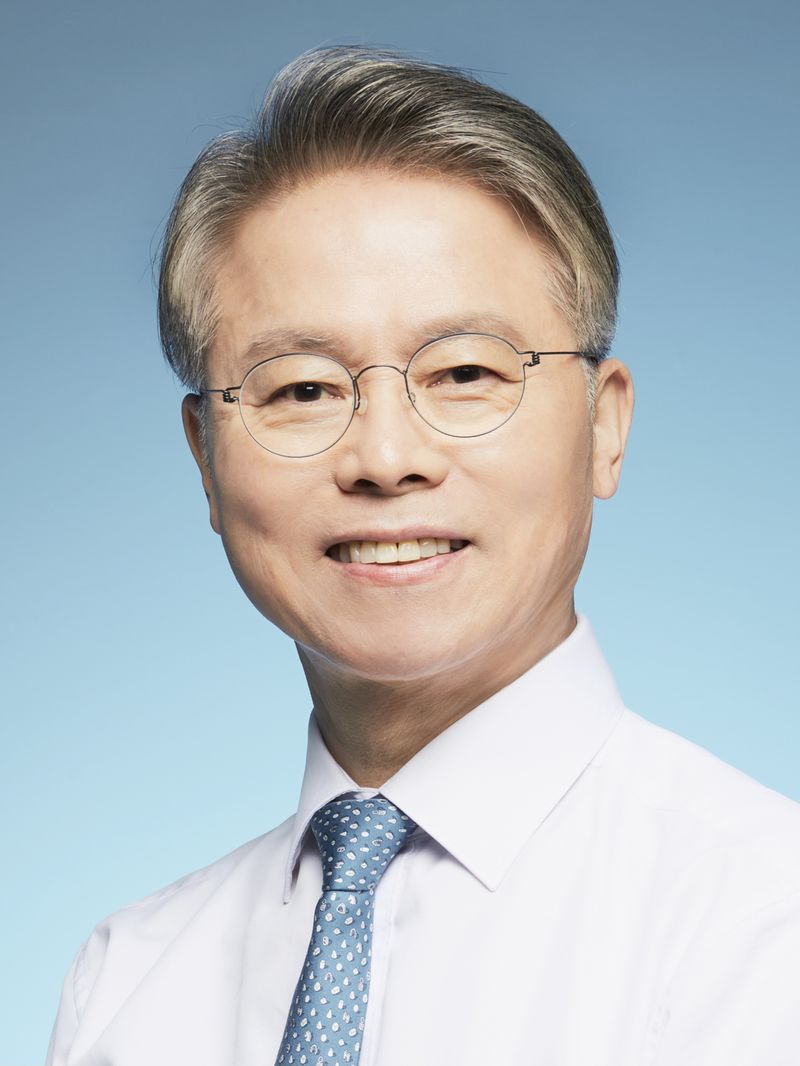
【Financial News, Jeonnam-Gwangju = Hwang Tae-jong, reporter】The fifth launch of Korea’s homegrown Nuri rocket was successfully carried out at the Naro Space Center in Goheung on the 7th. Min Hyung-bae, Jeonnam-Gwangju Unified Special Mayor (Gwangju Special Mayor), said, “Building on this success, we will accelerate our progress toward the K-SpaceX era.”
He stressed, “We will pool all our strength to bring the Second Space Center, which will become a hub for reusable launch vehicles, to the region, and Jeonnam-Gwangju will take the lead in opening the way for the Republic of Korea to become a space powerhouse.”
Mayor Min first commented on the successful launch, saying, “Nuri carried a record 15 satellites and opened the sky once again. With four consecutive successful launches since the second launch in 2022, the path to space using our own technology and strength has become more firmly established.”
He added, “I am deeply grateful to the researchers at the Korea Aerospace Administration and the Korea Aerospace Research Institute (KARI), who have worked tirelessly day and night; the technical staff of participating companies, including Hanwha Aerospace; and the residents of Goheung County, who earnestly hoped for a successful launch despite putting up with considerable inconvenience.”
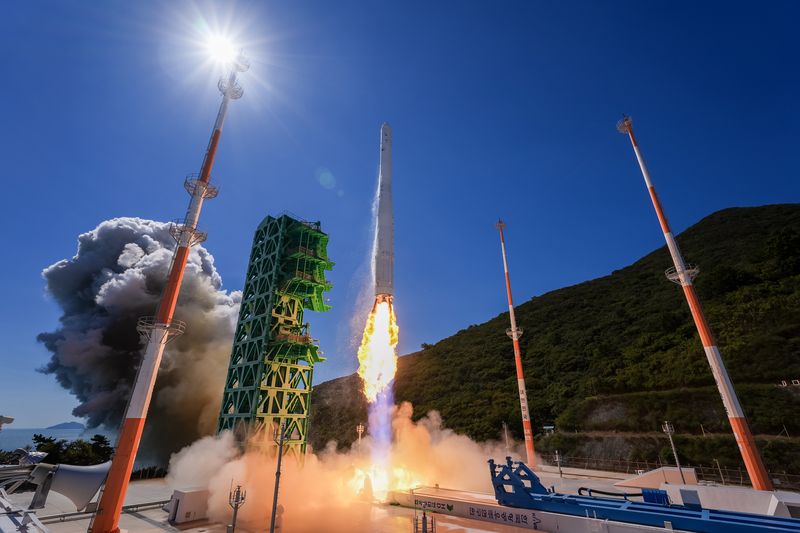
According to Gwangju Special City, the mission for Nuri’s fifth launch was to carry a record total of 15 satellites—including five ultra-small cluster satellites (Nos. 2–6) and 10 CubeSats developed by domestic companies, universities and research institutions—and place them into a sun-synchronous orbit at an altitude in the 500-kilometer range. The launch is significant as the first time our launch vehicle has placed ultra-small cluster satellites into orbit.
In particular, this launch used the fifth Nuri launch vehicle, manufactured by Hanwha Aerospace, the system integrator that led its development based on the transfer of Korean launch-vehicle technology. The experience gained since Nuri’s fourth launch, with private companies involved in every stage of launch-vehicle production, assembly and launch operations, is expected to help establish reliability through repeated launches, improve the technological capabilities of domestic private space companies and expand the space-industry ecosystem.
Mayor Min also said, “We will bring the Second Space Center to Goheung to serve as the national launch hub in the era of reusable launch vehicles, and create a science complex where hands-on experiences, education and culture come together, like the Kennedy Space Center in the United States. We will make it a landmark where anyone can experience space up close.”
He also plans to establish a Space and Aerospace Industry Promotion Agency to systematically support the launch and growth of space companies, while connecting Gwangju’s research and development capabilities with Goheung’s launch site by building the Goheung–Gwangju Space Expressway and widening the Goheung–Bongnae section of National Route 15 to four lanes.
Gwangju Special City has been developing a city centered on Goheung where every stage of the space industry—from launches to production and testing—takes place in one location. Since Goheung was designated a launch-vehicle-specialized zone within the Space Industry Cluster in 2022, the city has been steadily working toward its 2030 target of building key space-industry infrastructure, including a national space-launch-vehicle industrial complex, a private launch site, a launch-vehicle technology commercialization center and an engine-combustion test facility.
[email protected] Hwang Tae-jong Reporter