Jeju sketches out youth basic income plan, weighs links with housing, finance and jobs
- Input
- 2026-10-07 13:45:26
- Updated
- 2026-10-07 13:45:26
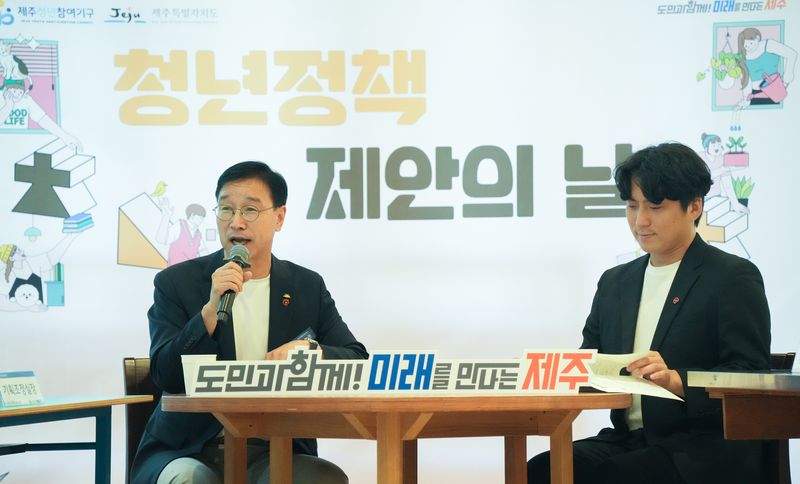
【Financial News | Jeju = Reporter Jeong Yong-bok】 The “Jeju-style Youth Basic Income,” a key pledge of the ninth popularly elected administration, has entered the policy-design stage. Jeju Province will consider options that go beyond income support providing a set amount, including linking the program with housing, finance and employment policies.
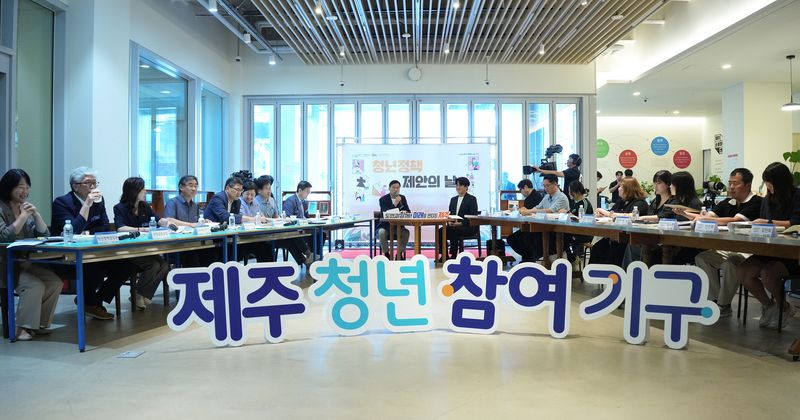
According to Jeju Special Self-Governing Province on the 7th, the province will begin drawing up detailed operating guidelines based on the results of four rounds of discussions on the “Jeju-style Youth Basic Income,” held at the Jeju Youth Center from August 30 to September 15.
A total of 40 people took part in the discussions: 30 young people selected through an open recruitment process and 10 members of a youth participation body. Through expert lectures, small-group discussions, voting and project evaluations, they discussed the difficulties young people in Jeju face in their daily lives and the kinds of support they need.
The issues the young participants focused on were jobs, income and housing. They said it was difficult to find work in their preferred fields and that, while their incomes were unstable, the burden of rent and deposits made it hard to save or prepare for the future. Some also said that having a certain level of income would allow them to spend time studying for employment, earning qualifications, changing career paths, starting businesses or pursuing creative work.
Participants also said that income support alone would not resolve young people’s difficulties in becoming self-reliant. They noted that without the foundations of daily life—such as jobs, education, transportation and care—cash support would have limited ability to lead to real opportunities to take on challenges and become self-reliant.
This is why Jeju Province is considering whether to link the Youth Basic Income with the “Youth Self-Reliance Package,” which connects housing, finance and employment policies.
On the duration of payments, many participants said support should continue for a set period, rather than be provided just once, so young people can plan for the future. They proposed that recipients should know the timing and amount of payments in advance and be able to choose how to use the support based on their individual circumstances.
Concerns were also raised about what level of support would have a real impact and whether local government finances could sustain it. Questions still under consideration include whether eligibility should cover all young people or be limited to a particular age group or stage of self-reliance; whether to provide cash or local currency; and whether to combine cash support with services.
It is therefore not yet possible to say definitively how much Jeju’s young people will receive. Jeju Province plans to use the discussion results as a basis for policy and, after assessing the required funding and institutional conditions, work out the eligibility criteria, benefit amount and payment method.
The Youth Basic Income is one of the key policies in the “Jeju-style Basic Society” initiative put forward by Jeju Governor Wi Seong-gon during the ninth popularly elected administration. The 100 major policy tasks for the administration, finalized this past June, also included establishing a Jeju-style Basic Society and introducing a Youth Basic Income.
The Jeju-style Basic Society aims to create a policy framework that guarantees basic services for daily life, including income, work, care, medical care, housing, transportation and culture. The Youth Basic Income is also being considered for design within a framework that supports the stability and self-reliance of young people entering society, rather than as a stand-alone cash assistance policy.
Elsewhere in the country, Gyeonggi Province operates a prominent youth basic income program. As of this year, it pays young people aged 24 who meet certain residency requirements 250,000 won per quarter, up to 1 million won a year, in local currency.
Jeju has not adopted a model like Gyeonggi Province’s, which pays a fixed amount based on age. The young participants also discussed various options, including cash, local currency and a combination of support and services. The key policy question is what structure Jeju’s model will ultimately take.
Jeju already operates cash-based policies to support young people settling in the province. Introduced this year, the “Tamna Youth Start Package” provides up to 100,000 won in local currency, Tamna Jeon, to young people aged 19–39 who move to Jeju, and up to 200,000 won to those in the “U-turn” category who have lived in Jeju before.
However, this program, which encourages people to move to Jeju, has a different policy purpose and design from the Youth Basic Income. The Youth Basic Income is at a stage where Jeju is determining how best to address income gaps and the burden of becoming self-reliant among young people living in the province.
Funding is expected to be one of the biggest factors in ensuring the policy’s sustainability. The budget required could vary significantly depending on how the eligible age range, benefit amount and payment frequency are set.
Yang Je-yun, head of Jeju Province’s Planning and Coordination Office, said, “We took the difficulties young people face and the lives they hope to lead as the starting point for policy design,” adding, “We will develop concrete measures to ease income gaps and the burden of early-stage self-reliance, and to create opportunities for young people to learn and take on challenges in Jeju.”
[email protected] Jeong Yong-bok Reporter