Ulsan City pitches Namshin Port Energy Hub investment to Saudi Aramco and the UAE
- Input
- 2026-10-07 14:16:38
- Updated
- 2026-10-07 14:16:38
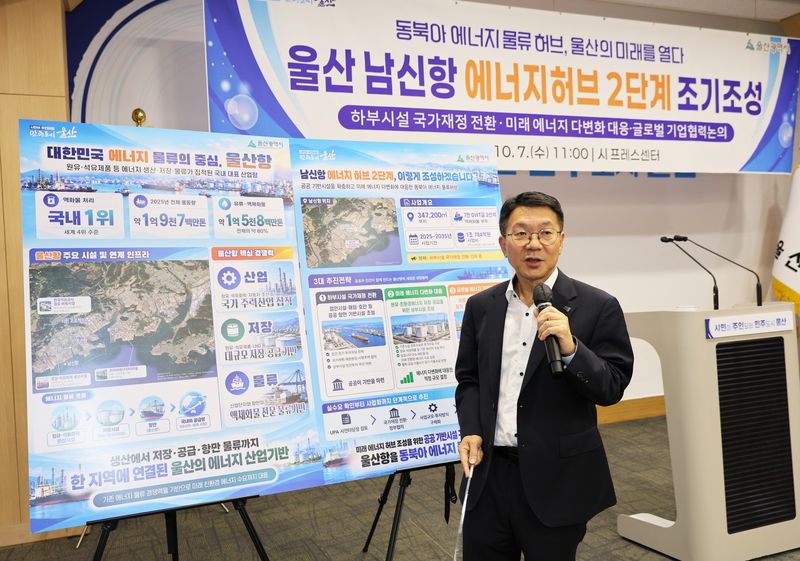
【Financial News, Ulsan = Reporter Choi Soo-sang】 Ulsan City, which aims to become Northeast Asia’s largest eco-friendly energy hub, has overhauled plans for Phase 2 of the Namshin Port Energy Hub, considered a key piece of infrastructure.
At a press briefing on the 7th, Ulsan Deputy Mayor for Economic Affairs Shin Min-sik said that the highly public-oriented infrastructure components of the Namshin Port project, originally planned as a private investment project, would be shifted to a state-funded project, while the privately funded components would be tailored to future energy demand, including hydrogen and ammonia. He also disclosed Ulsan Mayor Kim Sang-wook’s planned visit to the Middle East to attract global private investors.
Phase 2 of the Namshin Port Energy Hub is a major project to create a site of about 347,000 square meters in waters off Wonsan-ri, Onsan-eup, Ulju-gun, and build two berths for 70,000-DWT-class liquid cargo vessels. When the project passed the Korea Development Institute (KDI)’s preliminary feasibility study in 2017, the total investment was estimated at 1.0784 trillion won.
But since the project passed the preliminary feasibility study, the energy landscape, including international oil markets, has changed rapidly, while rising geopolitical risks have increased the importance of supply chain stability. The project has long been stalled, particularly because the all-private-investment model—in which the private sector bears all the upfront infrastructure costs, including land reclamation, dredging and revetment construction—proved to be an obstacle.
Ulsan City has therefore drawn up a new public-private partnership model: the government will build lower-level infrastructure, such as breakwaters and reclaimed land, using national funds, while private investment will be sought for upper-level facilities such as storage tanks and supply equipment. In line with this, the Ulsan Port Authority (UPA) plans to begin a pre-feasibility review study in November to reassess the project’s economic viability and consult relevant government ministries on preliminary procedures that could shorten the project timeline.
Ulsan City has also decided to reshape the privately funded upper-level facilities from a storage plan centered on crude oil into an “expanded eco-friendly energy hub” encompassing hydrogen, ammonia and methanol. The city says it will design the facilities to appeal to private investors.
That is also why Mayor Kim Sang-wook will visit Saudi Arabia and the United Arab Emirates (UAE) from November 2 to 7 on a three-night, six-day trip.
The centerpiece of the trip is a meeting with senior executives of Saudi state-owned oil company Aramco. Mayor Kim plans to meet with Saudi Arabia’s energy minister and Aramco’s key leadership to present the vision for Namshin Port and its logistics competitiveness, and to gauge specific business demand and investment interest. In the UAE, he will explore ways to cooperate on investment in the eco-friendly energy sector.
Mayor Kim will also formally propose to Aramco that S-OIL move its headquarters to Ulsan. S-OIL, an Aramco subsidiary, is currently in the final stages of construction on the Shaheen Project, the largest petrochemical project in the company’s history. Ulsan City considers this an opportune time to strengthen ties, now that cooperation with Saudi capital is bearing fruit. The city’s vision is that relocating S-OIL’s headquarters to Ulsan, home to the country’s only large-scale production base, would maximize synergies between the company and the region.
Deputy Mayor Shin Min-sik struck a cautious note, saying, “We are currently at the first step in global negotiations, and neither the investment amount for any specific company nor the ownership structure has been decided.” He nevertheless stressed, “It is clear that Ulsan City will not let Namshin Port remain merely a plan on paper.”
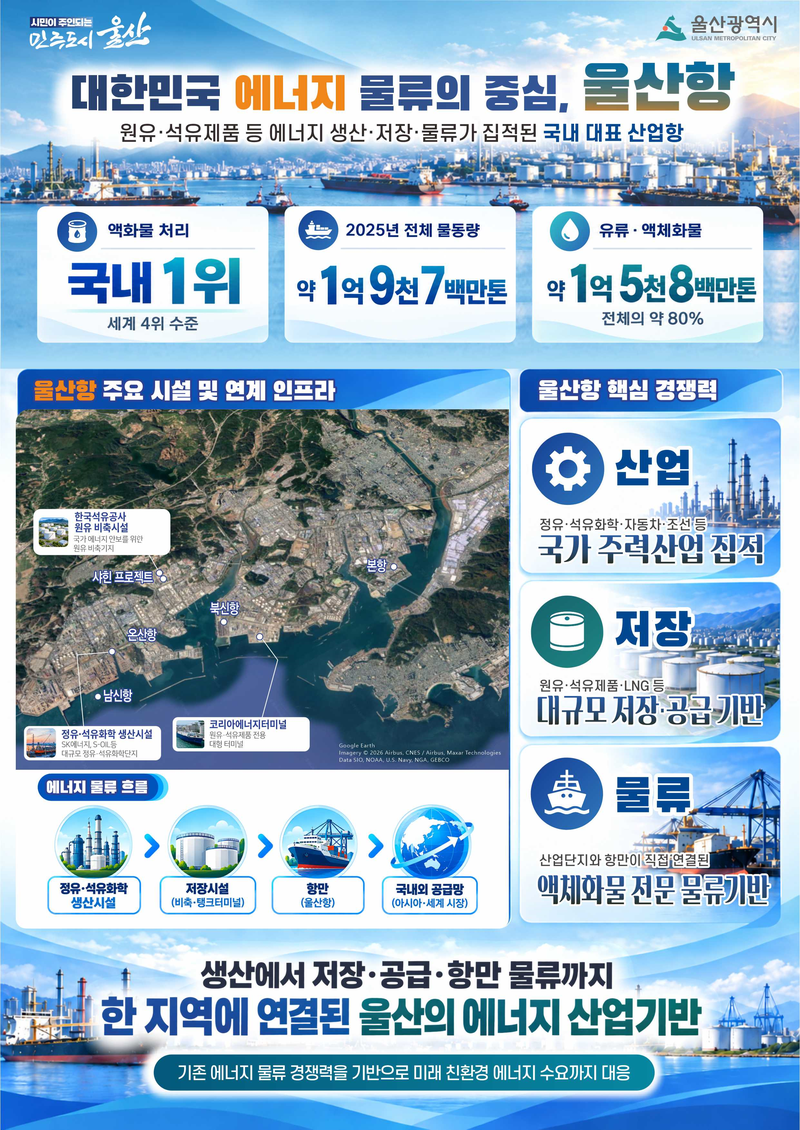
Ulsan Port ranks first in South Korea and fourth in the world in liquid cargo handling volume. It supports the country’s energy imports and exports, including crude oil and petroleum products, as well as Ulsan’s key industries. Last year, liquid cargo, including oil, accounted for about 158 million tonnes—or roughly 80%—of the approximately 197 million tonnes of total cargo handled by Ulsan Port.
[email protected] Choi Soo-sang Reporter