“Shoe noise disrupting the exam” ... Dispute over overshoes for civil service interview candidates at National Assembly audit [2026 National Assembly audit]
- Input
- 2026-10-07 13:27:37
- Updated
- 2026-10-07 13:27:37
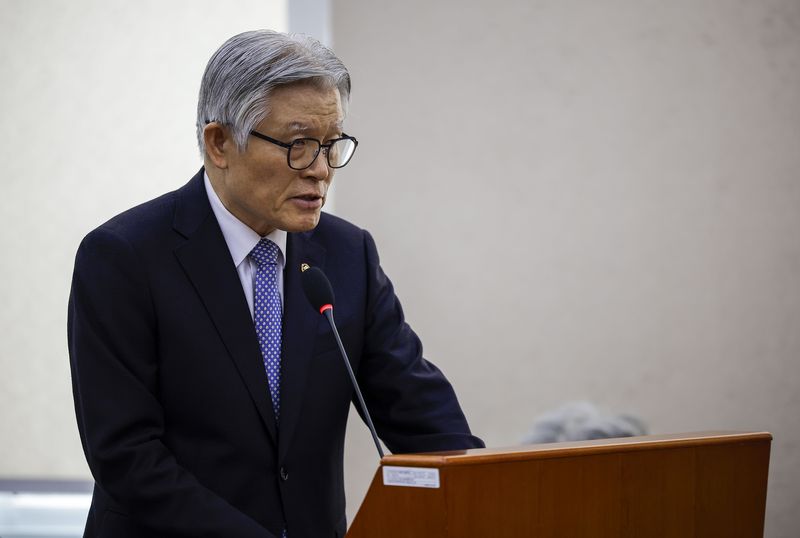
[The Financial News] Choi Dong-seok, head of the Ministry of Personnel Management, said on the 7th that candidates arriving in dress shoes for the national civil service interview exam would be made to wear overshoes “because noise from shoe footsteps and the like disrupts the administration of the exam.”
At the National Assembly Public Administration and Security Committee’s audit of the Ministry of Personnel Management that day, Rep. Yoon Kun-young of the Democratic Party of Korea took issue with the interview dress code. Choi explained, “I allowed the overshoes because the recruitment bureau had a clear position on the matter.”
Last month, the ministry issued its “Guidelines on Attire for National Civil Service Interviews,” recommending comfortable clothing that would not interfere with candidates’ ability to perform to their potential. It advised candidates not to wear ties or dress shoes, and said those arriving in dress shoes would be given overshoes.
The ministry said it strengthened the guidelines because many candidates continued to arrive in suits despite repeated recommendations to dress casually. The notice said, “Most candidates are taking the interview in suits despite the recommendation to wear comfortable interview attire, making the atmosphere unnatural and disrupting the administration of the exam with noise from shoe footsteps and the like.”

Citing female candidates as an example, Choi said, “They come in suits and pointed shoes, but the venue isn’t carpeted, and it has no measures to prevent noise.” He added, “If they came in ordinary clothes instead of suits, they wouldn’t inconvenience others.”
When Rep. Yoon said, “You just need to advise them to come dressed comfortably. That’s common sense,” Choi replied, “We did, but they keep coming in dress shoes and inconveniencing others.”
Plans to manage civil servants’ overtime also came under scrutiny. The government decided to abolish the cap that limited recognized overtime to a maximum of four hours a day and pay allowances for the actual hours worked. In exchange, it plans to introduce a system requiring employees to log whether they are working in an electronic system at set intervals. The measure is intended to prevent fraudulent claims.
Rep. Yoon pointed out that “the overtime approval rate is 96.4%” and asked, “What is this, a kids’ game—having to click once every hour while you’re working?” Choi responded that the system would help verify that employees were working overtime.
The civil servants’ union has opposed the system, saying it treats all public employees as potential fraudulent claimants. It argues that the system fails to reflect the realities of public service, where overtime arises from unpredictable administrative demands such as disasters, public complaints and various pressing issues.
Rep. Yoon also criticized the “emergency duty suspension system,” which requires civil servants experiencing severe psychological difficulties and the like to stop working first. He said, “Compared with existing sick leave, there is little difference beyond the fact that someone else can report it on their behalf.”
[email protected] Lee Bo-mi Reporter