Suncheon’s Maesandeung Modern and Contemporary History and Culture Space to Be Registered as a National Registered Cultural Heritage Site
- Input
- 2026-10-07 13:26:25
- Updated
- 2026-10-07 13:26:25
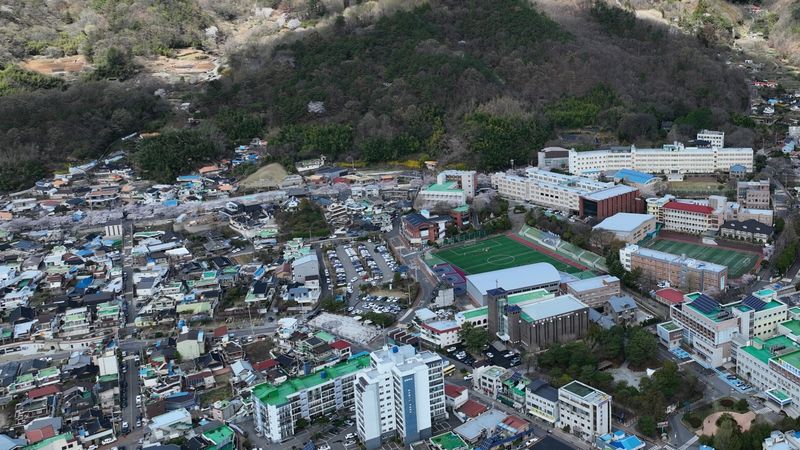
【Financial News, Suncheon = Hwang Tae-jong】Suncheon Maesandeung Modern and Contemporary History and Culture Space, which preserves traces of modern and contemporary Christian missionary work in the Honam region, is set to be registered as a National Registered Cultural Heritage site.
According to Suncheon City on the 7th, Maesandeung Modern and Contemporary History and Culture Space is a hub established by the U.S. Southern Presbyterian mission in the early 20th century for missionary work in the Honam region. It covers the area connecting the West Gate Information Center of Suncheon Eupseong with Suncheon Central Church and the Maesandeung area.
The National Heritage Administration plans to announce on the 12th its intention to register the space, along with seven individual heritage sites within it, as a National Registered Cultural Heritage site, recognizing its historical and cultural value as a reflection of modern and contemporary life in Suncheon, including education, medicine, religion and housing. The proposed registration will be open for 30 days. After opinions from all walks of life have been gathered and the National Heritage Committee has reviewed the proposal, the space is expected to be formally registered as a National Registered Cultural Heritage site.
The seven individual heritage sites are: △Rogers Missionary House △the Old Wall of the Maesandeung Mission Village △the Anryeoksan Isolation Ward △the Stone School Building of the Rehabilitation Vocational Guidance Center △the men's quarters of the Woobuja House hanok △the inner quarters of the Woobuja House hanok △the Gosan Clinic Director's House.
The ‘Rogers Missionary House’ is a Western-style residence where missionary Rogers lived while serving as the second director of Anryeoksan Hospital, the first general hospital in eastern Jeonnam. The ‘Old Wall of the Maesandeung Mission Village’ is a key structure marking the boundary between Suncheon Eupseong and the mission compound. The ‘Anryeoksan Hospital Isolation Ward’ is the only facility associated with Anryeoksan Hospital that holds historical value in the history of modern medicine. The ‘Stone School Building of the Rehabilitation Vocational Training Center’ was used to treat intractable diseases and provide vocational education for people with disabilities. The ‘men's quarters of the Woobuja House hanok’ and the ‘inner quarters of the Woobuja House hanok’ were built in 1920. They show the evolution of modern hanok architecture and are living heritage connecting local residents’ daily lives with their housing culture. The ‘Gosan Clinic Director's House’ is a residence that exemplifies the value of 1960s residential architecture.
A Suncheon City official emphasized, “This registration will provide an opportunity to systematically preserve and make use of Maesandeung’s historical and cultural heritage.”
Suncheon City plans to draw up a comprehensive improvement plan by next year that reflects the historical and cultural value of the Maesandeung area and the characteristics of its individual heritage sites. Based on the plan, it will carry out preservation, improvement and utilization projects in stages through 2031.
In particular, the city plans to create a walking route connecting the old downtown with the missionary heritage of Maesandeung and expand exhibition, education and hands-on activities. It will also link the area with nearby cultural spaces and local businesses, including restaurants and cafes, to develop it into a historical and cultural tourism hub.
A Suncheon City official said, “Together with citizens, we will protect and care for the heritage and create a historical and cultural space that people will visit, stay in and return to.”
[email protected] Hwang Tae-jong Reporter