National Fire Agency Chief Choi Yong-cheol: “Expand emergency transport for critically ill patients nationwide ... shift to an AI-integrated 119 system” [2026 parliamentary audit]
- Input
- 2026-10-07 11:11:46
- Updated
- 2026-10-07 11:11:46
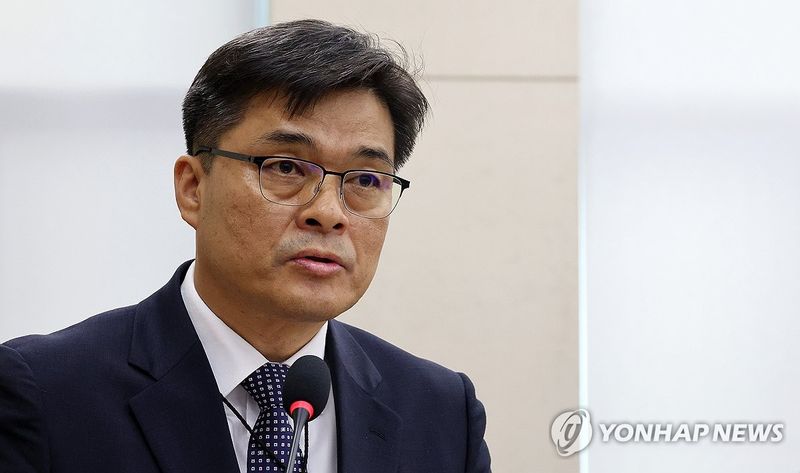
[Financial News] The National Fire Agency (NFA) has decided to expand its emergency transport system for critically ill patients nationwide and integrate artificial intelligence (AI) and big data across all areas of its 119 services, from call-taking to dispatch, response and prevention. It will also expand the role of special judicial police at the central level to prevent fire risks at factories, warehouses and hazardous-material facilities.
At the National Assembly Public Administration and Security Committee’s audit of the NFA on the 7th, NFA chief Choi Yong-cheol said, “We face a complex set of challenges, including extreme natural disasters caused by the climate crisis, demographic and social changes such as super-aging, and new types of disasters arising from advances in cutting-edge technology,” adding, “Fire services are being asked to demonstrate a higher level of response capability and shoulder greater responsibility.”
First, the NFA will strengthen on-scene command and emergency medical response systems. It plans to train commanders through specialized programs, deploy them where they are needed across the country, and improve conditions for fire-service dispatch.
Choi said, “We will improve conditions for fire-service dispatch so we can reach people in danger faster, and expand the emergency transport system for critically ill patients nationwide.”
To prepare for wildfires in autumn and winter, the NFA plans to analyze weather forecasts and wildfire spread and deploy firefighting resources proactively. It aims to reduce damage by rapidly mobilizing resources from across the country if a major wildfire breaks out.
Fire prevention will be strengthened with a focus on high-risk facilities, including factories, warehouses and hazardous-material facilities. Choi said, “We will strengthen fire-safety management at high-risk facilities to reduce harm in workplaces,” adding, “We will expand the role of special judicial police at the central level to prevent fire risks in advance.”
The NFA will also revamp in-house fire-safety management at private-sector workplaces. It will strengthen training and drills for in-house fire brigades and expand tailored support and fire-safety education for fire-vulnerable groups, including older adults and people with disabilities. Choi said, “We will address poor practices in voluntary fire-safety management by the private sector and improve the quality of training and drills for in-house fire brigades to strengthen the ability to respond in the early stages of a fire.”
The NFA will also accelerate the transition to a fire service system that uses AI. It plans to apply AI and big-data analytics across its operations, from call-taking and dispatch to on-scene response and prevention.
Choi said, “We will integrate AI and big-data analytics across all areas of fire services, from call-taking, dispatch and response to prevention, and gradually transform the 119 system through a scientific approach.” He added, “With the dedicated fire-service AI division at the center, we will establish a framework to rapidly bring advanced technologies from the defense and private sectors, including physical AI, into firefighting operations.”
The NFA will also expand the development and deployment of advanced equipment such as robots and drones. The plan is to use them to address areas at disaster sites where it is difficult for people to respond directly and to improve firefighters’ safety.
The state will also take greater responsibility for the health and safety of fire service personnel. The support system will be strengthened, from mental-health care to honoring personnel injured or killed in the line of duty and supporting their bereaved families.
Choi said, “The health and safety of fire service personnel must be supported if we are to protect public safety as well,” adding, “We will further strengthen the state’s responsibility, from mental-health care for firefighters to honoring personnel injured or killed in the line of duty and supporting their bereaved families.”
[email protected] Lee Bo-mi Reporter