Did King Sejong the Great also suffer from it?... ‘Back pain’ in the Annals resembles ankylosing spondylitis
- Input
- 2026-10-07 10:43:18
- Updated
- 2026-10-07 10:43:18
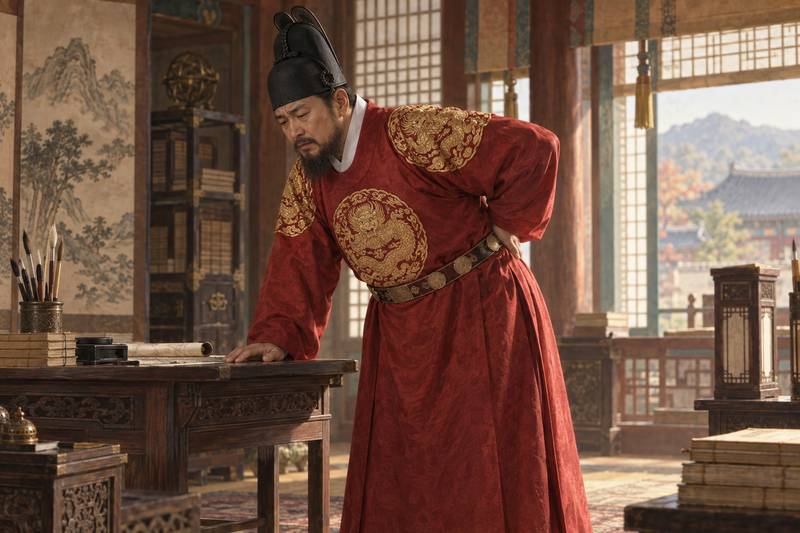
[Financial News] “My back and waist have stiffened and become rigid, making it difficult to bend and straighten.” These were the words of King Sejong, who set out for a banquet to see off envoys from Ming China in 1435 but eventually turned back.
According to the Annals of King Sejong, on the first day of the fourth lunar month in 1435, the 17th year of Sejong’s reign, Sejong went to Taepyeonggwan for a farewell banquet for the envoys and told the chief royal secretary about his condition in these words. When he left the palace, he thought he would be able to preside over the banquet, but once he arrived, his body could not keep up. In the end, Sejong returned to the palace, and Grand Prince Jinyang took charge of the banquet in his place. His back and waist discomfort had evidently made it difficult for him to host an official event.
The records in the Annals alone are not enough to determine what illness Sejong had. However, the symptoms described in the records resemble key symptoms of ankylosing spondylitis today.
Back and leg pain from age 22... eased with hot-spring baths
Ankylosing spondylitis is a chronic spondyloarthropathy in which inflammation develops in the spine and the vertebral joints gradually stiffen. Pain and stiffness around the lower back and hips are its main symptoms. If the inflammation spreads to leg joints such as the knees and ankles, it may also cause leg pain or swelling. As symptoms worsen, bending or straightening the back can become difficult and everyday activities, including walking, can be affected.
It is said that Sejong began experiencing discomfort in his back and legs at around age 22. Records also indicate that he had pain in his right leg and elsewhere from 1418, the year he ascended the throne. The Annals also mention that Sejong disliked exercise. It cannot be concluded that this was due to an illness, but ankylosing spondylitis can cause pain and stiffness in the leg joints as well, so it may have played a part.
Sejong managed his pain with hot-spring baths. In the Annals entry for the fourth day of the seventh lunar month in 1439, Sejong recalled that pain in his right leg had eased somewhat with treatment from a physician, and that the back pain he had suffered every year had also improved after bathing in hot springs in 1433. He added, however, that swelling and pain persisted for another year or two, indicating that his symptoms had not disappeared completely.
The warmth of hot-spring bathing can help relax muscles and ease pain and stiffness, so it is still used today as a complementary heat therapy. However, hot-spring bathing alone is unlikely to control the inflammation or progression of ankylosing spondylitis.
If treated today... medication and exercise alongside integrative Korean medicine treatment
If Sejong came to a hospital today with the same symptoms, doctors would first check when they began and how they changed with movement, and use blood tests to assess inflammatory markers. The joints connecting the spine and pelvis would be examined with X-rays and magnetic resonance imaging (MRI). If he were diagnosed with ankylosing spondylitis, medication to control inflammation and regular exercise and rehabilitation would be the basis of treatment; integrative Korean medicine treatment could also be considered to manage pain. This treatment would involve monitoring pain levels as well as changes in lower-back and joint mobility and everyday functions such as walking, and planning care with his existing medication in mind.
Related research has also been reported. According to a study by Jaseng Hospital of Korean Medicine published in The Journal of Internal Korean Medicine, patients with ankylosing spondylitis who received integrative Korean medicine treatment for 44 days had lower back-pain scores on the Numeric Rating Scale (NRS). The inflammatory markers erythrocyte sedimentation rate (ESR) and C-reactive protein (CRP) fell from 13 to 10 and from 1.39 to 0.84, respectively. A study published in The Journal of Korea CHUNA Manual Medicine for Spine & Nerves reported improvements in leg NRS scores and the straight leg raise test (SLRT) results after integrative Korean medicine treatment for a patient whose ankylosing spondylitis had caused sacroiliitis and hip synovitis.
Sejong spent more time sitting and reading or attending to state affairs than exercising, and appears to have endured considerable overwork and stress during the creation of Hunminjeongeum and the reform of institutions. Difficulty bending and straightening the back can interfere with daily life and work, while reducing movement because of pain can make the spine and joints even stiffer. If back pain and stiffness keep recurring, it is important not to dismiss them as simple fatigue, but to find the cause and continue suitable exercise alongside treatment.
Hong Sun-seong, director of Jaseng Hospital of Korean Medicine, said, “Symptoms of ankylosing spondylitis can improve and then recur, so ongoing management is important rather than stopping after short-term treatment.” He added, “When pain is severe, avoid strenuous activity. Even after symptoms ease, combining appropriate exercise with treatment to maintain spinal and joint function may help reduce difficulties in daily life.”
[email protected] Jeong Myeong-jin, Medical Correspondent Reporter