Defense Ministry steps up push for special act on nuclear-powered submarines and talks with U.S.; Defense AI Act to be enacted by year-end
- Input
- 2026-10-07 10:28:40
- Updated
- 2026-10-07 10:28:40
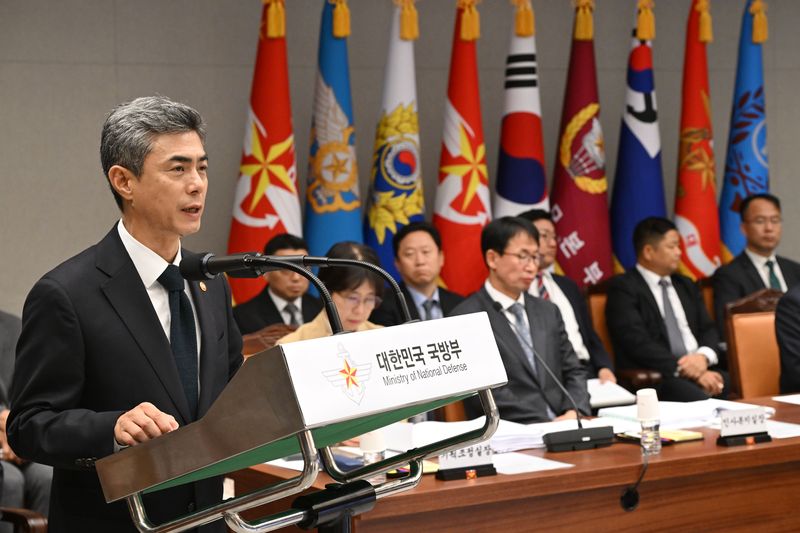
In addition, the budget for the South Korean three-axis system to counter North Korean nuclear and missile threats is being significantly increased. The 2026 budget was increased by 21% from the previous year, and the 2027 budget has been set 29% higher. The military will expand surveillance, reconnaissance, and overwhelming strike capabilities, including the Medium Altitude Unmanned Aerial Vehicle (MUAV), the supersonic KAI KF-21 Boramae fighter, and high-power missiles. It will also build layered, multi-domain defense capabilities by securing systems on schedule, including the M-SAM medium-range surface-to-air missile system, the Long-range Surface-to-Air Missile (L-SAM), and the long-range artillery interception system.■ Push to begin construction of the nuclear-powered submarine, a national strategic project, and pursue talks with the U.S.The legal and institutional foundation for the domestically pursued nuclear-powered submarine (nuclear sub) project is taking shape, drawing on the military’s accumulated submarine-building expertise. The Ministry of National Defense will actively pursue talks with the United States on the transfer of nuclear material for military purposes, as well as an agreement, to secure a stable supply of nuclear fuel for the submarines. Building on the enactment of the Special Act on Nuclear-Powered Submarines, which was approved at a Cabinet meeting on the 29th of last month, the ministry plans to establish a decision-making framework to bring together the government’s capabilities, apply special procurement provisions tailored to the project’s unique characteristics, and lay the foundation for nuclear safety regulation of the submarines. It will also hold talks with the International Atomic Energy Agency (IAEA) on managing nuclear material for the submarines, while protecting military secrets and allaying concerns about its diversion to nuclear weapons.
The transfer of wartime operational control (OPCON) will also pick up pace in line with the Conditions-based OPCON Transition Plan (COTP). The timing of the transfer will be determined through verification of the Future Combined Forces Command’s Full Operational Capability (FOC). Following the completion this year of the permanent establishment of the Combined Special Operations Component Command (Yeonteuksa), the military plans to complete the permanent establishment of all six combined component commands by making the Combined Military Intelligence Support Operations Component Command permanent in 2027.■ Defense Artificial Intelligence Act to be enacted by year-end; secure zones at Defense AX hubs to open this monthThe military is undertaking a broad effort to build the legal and physical infrastructure needed to develop an “AI-powered advanced military” that safeguards sovereignty over security data. To ensure the safety and reliability of the systematic development and operation of AI, the military plans to enact by year-end the Defense Artificial Intelligence Act, which was introduced in January this year. It will also establish Defense AX hubs at five locations across the country this month (October 2026)—Yongsan (Joint Chiefs of Staff), Pangyo (Army), Daejeon (Army), Busan (Navy and Marine Corps), and Yangjae (Air Force)—to enable the secure use of defense data, and operate secure zones shared by civilian and military users. The expansion of access for the private sector is expected to be completed in December.
The ministry has also overhauled its organizational structure and budget. It has completed the establishment of a Defense AI Planning Bureau and an assistant minister post to coordinate the entire acquisition and operations process under a government-wide framework. The government’s 2027 defense budget proposal stands at 73.2777 trillion won, up 5.6 trillion won from this year—the largest increase on record—and an 8.2% rise. Of this, 22.7112 trillion won, up 13.8%, will go to force improvement, including the acquisition of advanced capabilities such as drones and counter-drone systems, as the military shifts toward advanced technology.
■Preventing another illegal declaration of martial law: adding grounds for refusing unlawful orders and reorganizing military intelligence agenciesHigh-intensity internal reforms to rebuild the “military of the people” were also formally reported. To prevent illegal declarations of martial law, the Ministry of National Defense completed an amendment to the Enforcement Decree of the Martial Law Act last June and is now pursuing an amendment to the Framework Act on Military Status and Service to add provisions requiring service members to uphold the Constitution and establishing grounds for refusing unlawful orders. The law will also explicitly prohibit those issuing orders from giving orders that violate the Constitution or statutes.
The reorganization of military intelligence agencies to ensure democratic oversight has also been completed. Following the recommendations, the Defense Counterintelligence Command was disbanded last July, and two new specialized counterintelligence and security agencies—the National Defense Counterintelligence Headquarters and the National Defense Security Support Group—were established. The head of the Defense Intelligence Headquarters has also been removed from the concurrent post of head of the Joint Chiefs of Staff Intelligence Headquarters, and an organizational restructuring plan will be drawn up by the end of the year. Education on “Democracy and the Defense of the Constitution” will also be significantly strengthened for all service members.■ Junior officers’ base pay to rise 5.9%; on-duty pay to increase to as much as 100,000 wonA range of measures to improve service conditions has been incorporated to address the decline in military manpower caused by the demographic cliff and improve job security. To gradually raise junior officers’ pay to levels offered by mid-sized companies, the Ministry of National Defense will increase their base pay by 5.9% in 2027, bringing average monthly compensation to around 3 million won. It will continue consultations with relevant ministries to raise the annual pay of a Staff Sergeant in the first pay grade to around 40 million won by 2029.
The ministry will also reduce the number of on-duty positions by 29.8% to ease the frequency of duty shifts and implement reforms that significantly raise on-duty pay from 20,000 to 30,000 won on weekdays and from 40,000 to 100,000 won on holidays, helping improve job security for personnel serving in remote areas. To improve housing conditions, it plans to build a consolidated housing facility with 1,230 units in the Chuncheon area (II Corps) by 2031 and expand eligibility for rental-deposit assistance to include personnel in officers’ housing, creating a stable environment in which service members can focus on their duties.■ Diversifying support for defense exports and building an ecosystem for cooperation between large and small businessesTo lead efforts to make South Korea a defense industry powerhouse, the ministry will gradually increase the share of the defense R&D budget from 8.1% in 2025 to around 10% by 2030. It is also pursuing improvements to make the defense acquisition system faster and more flexible, quickly fielding minimum viable products to shorten the time needed to acquire technology, and has completed the introduction of a bill for the Act on Defense Advanced Power Projects.
The ministry also established the Directive on the Operation of Defense Export Support on September 8, systematizing the military’s role in supporting defense exports, and will expand the designation of government-furnished items to increase small and medium-sized businesses’ participation in domestic weapons-system development. It plans to launch a new Military Demonstration Test Support Program to help products developed by smaller companies enter the supply chains of system integrators, and introduce a defense industry-specific Win-Win Cooperation Level Assessment System to create an ecosystem that provides incentives to outstanding large companies.

[email protected] Lee Jong-yun Reporter