Russia Denies Plague Leak Allegations ... US Calls for Explanation
- Input
- 2026-10-07 11:24:37
- Updated
- 2026-10-07 11:24:37

[Financial News] The Russian government said no plague bacteria had been found near a researcher who died last month at a plague research facility. The US government, sensitive to pathogen leaks from research institutes, pressed Russia to release more information.
Russian authorities find no trace of plague
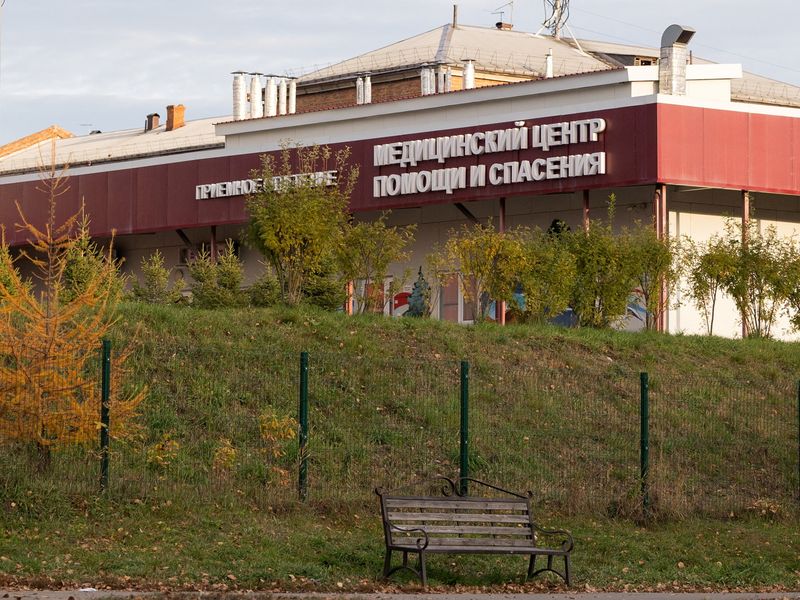
According to the US business news outlet CNBC, Russia’s Federal Service for Surveillance on Consumer Rights Protection and Human Wellbeing said in a statement on the 6th that it had tested about 60% of those quarantined at the Irkutsk Anti-Plague Research Institute of Siberia and the Far East in Shelekhov, Irkutsk Oblast, and had so far found no trace of plague. The service said, “Laboratory tests confirmed two cases of COVID-19 infection, as well as two cases of rhinovirus infection”—rhinoviruses being a major cause of the common cold. Without specifically using the word “plague,” the service said, “No other types of pathogens have been found in connection with this contact.”According to Russian media, including the TASS news agency, on the 5th, 28-year-old researcher Darya Shipilova, who worked at the institute, was hospitalized with severe pneumonia on the 29th of last month and died on the 2nd. Local media raised suspicions that Shipilova contracted plague after accidentally breaking a test tube containing the plague pathogen at the institute in question on the 25th of last month.
Regarding the reports, the Federal Service for Surveillance on Consumer Rights Protection and Human Wellbeing said Shipilova died after being diagnosed with “pneumonia of unknown cause.” Russian health authorities subsequently designated 197 people who had come into contact with Shipilova for monitoring and quarantined 189 of them in hospitals and other facilities.
Plague is an infectious disease caused by the plague bacterium, which is found in rodents and fleas, among other hosts. Unlike other forms of plague, which are contracted through contact with fleas or animals, pneumonic plague can spread through respiratory droplets. It can be treated with antibiotics if detected early, but it is highly lethal, with untreated patients at risk of dying within one to six days.
On the 6th, World Health Organization (WHO) spokesperson Christian Lindmeier discussed the incident at a press conference in Geneva, Switzerland. “According to the WHO’s initial risk assessment, based on the information currently available, the risk is moderate to low in the Irkutsk region, low across Russia, and very low in Europe,” he said. Lindmeier said, “A woman who worked in a laboratory in Irkutsk has died, and the authorities are investigating whether pneumonic plague was the cause of death.” He explained that the Irkutsk institute “studied dangerous pathogens in Siberia, a region where infectious diseases occur naturally in wild animals.”

Trump and Putin to speak soon ... calls for explanation
However, US President Donald Trump, who is sensitive to allegations that viruses have leaked from research institutes, wants a more detailed explanation. He claimed that in May 2020, during his first term, he had personally seen evidence that COVID-19 originated at a laboratory in Wuhan, Hubei province, China. The White House, under Trump’s second administration, reiterated in a post on its website in April last year that the COVID-19 virus had been created at a laboratory in Wuhan and leaked.On the 5th, Trump said of the incident, “We are watching this issue very closely.” He claimed, “We just heard the news. We will help them (Russia). We will help them as much as we can.” The next day, Trump said, “At this point, we are having very in-depth discussions. Perhaps tomorrow we’ll be able to report on that.” He also said he had agreed to speak with Russian President Vladimir Putin “soon.”
At a press conference on the 6th, US Secretary of State Marco Rubio said, “It would be irresponsible to speculate when we have not yet verified all the information,” adding, “I think Russia clearly has an obligation to share more information with the world.” He stressed, “The more we know about what happened, the better we can respond. It may be nothing, or it may be a bigger problem than we thought.” Rubio said, “If it is more serious than what is known so far, measures to address it are already in place,” and added, “We are monitoring the situation very closely, hour by hour.”
On the 6th, WHO Director-General Tedros Adhanom Ghebreyesus said in a post on social media platform X that he had asked Russia for more information about “the cause of the severe pneumonia, the pathogen that prompted public health measures, and media reports that another staff member is suffering from pneumonia of unknown cause.” He said Russia should “share information in a timely, complete and transparent manner” to dispel the suspicions.
The US political news outlet Axios stressed the importance of determining whether the incident stemmed from Russia’s legitimate plague research or from a biological weapons development program. The US think tank James Martin Center for Nonproliferation Studies previously noted that vaccines and diagnostic methods had been developed for pathogens modified by the Russian military, in connection with the institute. The US State Department had earlier assessed in 2024 that Russia maintained an offensive biological weapons program and had absorbed and developed the former Soviet Union’s program.
[email protected] Jongwon Park Reporter