Morgan Stanley: Shortages of power and data centers needed for AI growth are inevitable
- Input
- 2026-10-07 10:56:14
- Updated
- 2026-10-07 10:56:14
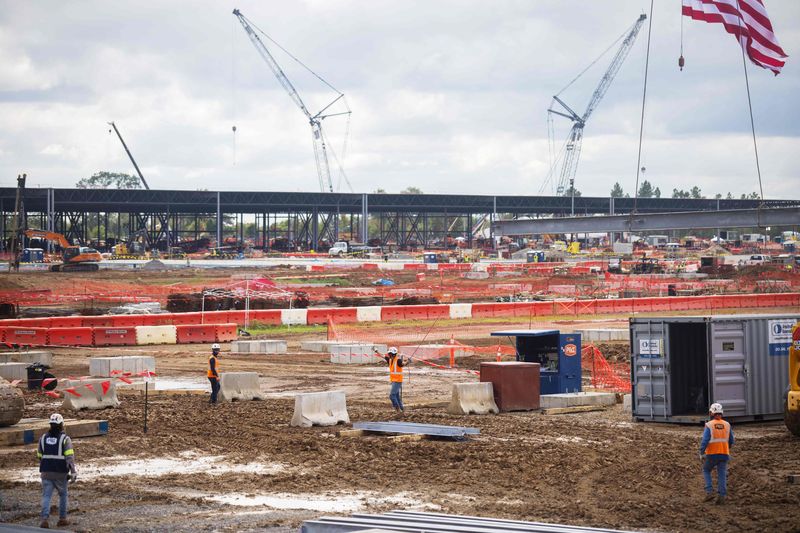
[Financial News] The Wall Street Journal (WSJ) reported on the 6th (local time) that, despite the explosive growth of artificial intelligence (AI) technology driving demand for data centers and electricity, supply is inevitably set to fall short of demand.
While factors such as shortages of memory chips, uncertainty over returns on investment and rising interest rates are weighing on AI growth, the data-center shortage has been identified as the most serious problem.
According to an analysis recently released by investment bank Morgan Stanley, global data-center electricity demand is expected to reach about 56 gigawatts (GW) next year, while newly available power capacity is estimated at just 51 GW.
The problem is that the gap is widening. By 2028, demand is expected to surge to 86 GW, while only 68 GW of power will be available, resulting in a severe shortfall of about 18 GW. The cumulative electricity needed to build data centers over the next two years is equivalent to the amount consumed by about 118 million households—an enormous figure approaching the roughly 150 million households in the United States as a whole.
Big Tech companies, AI labs and data-center developers are exploring a range of solutions to keep growth from slowing.
The first is technological innovation. Research is underway to reduce power consumption as much as possible by improving computing algorithms and adopting next-generation, high-efficiency semiconductors.
The second is securing power sources that generate electricity directly at data-center sites, without going through the grid. As more efforts are made to use fuel cells, gas turbines and other technologies to cut unnecessary administrative procedures and delays involved in connecting to the grid, large amounts of capital are flowing into related energy markets.
But there are significant practical barriers to overcoming the power crunch through technological solutions alone. UBS semiconductor analyst Tim Arcuri said that, to accommodate all the AI chips major companies such as NVIDIA Corporation will sell by 2030, most of the roughly 110 GW of “behind-the-meter” supply sources in development, as well as about 150 GW of power plants awaiting permits, would need to be completed.
The reality is not encouraging. Political opposition from local communities to data-center construction is growing, and the possibility of tighter data-center regulations after the U.S. midterm elections is also increasing.
Delays to major projects are mounting. Oracle is facing setbacks, including trying to defer rent payments, because of power supply and permitting issues at a large data-center facility it is pursuing in New Mexico.
Major semiconductor companies such as NVIDIA Corporation and Broadcom Inc. have yet to issue direct warnings about a shortage of data-center capacity. This is because their annual sales forecasts incorporate their own assessments of data-center availability.
Some, however, are concerned about this complacency. Semiconductor manufacturers cannot accurately predict geopolitical issues, regulatory risks or supply-chain delays. The Journal reported that, according to a Bernstein Research survey, U.S. data-center capacity estimates vary widely, from 60 GW to 180 GW, and even industry experts have been unable to reach a consensus.
[email protected] Yoon Jae-jun Reporter