“U.S. debt crisis within two years ... Japan and China, major Treasury buyers, pull back”
- Input
- 2026-10-07 08:56:43
- Updated
- 2026-10-07 08:56:43
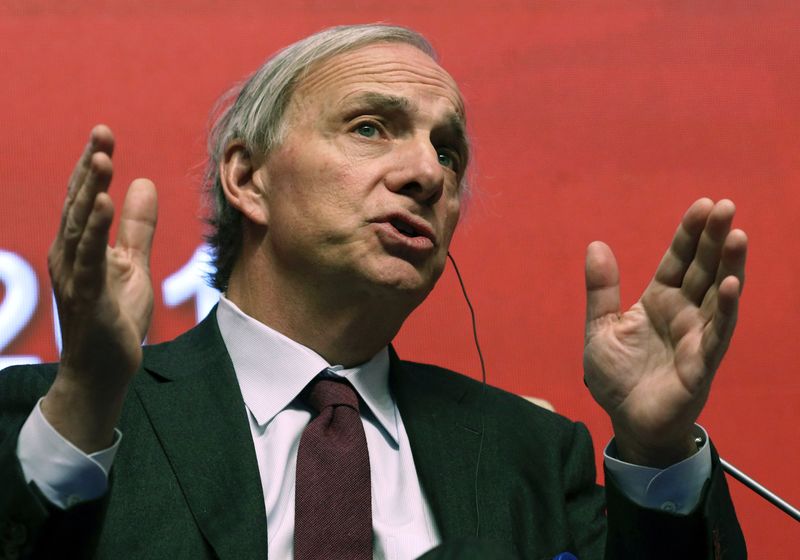
[The Financial News] Billionaire investor Ray Dalio, who predicted the 2008 financial crisis and founded Bridgewater Associates, the world’s largest hedge fund, warned that the U.S. would face a “debt crisis” within two years.
According to Business Insider on the 6th (local time), Dalio made the remark in a video interview that day at the annual Greenwich Economic Forum, saying, “We are clearly in a dangerous period.”
He said that while the government and major technology companies are flooding the market with U.S. Treasuries, institutional buyers such as China and Japan are pulling back, and that he is taking a short position in debt.
Dalio had previously warned in an interview that the U.S. was nearing the limit of how much debt it could sustain, as rising interest costs took up an increasing share of government spending. He also noted that geopolitical tensions were weighing on foreign demand for U.S. debt.
Apart from selling bonds, he is buying gold. Dalio said that an ideally diversified portfolio would have a 5–15% allocation to gold.
He allocates a small amount, around 1%, to Bitcoin, but stressed that he is not a Bitcoin advocate. In particular, he cited AI models’ demonstrated ability to break into digital fortresses.
Dalio, who moved his family office to Abu Dhabi in 2023, is also looking beyond the U.S. to diversify.
He said that “surplus countries” such as Singapore and the United Arab Emirates (UAE), which have abundant cash and do not rely on foreign borrowing, offer attractive conditions. He also saw sporadic opportunities in Europe.
On how to assess a country’s potential, he said, “Are they innovative, riding the wave, or being swept along by it?”
He also recommended inflation-linked bonds, which rise and fall with inflation, as a hedge against persistent cost increases.
[email protected] Lee Seok-woo, International Affairs Specialist Reporter