Nuri (KSLV-II)’s Fifth Launch Finalized for 12:25 p.m. Today
- Input
- 2026-10-07 08:56:53
- Updated
- 2026-10-07 08:56:53
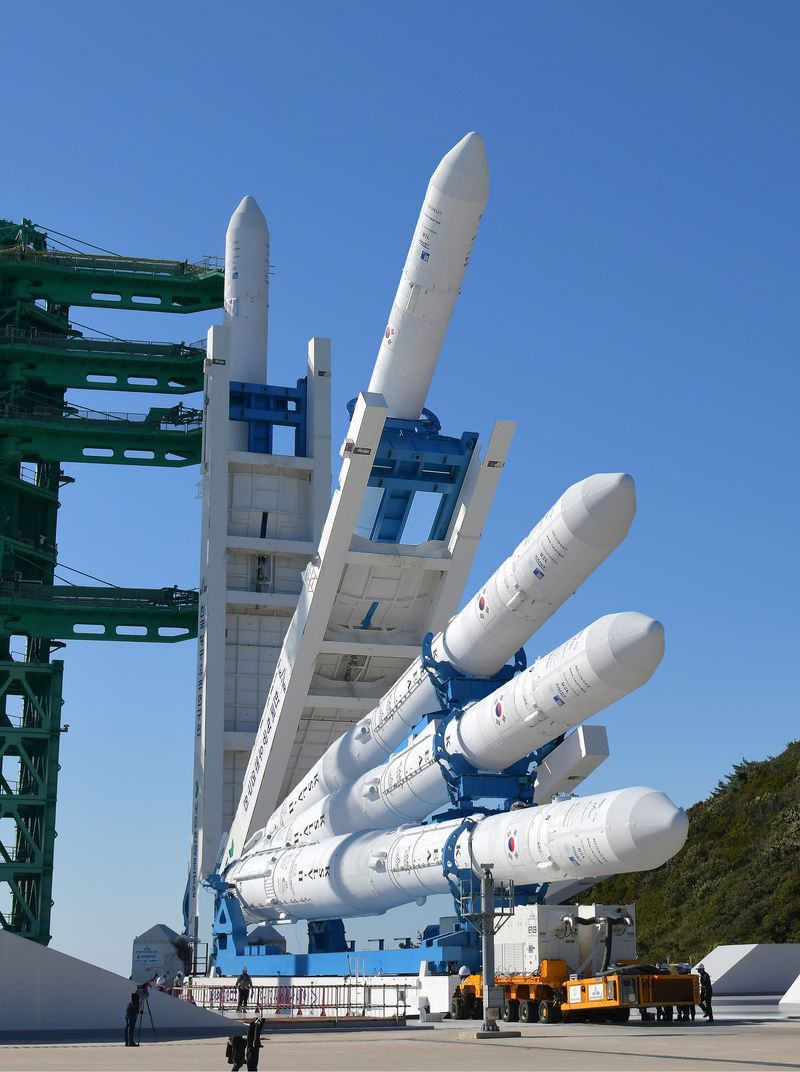
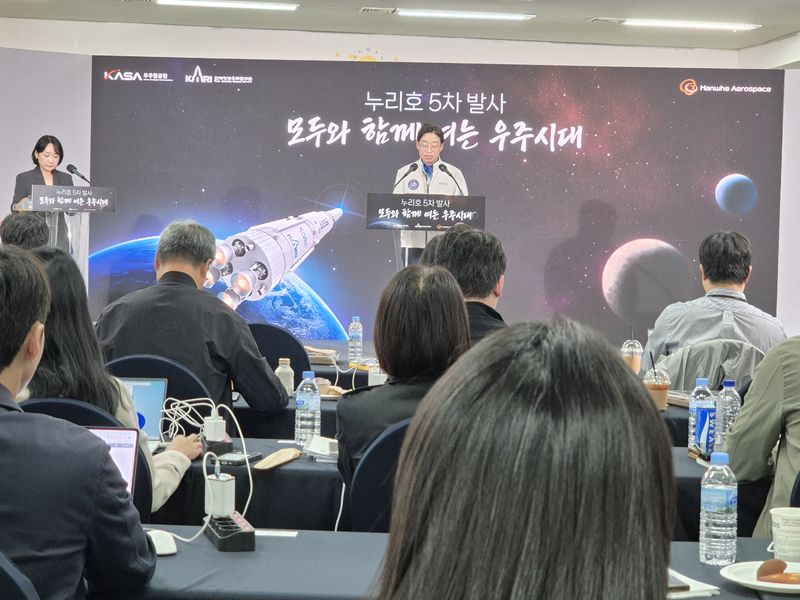
[Financial News] Nuri is set to make its fifth launch at around 12:25 p.m. on the 7th, as scheduled.
The Korea AeroSpace Administration and the Korea Aerospace Research Institute said they had convened the Nuri Launch Management Committee at 8 a.m. on the 7th and finalized the time of Nuri’s fifth launch. The launch window is one hour, from 12:23 p.m. to 1:23 p.m. that day.
Oh Tae-seok of the Korea AeroSpace Administration said, “The Nuri Launch Management Committee comprehensively reviewed technical readiness, weather conditions and the space environment, as well as the possibility of collisions with space objects. The launch time is 12:25 p.m., as scheduled. No technical problems have occurred, and weather conditions also meet all launch requirements.”
Checks are currently underway on Nuri’s equipment, including its sensors, with the goal of placing its primary payload, five microsatellite cluster satellites, into their target orbits.
For Nuri’s fifth launch, payload requirements different from those for the fourth launch in November last year were applied, and the payload section was redesigned. A low-shock satellite separation device was developed and installed to meet the separation requirements of the five microsatellite cluster satellites, the primary payload. The aim is to reduce the shock during satellite separation to levels seen with overseas launch vehicles. The explanation is that a new integrated clamp-band-type satellite separation device was developed and installed based on Nuri’s existing small-satellite separation device. A lower ring to carry 15 secondary payloads was also developed and installed.
Criteria for launch availability were also added to the close-approach avoidance analysis for crewed spacecraft. The aim is to secure as wide a launch window as possible as launch experience accumulates. As with the previous, fourth launch, a minimum close-approach distance of 200 km is applied first for crewed spacecraft. However, the criteria of “a close-approach distance of 200 km in the direction of travel and at least 50 km perpendicular to it” and “a collision probability of 0.0001% or less” are used as supplementary criteria.
[email protected] Yeon Ji-an Reporter