Mecca Pact Takes Effect Suddenly; Pakistan and Türkiye to Deploy Troops to Saudi Arabia
- Input
- 2026-10-07 07:07:19
- Updated
- 2026-10-07 07:07:19
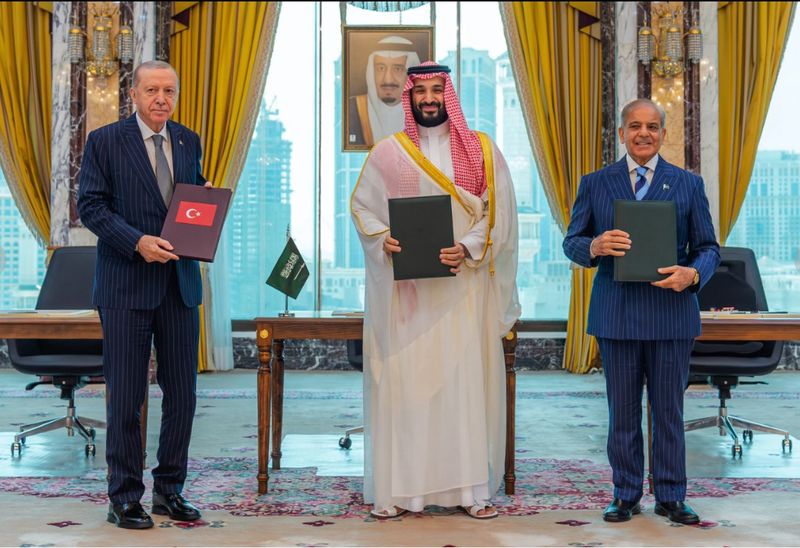
[Financial News] The 'Mecca Pact,' signed by Saudi Arabia, Pakistan, and Türkiye in August, has suddenly taken effect.
According to an Al Jazeera report on the 6th (local time), at an emergency Supreme Committee meeting held on the 5th in Riyadh, the Saudi capital, the three countries agreed to immediately deploy Pakistani and Turkish troops within Saudi territory in response to attacks by Yemen's Houthi rebels.
According to a joint statement released by Pakistan's Foreign Ministry, the committee said, “The committee has decided to act immediately to put the collective defense commitment into practice, and to take the necessary measures to immediately deploy the agreed military forces and capabilities in accordance with the approved provisions and each country's domestic laws.” However, the exact number of troops and their specific roles were not stated.
Major General Turki al-Maliki of the Saudi-led coalition said that 100 fighter jets were carrying out airstrikes in support of Yemeni government forces to retake territory seized by Houthi rebels last month.
In this regard, Pakistani Defense Minister Khawaja Asif said, “Pakistani and Turkish forces are performing support roles such as reconnaissance, while Saudi forces themselves are leading the actual ground combat and the retaking of territory.”
However, experts are questioning how long Pakistan can remain in a 'defensive role' without becoming embroiled in direct combat. Pakistan has been training Saudi forces since 1967, and in September 2025 it signed a mutual defense pact under which aggression against either side would be considered aggression against the other.
Meanwhile, Türkiye's military involvement appears more cautious. Article 92 of the Turkish Constitution gives parliament the authority to deploy troops, but parliament has yet to ratify the Mecca Pact. Experts expect Türkiye's role to be limited to such support as intelligence sharing, air defense, and the provision of drones and defense industry materiel, rather than deploying ground troops.
Iran has reacted very coldly to this deployment. Iranian Foreign Ministry spokesperson Esmaeil Baghaei expressed concern over reports of Pakistani forces becoming involved in the war in Yemen and warned, “A new military intervention will only complicate the situation.”
Javad Heyran-Nia, a Tehran-based expert on Gulf studies, told Al Jazeera in an interview, “Iran might tolerate Pakistan's deployment if it is purely defensive, such as protecting key Saudi facilities. But if it joins offensive operations against the Houthi rebels, that would cross Iran's red line.”
Meanwhile, concerns are mounting that the military operation could expand into a protracted war after Yemen's government forces recently declared that they would also aim to retake the capital, Sana'a, which is under Houthi control.
[email protected] Yoon Jae-jun Reporter