“I sat my two sons down and divided it equally” ... Jeon Won-ju, the “600% Hynix legend,” gives away half her assets
- Input
- 2026-10-07 06:32:05
- Updated
- 2026-10-07 06:32:05
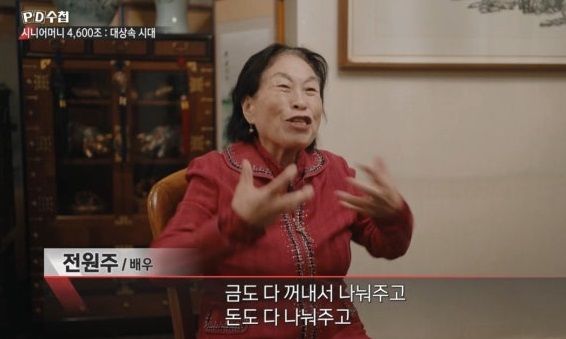
[Financial News] As lawsuits over the division of inherited estates hit record highs amid a rapidly aging population, the lifetime gifting strategy of actor Jeon Won-ju, 87, considered one of the entertainment industry’s leading wealthy figures, is drawing attention in the wealth succession market. The strategy, dubbed “pragmatic half gifting,” is to distribute assets during one’s lifetime to prevent disputes among siblings after death, while retaining half to ensure support and prepare for old age.
Jeon said on MBC’s PD Notebook, which aired on the 6th, that she had given half her assets to her two sons in advance. “To prevent my two sons from fighting over my assets after my death, I sat my sons and daughters-in-law down and divided gold, cash and other assets equally in advance,” she said. She explained, “If you give it all away, they get lazy and stop coming to visit. You have to give away only half and hold on to the rest if you want to be treated well in your old age.”
Born in 1939, Jeon is one of the entertainment industry’s best-known long-term value investors. She is reported to have earned returns of at least 600% on SK hynix shares she bought 15 years ago for around 20,000 won per share. Her prized assets are said to total around 5 billion won, including 3 billion won in stocks, 1 billion won in gold, a building in Seoul’s Sinchon neighborhood and an apartment in Cheongdam-dong.
Jeon’s case carries important lessons amid a sharp rise in inheritance disputes. In South Korea, cultural reluctance to talk about parents’ deaths means that fewer than 1% of the approximately 350,000 people who die each year leave notarized wills. As a result, legal disputes over the division of estates after death are setting new records every year.
In particular, the assets of older people whose cognitive decline, including dementia, makes it difficult for them to make sound decisions—so-called “dementia money”—are projected to surge from 154 trillion won in 2023 to 488 trillion won by 2050. Unless people, like Jeon, take steps to put their affairs in order while their cognitive abilities remain intact, using lifetime gifts, notarized wills or trusts, family disputes can easily escalate into court battles, including lawsuits challenging a will’s validity or seeking the return of legally reserved inheritance shares. Jeon recently disclosed that she had received an early diagnosis of dementia.
Financial investment industry professionals and lawyers specializing in inheritance say, “Jeon’s approach is a pragmatic asset-allocation model that reduces the risk of disputes after death while encouraging children to provide ongoing support.” They advised that “reasonable succession tools, such as lifetime gifts, conditional gift agreements and trusts in lieu of wills, should be institutionally promoted in step with population aging.”
[email protected] Moon Young-jin Reporter