Im Jik-sun’s final landscape... Unfinished posthumous work ‘Palm Tree’ unveiled for the first time [fn Art Snap]
- Input
- 2026-10-07 08:30:00
- Updated
- 2026-10-07 08:30:00
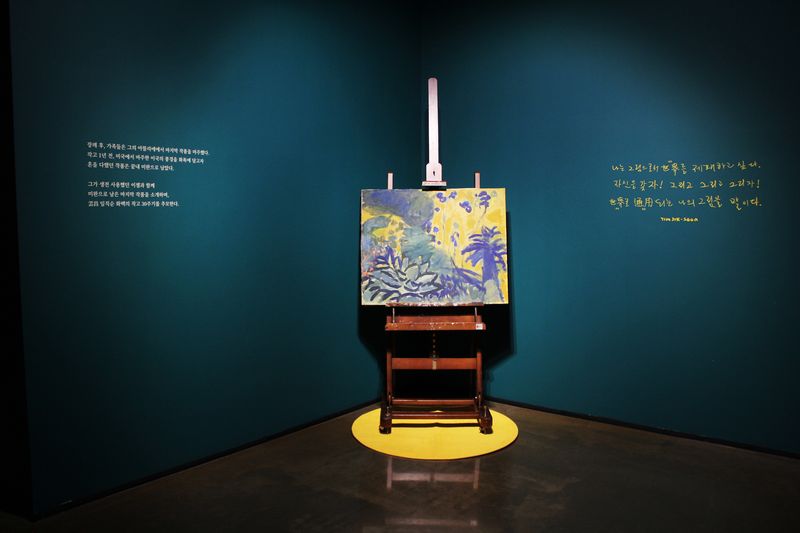
According to Seoul Museum, the special exhibition ‘I Want to Paint the Inner World,’ marking the 30th anniversary of Im Jik-sun’s death, opens on the 7th at the museum’s main building in Buam-dong, Jongno-gu, Seoul. The exhibition looks back at the work of the artist known as ‘the painter of flowers and women’ through around 100 works, including about 80 oil paintings, and personal effects.■ Unfinished Posthumous Work and Traces of the Studio‘Palm Tree’ was a work in which he was painting a landscape he had seen in the United States in 1995, the year before his death. Im Jik-sun, who was battling kidney disease, continued working until his death in July 1996. The painting his family came upon in his studio after the funeral is included in this exhibition.
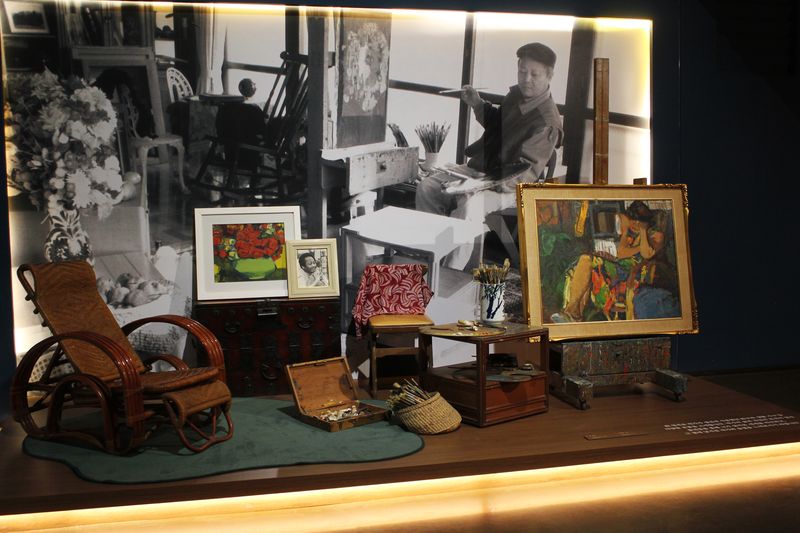
Around 30 personal items, including a palette with dried paint, brushes and furniture, are also on display. The exhibition presents the rattan armchair on which models sat for portraits alongside works featuring the chair. Comparing the objects in the paintings with the real ones offers a glimpse of how the artist brought everyday spaces onto the canvas.
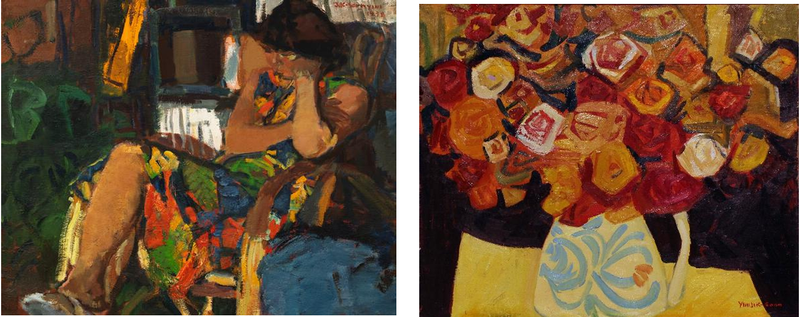
In ‘Seated Figure of a Woman’ (1978), the figure’s clothing and surrounding objects interlock in planes of color. The chair can be read both as a practical object supporting the model’s pose and as part of the composition that connects the figure with the interior space.
In the 1980s, he painted portraits while observing female models in the mornings; after lunch, he painted still lifes, arranging flowers in vases or jars. His wife prepared flowers for his work, and the vases he used at the time are also displayed alongside related works.
Letters to his family, newspaper articles, illustrations and cover art offer a glimpse of his life outside the studio. The exhibition considers not only his achievements as an artist but also the time he spent painting and sharing everyday life with his family.
The exhibition proceeds chronologically from the 1960s through the mid-1990s. His compositions, which once placed figures and flowers in carefully structured arrangements, gradually shifted toward simplifying forms and emphasizing color, line and brushwork. The exhibition title comes from his words, ‘I want to paint the inner world.’
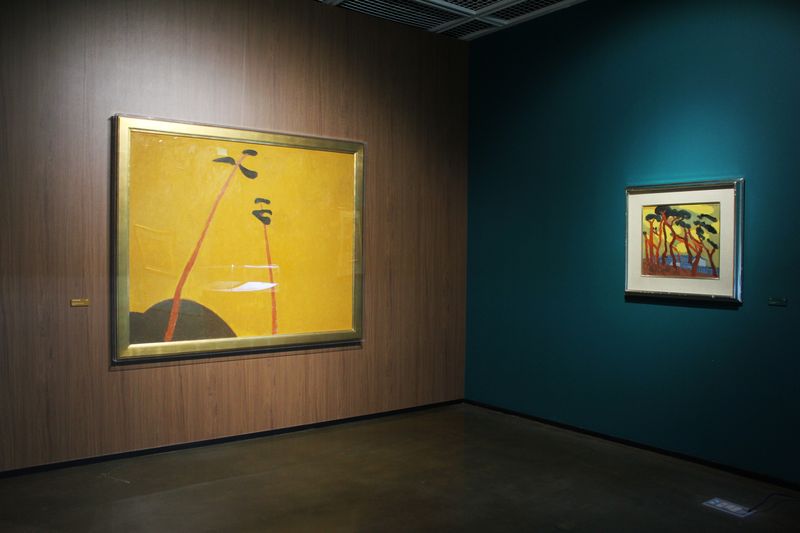
The petals in ‘Rose’ (1981) are distilled into short brushstrokes and blocks of color, while the mountain in ‘Mountain Scene’ (1991) is rendered in planes of red and black lines. Though the subjects differ, the approach of interpreting them through the relationships between color and line remains consistent. It is worth considering not only what he painted, but also how color divides and connects the picture surface.
The landscapes are grounded in sketches and watercolors made on location. During his travels, he observed and recorded mountains, seas and ports firsthand, then developed them into oil paintings in his studio. Some of the around 1,000 sketches gathered for the exhibition have been selected to show his working process.
The exhibition runs through February 14 next year in Exhibition Room 2 on the third floor of the main building. Visiting hours are 10 a.m. to 6 p.m.; the museum is closed on Mondays and Tuesdays.
During the same period, the second floor of the main building will host the contemporary art exhibition ‘Mostly So, Not So,’ featuring around 150 works by 28 artists. The annex will present ‘Living Together: Gathering, Becoming Something,’ a sculpture exhibition by Kim In-tae, Lee Il and Jo Jin-gyu, through December 27.
[email protected] Jang In-seo Reporter