U.S., China Discuss Reciprocal Visits to Nuclear Facilities: Could They Be a “Cornerstone” for Trilateral Nuclear Arms Reduction Talks?
- Input
- 2026-10-07 01:03:08
- Updated
- 2026-10-07 01:03:08
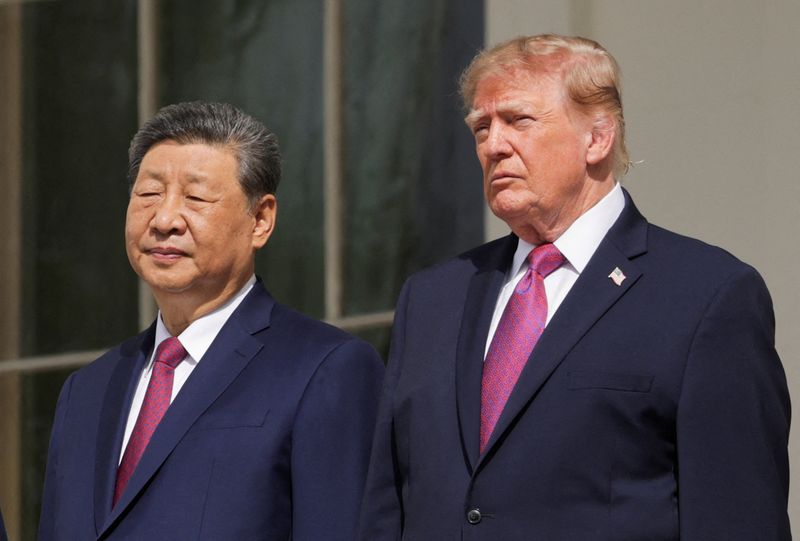
[Financial News] The United States and China are reportedly discussing reciprocal visits to major nuclear-related facilities in their respective countries to control the arms race and build mutual trust.
On the 6th (local time), CNN and other foreign media outlets, citing multiple sources, reported that the administration of U.S. President Donald Trump and Chinese authorities had discussed the idea of reciprocal visits to nuclear facilities at in-person working-level meetings this year. The proposal was first put forward by China, and the two countries plan to flesh out the discussions at further in-person meetings over the next few months.
The core of the discussions is for each side to visit and inspect U.S. national laboratories under the Department of Energy and corresponding facilities in China. The U.S. side is also open to discussing reciprocal visits to the two countries’ nuclear test sites.
The move comes amid a gap in the global nuclear arms control framework following the expiration last February of the last nuclear arms reduction treaty between the United States and Russia, the New Strategic Arms Reduction Treaty (New START). The United States has sought to replace New START with a “trilateral nuclear arms reduction treaty” involving China as well as the United States and Russia, but China has opposed the idea, saying, “Our nuclear arsenal is not at a level comparable to those of the United States and Russia.” The United States is currently estimated to have about 5,000 nuclear warheads, compared with about 600 for China.
Experts said that if the discussions on reciprocal visits come to fruition, they could provide an important stepping stone toward trilateral nuclear arms reduction talks.
However, considerable skepticism remains about China’s real intentions. Gerald Brown, a researcher at the Council on Foreign Relations (CFR), said, “China’s nuclear buildup is closely tied to political goals, including its ambitions to invade Taiwan,” and warned that China may be using nuclear talks as a lure to secure political concessions from the United States on issues such as Taiwan. Another former official also noted, “This may be a superficial proposal, with China trying to appear magnanimous to set the tone ahead of the summit.”
In fact, the issue of reciprocal visits was not discussed at the U.S.-China summit held during Chinese President Xi Jinping’s visit to the United States last month, even though President Trump raised the need for trilateral arms reduction talks. Still, with Trump and Xi scheduled to meet in succession in November and December this year, observers see a possibility that further working-level discussions will make progress before then.
Meanwhile, the United States has not dropped its suspicion that China conducted a covert, low-yield nuclear test in 2020 using a method designed to evade seismic detection. To verify this, the U.S. National Nuclear Security Administration (NNSA) recently conducted a 16-ton non-nuclear underground explosion test in Nevada, and plans to share its verification approach with the five permanent members of the U.N. Security Council (P5) later this year.
[email protected] Park Ji-hyun Reporter