“Historical distortion” vs. “Watch it before you speak” ... Film “Assassin(s)” sparks head-on clash between ruling and opposition parties at parliamentary audit
- Input
- 2026-10-06 23:10:35
- Updated
- 2026-10-06 23:10:35
[Financial News] The film “Assassin(s),” which deals with the 1974 shooting of Mrs. Yuk Young-soo, became a hot-button issue in political circles from the very first day of the National Assembly’s parliamentary audit. The ruling People Power Party strongly criticized the spending of related funds and promotional efforts, calling the film a “serious distortion of history,” while the opposition Democratic Party of Korea pushed back, accusing the ruling party of “portraying cinematic imagination as factual distortion.” Tensions flared across several standing committees.
■ Political Affairs Committee: “Inappropriate to promote it with veterans ministry funds” vs. “Shameful to demand that screenings be canceled”
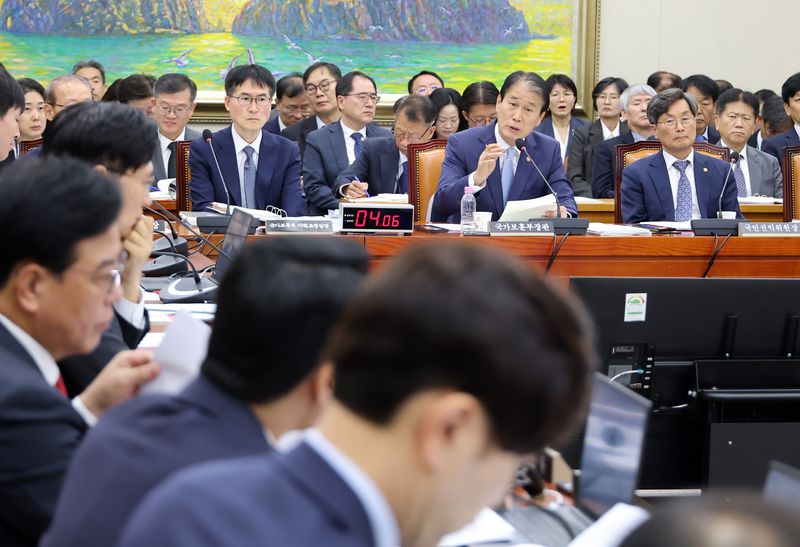
At the National Assembly Political Affairs Committee’s audit on the 6th, the Veterans Support Center under the Ministry of Patriots and Veterans Affairs came under scrutiny for selecting the film as a free screening and promoting it.
People Power Party lawmaker Song Eon-seok criticized the move, asking, “Does it make any sense to promote a film with such serious historical distortions by sending text messages in the ministry’s name?” Fellow party member Cho Jung-hoon also said, “Freedom of expression can be recognized in novels or works of fiction, but using public funds to show it to veterans is an entirely different matter,” adding, “Film selections should reflect values related to veterans affairs.”
In response, Democratic Party of Korea lawmaker Lee Kang-il countered, “The film does not alter in any way the fact that Moon Se-gwang fired the gun, and its main subject is the suppression of the press by state institutions.” Fellow party member Han Min-soo, referring to People Power Party lawmakers’ call for the Singapore International Film Festival to withdraw the film from its lineup, pointedly asked, “What will filmmakers say about South Korea’s standing? Isn’t that embarrassing?”
■ Legislation and Judiciary Committee: “A depraved film about intervention by higher-ups” vs. “There’s not even a hint of that—watch it as a movie”
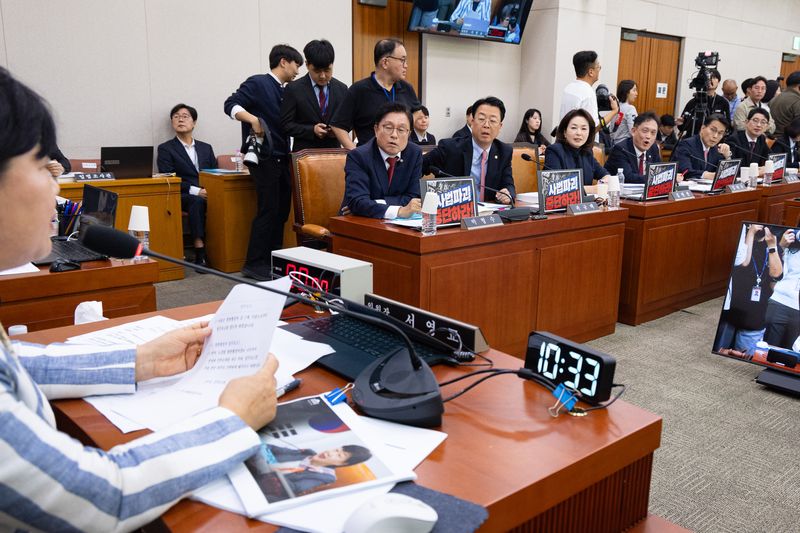
Heated exchanges also broke out at the National Assembly’s Legislation and Judiciary Committee over film investments by state-run institutions, among other issues.
People Power Party lawmaker Joo Jin-woo took issue with the plural in the film’s title, “Assassin(s),” and strongly denounced it as “a depraved film built around the notion that President Park Chung-hee could ultimately have been behind the assassination of Mrs. Yuk Young-soo.” He went on to say that “the Korea Development Bank, the Industrial Bank of Korea and Korea Venture Investment Corporation investing 40.4 billion won all at once amounts to intervention by higher-ups and abuse of authority,” and raised the need for legal action.
The opposition, meanwhile, dismissed the ruling party’s actions as excessive political attacks. Seo Young-kyo, the Democratic Party of Korea chair of the Legislation and Judiciary Committee, retorted to Rep. Joo, “Are you saying this after watching the film? There isn’t a single bit of that in it,” adding, “Don’t distort the film; watch it as a film.” Rep. Park Ji-won, a former director of the National Intelligence Service, also denied the ruling party’s claim that North Korean National Defense Commission Chairman Kim Jong-il had once admitted to being behind the attack and apologized, saying, “Nothing like that came up when I was director of the National Intelligence Service.” The two sides traded barbs.
The film “Assassin(s),” which stirred controversy at the audit, is based on the shooting of Mrs. Yuk Young-soo at the Liberation Day commemoration ceremony on August 15, 1974. With reports that the film includes a plot exploring the possibility of involvement by powerful state agencies at the time, the dispute appears to be escalating into an ideological battle in political circles.
[email protected] Park Ji-hyun Reporter