Deputy PM Lee: “The MOU typo was used as a negotiating tool”; Industry: “Alaska’s strategic value” ... Government takes a defensive stance
- Input
- 2026-10-06 21:55:30
- Updated
- 2026-10-06 21:55:30
[Financial News] The government mounted a strong defense against the National Assembly’s sustained offensive over strategic investment in the United States. It countered criticism over the wording of the remittance deadline in a controversial memorandum of understanding (MOU), saying, “The error worked in our favor, so we used it as leverage in negotiations.” It also signaled a more open stance on reconsidering the Alaska liquefied natural gas (LNG) project, previously rejected for lack of commercial viability, saying its “strategic value from a national security perspective has grown since the war in the Middle East.”
At parliamentary audits by the National Assembly Planning and Finance Committee and the Trade, Industry, Energy, SMEs and Startups Committee on the 6th, opposition lawmakers continued to criticize the appropriateness of pursuing investment in the United States.
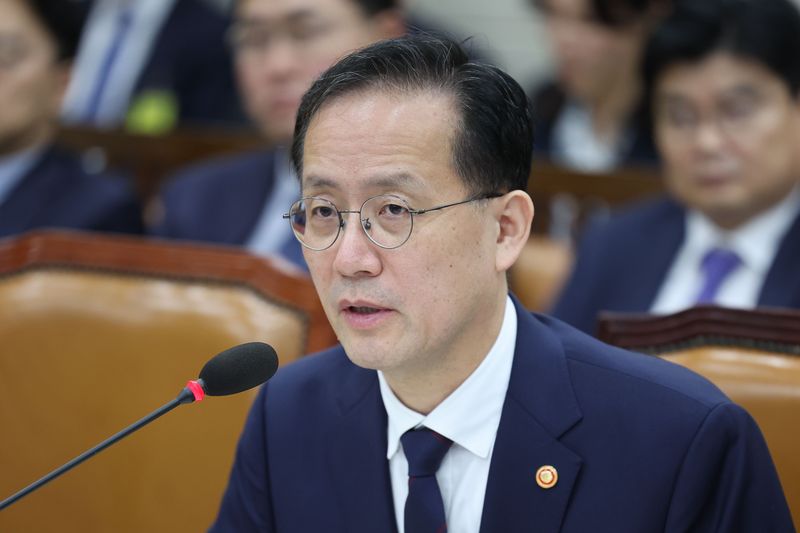
At the Planning and Finance Committee’s audit, suspicions of a behind-the-scenes deal came under scrutiny after an immediate remittance was made despite a US-proposed MOU draft incorrectly stating that the transfer would take place “after 45 business days.” Deputy Prime Minister Lee Hyeong-il explained, “It is true that there was an error in the US draft, but at the nonbinding MOU stage, there was no reason for us to ask first for wording that worked in our favor to be changed.” He said South Korea used this position in the subsequent formal negotiations to resist persistent US demands for an early remittance and gain the upper hand by setting 45 days as the final deadline.
The audit by the Trade, Industry, Energy, SMEs and Startups Committee focused on why the Alaska LNG project (“Project North”) was being reconsidered. Minister of Trade, Industry and Energy Kim Jeong-gwan said, “It is true that the project was not pursued as recently as November last year because it had low commercial viability, but it has gained new strategic value amid the war in the Middle East.” He explained that securing LNG produced in Alaska had become urgent amid supply and demand uncertainty stemming from the Middle East and disruptions to maritime logistics, and that circumstances had changed, with the US federal government now directly leading the project.
The government also emphasized that commercial viability requirements had been met in connection with the $2.4 billion advance remittance for a Texas power plant confirmed earlier in the day. Deputy Prime Minister Lee dismissed concerns, saying the project’s viability had been assessed based on a plan to invest a total of $22.3 billion in the Texas project and recoup $45.4 billion by 2052, and that all required reporting procedures to the National Assembly had been completed. He also drew a line on large-scale follow-on investments, including a request for a $10 billion advance remittance within the year for a nuclear power plant construction project (“Project Power”), saying, “A decision can be made only after commercial reasonableness has been finally verified and all procedures under domestic law have been completed.”
Meanwhile, that day’s Planning and Finance Committee audit also saw a series of mea culpas over domestic livelihood and financial issues, alongside investment in the United States.
Deputy Prime Minister Lee and First Vice Minister of Economy and Finance Kwon Dae-young formally apologized for the large losses suffered by individual investors following the introduction of single-stock leveraged exchange-traded funds (ETFs), saying, “As policymakers, we take responsibility for the considerable losses ultimately caused to investors, and we are sorry.” Regarding Seoul apartment prices, which have risen for 86 consecutive weeks, they said, “We feel the weight of the situation,” and emphasized that they would seek housing stability by raising the share of rental housing in the housing stock from its current level of around 8% to at least 10%.
[email protected] Park Ji-hyun Reporter