Betting on 2x Samsung Electronics and Hynix: Retail investors lose 2.3242 trillion won in two and a half months
- Input
- 2026-10-07 05:30:00
- Updated
- 2026-10-07 05:30:00
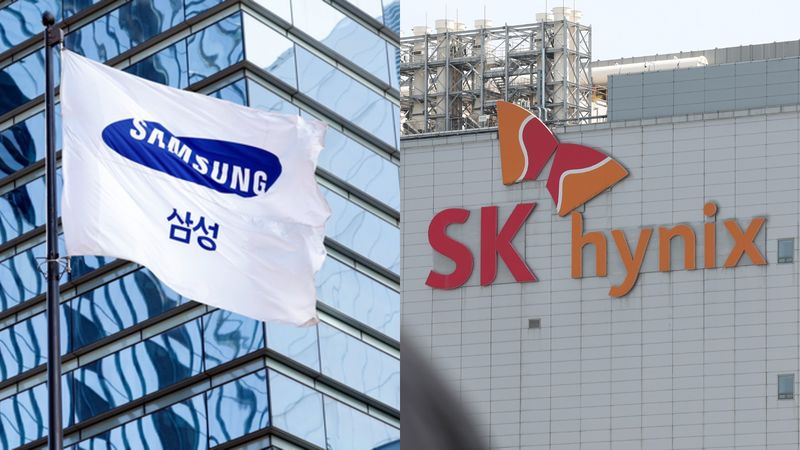
[Financial News] Realized losses by individual investors in leveraged and inverse exchange-traded products (ETPs) designed to track twice the daily returns of individual stocks such as Samsung Electronics and SK hynix topped 2.3 trillion won just about two and a half months after the products were launched.
According to data submitted by the Financial Supervisory Service to the office of Choi Eun-seok of the People Power Party on the 6th, individual investors recorded 2.3242 trillion won in realized trading losses through 10 major securities firms designated as comprehensive financial investment business entities between May 27, when single-stock leveraged and inverse ETPs were first listed, and August 14.
The 2.3242 trillion won figure includes only losses realized when the products were actually sold. It excludes valuation losses on products that investors still hold without having sold. Also excluded are transactions through small and midsize securities firms outside the 10 firms covered by the survey, as well as losses incurred after August 14.
Therefore, this figure cannot be taken as the total losses suffered by all individual investors. It counts only realized losses from trades completed during a specific period at some securities firms. The losses could be greater if unrealized losses on products still held are included.
A separate estimate covering the market as a whole put the losses much higher. In July, international investment bank Citi Global Markets analyzed South Korea’s leveraged ETF market and estimated that cumulative losses for individual investors could reach up to around 56 trillion won. However, this was an estimate based on analysis, not a tally of all actual transactions. Its coverage and calculation method differ from those used by the Financial Supervisory Service to calculate the 2.3242 trillion won figure.
The structure of leveraged products themselves is also a factor behind the rapid accumulation of losses. Single-stock leveraged products are designed to track twice the daily return of a particular stock. They magnify gains on days when the underlying stock rises, but losses can likewise grow to around twice their usual level when the share price falls.
When a share price repeatedly rises and falls instead of moving in one direction, returns can be worse than investors expect. Because leveraged products are recalculated daily based on returns, the outcome of holding them over the long term does not match simply doubling the underlying asset’s overall gain or loss. This is why the so-called “negative compounding effect,” in which losses can accumulate in volatile markets, occurs.
The products’ prices also fluctuated sharply. Samsung Asset Management’s “KODEX SK hynix Single Stock Leverage” rose to 44,385 won on June 23, but fell as low as 6,000 won intraday on July 29. It closed at 10,700 won on the 6th, about 76% below its June peak.
As concerns about losses among individual investors grew, financial authorities also tightened related regulations. The Financial Services Commission and other agencies temporarily suspended new listings of single-stock leveraged and inverse products starting July 16, when stock market volatility increased.
The requirements for entering the market were also tightened. The minimum deposit requirement was raised to 30 million won in cash from July 31, and the minimum order size is set to increase to 20 shares starting in November.
[email protected] Han Seung-gon Reporter