[Editorial] The outdated practice of summoning business leaders to parliamentary audits to humiliate them must end
- Input
- 2026-10-06 18:27:35
- Updated
- 2026-10-06 18:27:35
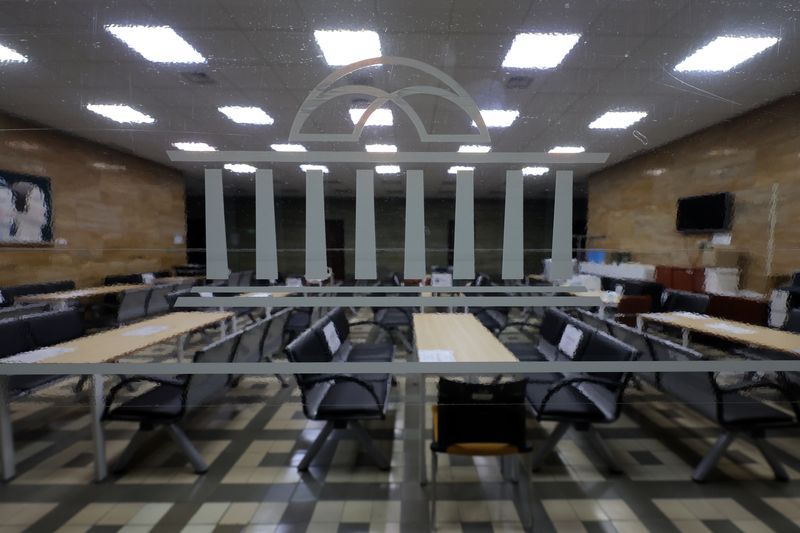
In particular, the annual summoning of business leaders is once again being repeated this year. Attempts to summon chaebol chairmen have also continued. Political circles again sought to have Lee Jae-yong, chairman of Samsung Electronics, and Chey Tae-won, chairman of SK Group, testify as witnesses, saying they would ask whether the government exerted undue pressure during the decision-making process for investments in the Honam semiconductor cluster. Both men were ultimately left off the final list.
Even before the audit begins, politicians’ attempts to wield influence over companies by determining whether their group chairmen must attend are no different from last year. Allegations surrounding major government-led investment projects do need to be investigated. But the first parties to scrutinize should be the government authorities that formulate and lead policy. Calling in the group chairmen who made the investment decisions first, however, makes it difficult to avoid the impression that this is a performance staged to attract public attention under the pretext of establishing the facts.
Of course, even a chaebol chairman can be called as a witness or a reference witness at a parliamentary audit when the matter is serious. In the case of the personal information leak, public anger toward Coupang is high and the issue has attracted enormous attention, so the key person responsible can be called in to examine the matter. Nor does it seem open to dispute that the top official should be called in to address the harm suffered by store tenants as a result of the Homeplus crisis, and to answer questions about where responsibility lies and the company’s position going forward.
The issue lies in the intention behind calling businesspeople as witnesses or reference witnesses. If the aim is to fully disclose at the parliamentary audit the details of current issues directly affecting consumers and the public, then company heads should properly be required to attend, whatever the reason. But past examples show that well-known businesspeople were often deliberately called as witnesses to attract public attention, only to be routinely shouted at and reprimanded.
It is reasonable to ask a group’s top official about overall responsibility for the business and its decision-making process. But in reality, it is difficult to get answers about specific contracts or practical procedures. Even so, politicians compete to put businesspeople on the witness stand, regardless of the circumstances.
Ultimately, the purpose of the parliamentary audit is to look after people’s livelihoods. Avoiding unnecessary interference in companies’ business activities is also, in a broader sense, a way of looking after people’s livelihoods. Companies must work hard to create jobs and generate investment through their business activities. The people responsible for running them are busy without a moment to spare. They have no time to waste being summoned to a parliamentary audit for political purposes.
The quality of questioning for witnesses who attend must also improve. Questioning time at a parliamentary audit is a limited resource. Sometimes, after going to great lengths to summon a businessperson, lawmakers ask a few pointless questions and then wrap things up. It is also common for them to barrage witnesses with questions that go beyond what they can answer. The criteria for selecting witnesses need to be corrected as well: witnesses should be chosen primarily from among the working-level officials directly responsible for the matter.
The purpose of questioning should also be made clear to reduce unnecessary demands for attendance. Wasteful selection of businesspeople as witnesses should be kept to a minimum. There may be things to ask businesspeople, but the practice of summoning them without cause for political reasons and humiliating them must stop.