From the Korea Traditional Orchestra Festival to the Noon Concert: Korean Traditional Orchestral Music Reinvents Itself in October
- Input
- 2026-10-07 14:00:59
- Updated
- 2026-10-07 14:00:59
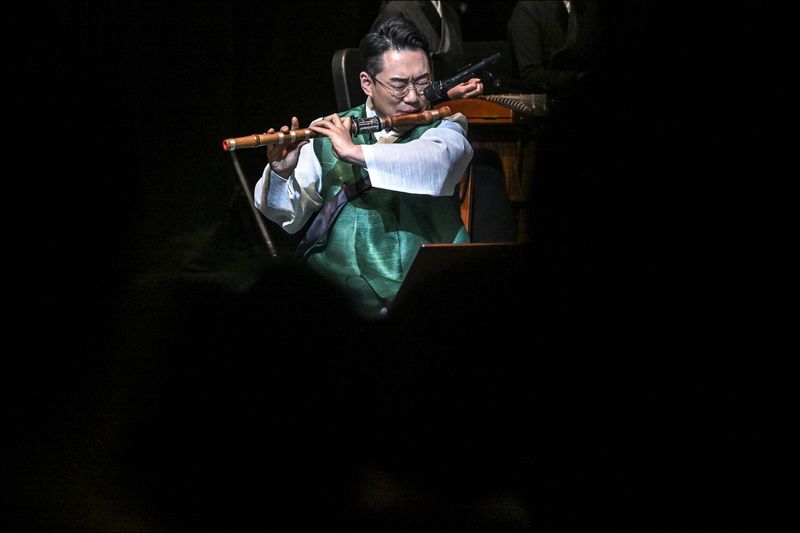
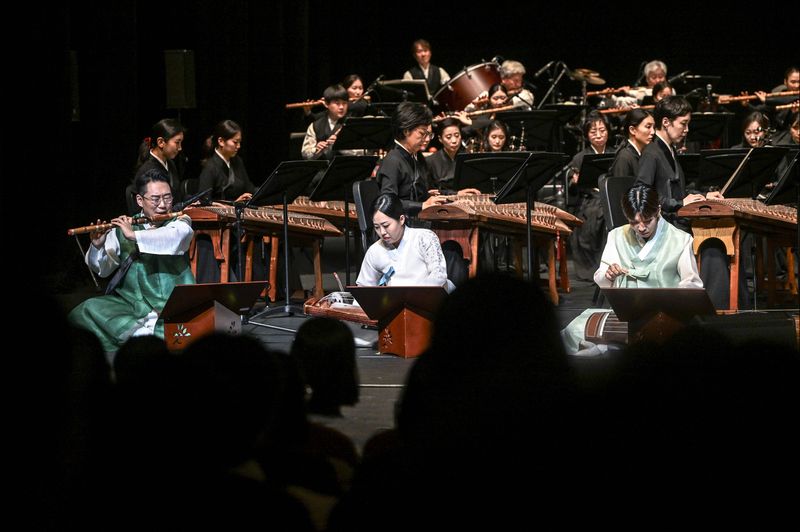
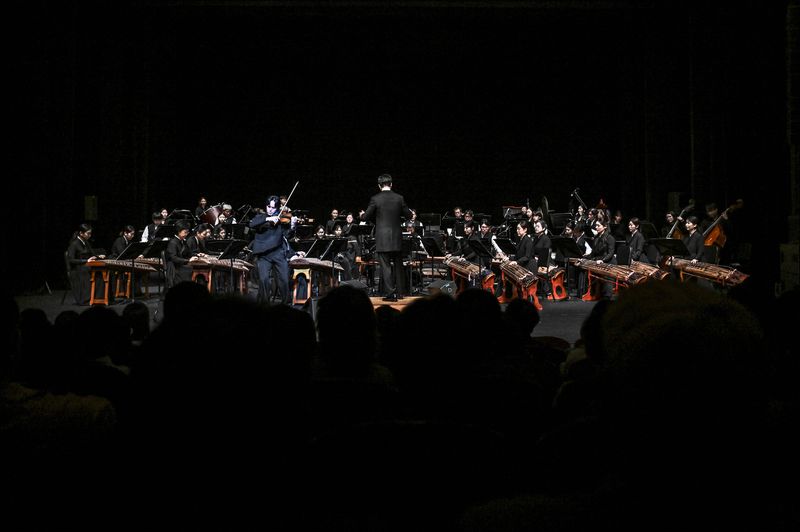
[Financial News] Korean traditional orchestral music is embracing not only traditional instruments from Japan, Mongolia and China, but also the cello, beatboxing and folk music. Two performances that cross genres and borders will meet audiences one after another in downtown Seoul in October.
The 2026 Korea Traditional Orchestra Festival, featuring leading traditional orchestras from across the country, opened on the 6th at the Sejong Center for the Performing Arts M Theater in Seoul. Running for 12 days through the 17th, the festival brings together 11 public and private organizations to showcase the potential for Korean traditional orchestral music to expand.
The National Orchestra of Korea’s traditional music brunch concert, Noon Concert, will be held at 11 a.m. on the 15th at Haeoreum Grand Theater at the National Theater of Korea. Launched in 2009, it is a signature regular program at the theater, now marking its 18th year.
KBS Traditional Orchestra kicks off the festival
At an earlier production presentation for the 2026 Korea Traditional Orchestra Festival, Ahn Ho-sang, president of the Sejong Center, said, “I hope this festival will help Korean traditional music grow another step,” adding, “I hope it will become a forum that broadens the reach of Korean traditional orchestral music and delivers an important message pointing toward its future direction.”
Festival steering committee chair Park Beom-hoon also said, “The range has expanded considerably as various instruments have performed alongside Korean traditional orchestral music,” adding, “I hope an era of orchestral music will dawn in which music imbued with Korean sensibilities is shared with people around the world.”
The opening concert was launched by the KBS Traditional Orchestra, which has been part of the festival since its beginning. The following day, the 7th, the Pyeongtaek City Traditional Music Orchestra will take the stage with “Sounds of Asia: Origins and Currents of Asia” as its theme. The performance places Korean traditional orchestral music at its center, weaving the traditional instruments and musical sensibilities of Japan, Mongolia and China into a single program. Japanese conductor Yasushi Inada will lead the orchestra. Drawing on his experience conducting the National Orchestra of Korea’s “Best Collection III” in 2017, he will bring Korean traditional orchestral music together with traditional music from across Asia. Lee Sang-gyun, head of the Pyeongtaek Cultural Foundation, described it as “a performance that uses music to explore how traditional music from Asian countries meets and communicates, centered on Korean traditional orchestral music.”
On the festival’s closing day, the 17th, the Seoul Metropolitan Traditional Orchestra will bring the festival to a close with beatboxer Bigman. The orchestra will give the world premiere of a new work by composer Lee Il-woo for beatboxing and Korean traditional orchestra, showcasing an unusual blend of traditional orchestral music and modern rhythms.
“The expansion of genres is inevitable in contemporary music,” said Lee Seung-hwon, head of the Seoul Metropolitan Traditional Orchestra. “Through various experiments, including performing with a beatboxer, we have prepared a stage that can bring Korean traditional orchestral music closer to the public.”
Sunflower’s greatest hits, reimagined for Korean traditional orchestra
Park Gyeong-hyeon, who has served as a member of the National Orchestra of Korea and as principal conductor of the Gyeongbuk Provincial Traditional Music Orchestra, will conduct the National Orchestra of Korea’s traditional music brunch concert, Noon Concert. Announcer Lee Geum-hee will provide commentary.
The opening segment, “Noon Begins,” features “Hwarang,” composed by Baek Gyu-jin and inspired by the Hwarang spirit that helped Silla unify the Three Kingdoms. Its powerful melodies and dynamic rhythms portray a spirit of challenge and vigor, as well as an unwavering commitment to the community.
In “Noon Collaboration,” Yeon Je-ho, the orchestra’s principal percussionist, selected through an internal audition, will perform “Flame,” a percussion concerto composed by Lee Jeong-ho and based on the rhythms of Gyeonggi-do dang gut.
“Noon Requests,” which presents audience stories and song requests in Korean traditional orchestral arrangements, will feature Yang Hee-eun’s “Autumn Morning.”
The popular segment “Noon Star” features the folk duo Sunflower. For this performance, the duo will present signature songs written and composed by Lee Ju-ho—including “With Love,” “A Person Who Gives Happiness” and “Please Say Something”—in arrangements for Korean traditional orchestra.
The final segment, “Noon Choice,” features “Taesan,” composed by Im Gyo-min and selected by conductor Park Gyeong-hyeon. The title means a towering mountain, and the piece uses it as a metaphor for life’s trials, expressing through grand melodies the human spirit that overcomes hardship and rises again.
[email protected] Shin Jin-a Reporter