Jeju 4.3 Special Act returns to National Assembly... Deleting “riot” wording and expanding victim eligibility among key issues
- Input
- 2026-10-06 17:32:26
- Updated
- 2026-10-06 17:32:26
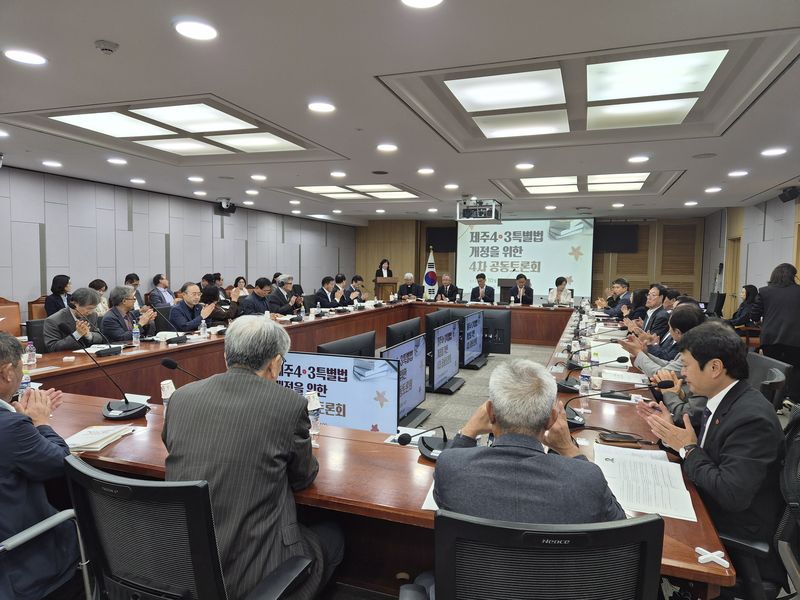
【Financial News, Jeju = Reporter Jeong Yong-bok】 As procedures to restore the honor of Jeju 4.3 victims continue through state compensation and ex officio retrials, follow-up legislative discussions have returned to the National Assembly, focusing on revising the “riot” wording that remains in the law and expanding the scope of those recognized as victims and those eligible for retrials.
The 4th Joint Forum on Amending the Jeju 4.3 Special Act was held in Seminar Room 1 of the National Assembly Members’ Office Building in Seoul on the 6th. It was co-hosted by Jeju Special Self-Governing Province, the Jeju Special Self-Governing Provincial Council, the Jeju Special Self-Governing Provincial Office of Education, lawmakers Kim Han-gyu, Moon Dae-lim, Kim Seong-beom and Jung Chun-saeng, and the joint council of Jeju 4.3-related institutions and organizations.
The forum was co-organized by the Jeju 4.3 Victims’ Families Association, the Jeju 4.3 Peace Foundation, the Jeju 4.3 Pan-National Committee and the Jeju 4.3 Commemorative Projects Committee. Around 50 people attended, including Byeon Yeong-geun, head of Jeju Province’s Bureau of Special Autonomy and Administration; lawmakers representing Jeju; bereaved family members, including Kim Chang-beom, chair of the Jeju 4.3 Victims’ Families Association; and representatives of 4.3 organizations.
The starting point of the debate is Article 2 of the current Special Act. It defines the Jeju 4.3 Incident as “the disturbances that occurred on April 3, 1948, with March 1, 1947 as the starting point, and the armed clashes that took place on Jeju Island through September 21, 1954, and the victimization of residents during those clashes and their suppression.”
Since the Special Act was enacted in 2000, the system has advanced through the government’s adoption of a truth-investigation report, an official presidential apology, state compensation and ex officio retrials. But the wording “riot” remains unchanged. A key task raised in the latest discussions was to remove this wording and determine how to reflect 4.3’s historical character in the law’s definition.
“Proper naming” means deciding what to call Jeju 4.3 in a way that reflects its historical character. Lee Jae-seung, a professor at Konkuk University Law School, proposed changing “Jeju 4.3 Incident” to “Jeju 4.3 Uprising.” However, proper naming requires historical, social and legal assessment, as well as consensus among bereaved families and the island community.
The professor grouped the issues in amending the Special Act into nine areas: proper naming and the definition of 4.3; expanding the categories of victims; exclusion of victims; retrials; penalties for distortion and slander; revocation of honors awarded to perpetrators; medical care and welfare; support for the bereaved families’ association; and medical information on bereaved families.
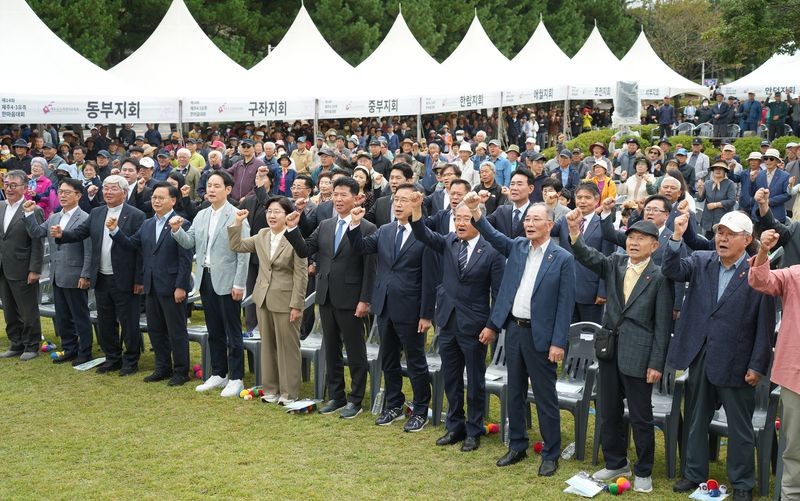
Yang Seong-ju, standing vice chair of the Jeju 4.3 Victims’ Families Association, also proposed deleting the current “riot” wording and incorporating into the law’s definition the contents of the Jeju 4.3 Truth Investigation Report adopted by the government in 2003. He also argued that, rather than leaving the name to a handful of experts, bereaved families and the island community should go through a thorough process of deliberation and public discussion.
How broadly to recognize victims is also a point of contention. The current law defines victims as those who died, went missing, suffered lasting disabilities or were convicted. It was noted that people who were forcibly detained at police stations or village halls at the time and subjected to torture and assault, but have no sentencing records, are unlikely to be recognized under the current categories.
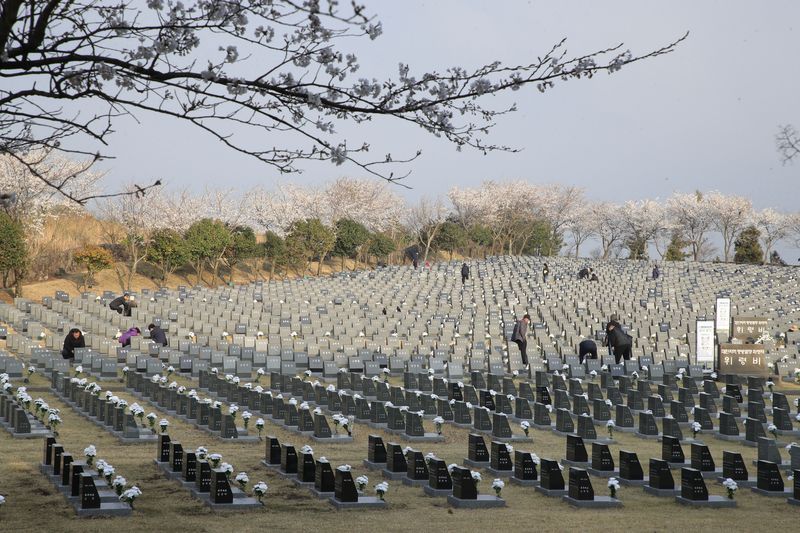
Some analyses suggest that the remaining gaps have become more apparent as compensation and retrials have progressed considerably. According to Jeju Province, as of August 31, 15,286 victims of 4.3 and 128,295 bereaved family members had been reviewed and approved, and compensation had been paid to 9,563 victims.
Efforts to restore the honor of victims of military trials are also continuing. Of the 2,530 people referred to military trials, 2,206 were acquitted: 1,749 through ex officio retrials and 457 following individual petitions. Among victims of civilian trials, 635 were acquitted: 542 through ex officio retrials and 93 through individual retrials.
One unresolved issue is the phrase “as a victim” in the provision on special retrials. It was noted that even victims of military trials could face restrictions in retrial proceedings if they have not been officially recognized as victims or their identities are difficult to establish. A presentation argued that eligibility for retrials should be expanded to reflect the illegality of the military trials and the aim of restoring the honor of those harmed by them.
Whether to impose criminal penalties for distorting 4.3 and disseminating false information is another major issue in the legislative process. The current Special Act says that false information about 4.3 must not be disseminated with the aim of slandering victims or their families and damaging their honor, but it does not provide separate penalties that directly punish such conduct.
The proposed amendments submitted to the National Assembly also differ in their approach to penalties and their severity. A bill by lawmaker Jung Chun-saeng provides for up to five years in prison or a fine of up to 50 million won for disseminating false information in certain ways. A bill introduced in 2024 by Wi Seong-gon, now governor, when he was a National Assembly member, provides for up to seven years in prison or a fine of up to 70 million won for denial, slander, distortion, fabrication or dissemination of false information. A key issue for the National Assembly is how clearly to define the scope of application while balancing historical truth, protection of victims’ honor and freedom of expression.
Some argued that a legal basis should be established to revoke honors awarded in connection with the suppression of 4.3. At the same time, it was noted that objective review criteria would first be needed to determine whose actions, and what actions, the state would officially deem to warrant responsibility.
In education, it was noted that the Special Act’s definition is also connected to 4.3 education for future generations. Hong Il-sim, principal of Pyoseon High School, proposed: “Verified historical facts should be taught accurately, while laws and institutions should support the educational foundations that enable students to ask questions and make their own judgments about historical context, state power, human rights and democracy.”
Several lawmakers’ bills to amend the 4.3 Special Act are currently before the National Assembly. The forum focused on bills introduced in 2024 by Jung Chun-saeng, Moon Dae-lim and Wi Seong-gon, who was then a lawmaker, as well as an amendment introduced by Kim Han-gyu in May this year. How to reconcile the issues spread across the bills—including proper naming, the scope of victims, retrials and support for bereaved families—will be central to future legislation.
Jeju Governor Wi Seong-gon did not attend in person and sent a written congratulatory message. He stressed, “The burden of proof should not be placed solely on victims and their families,” adding, “The system should be improved so that the state takes a more active role in establishing the facts and accepting responsibility.”
Kim Chang-beom, chair of the Jeju 4.3 Victims’ Families Association, urged the government and the National Assembly to speed up legislation so that the amendment to the Special Act can pass a plenary session before the 80th anniversary of 4.3 in 2028.
[email protected] Jeong Yong-bok Reporter