[Han Dong-ha’s Herbal Medicine Anecdotes] Nine out of ten illnesses are caused by phlegm
- Input
- 2026-10-10 06:00:00
- Updated
- 2026-10-10 06:00:00
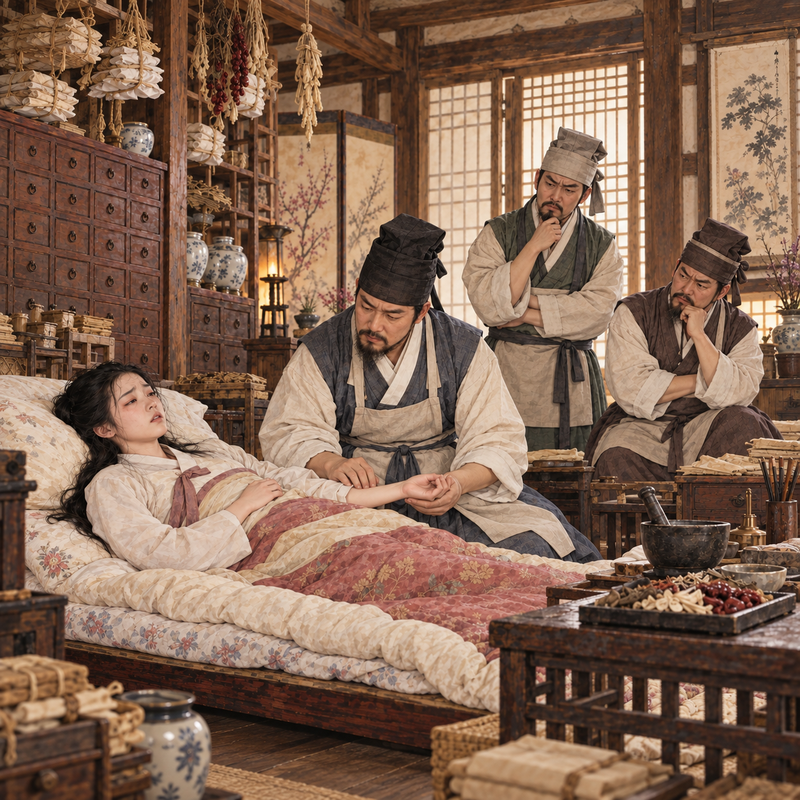
A young woman came to live in a miasma-ridden region known as a janghyang. These were remote, barren borderlands where endemic diseases were widespread and the climate was so harsh that living there was difficult. The hot, humid conditions lingered, and even the water and food were unfamiliar, so newcomers easily fell ill.
For officials, being exiled to a janghyang was practically a death sentence. Many fell ill and died soon after arriving, due to the unfamiliar climate and endemic diseases. The renowned Tang dynasty writer Han Yu and the Song dynasty poet Su Dongpo were among those who suffered after being exiled to such miasma-ridden regions in the south.
Several months had passed since the young woman had moved to the janghyang and settled there. Prolonged exposure to its unfamiliar, hot and humid climate weakened her spleen and stomach, making it difficult for her to eat properly. Strange symptoms began to appear.
One evening, when phlegm caught in her throat and her chest felt tight, the young woman hurried to a pharmacy. The physician concluded that her qi was obstructed and quickly gave her Sohaphyangwon to ease the acute symptoms. But after that, phlegm continued to rise up every evening.
One evening, a gagging sound came from the young woman’s throat, and she wildly flailed her hands and feet in the air. Her ears, eyes, mouth, nose, lips and other parts of her face trembled and twitched. She also foamed at the mouth and vomited; she could neither recognize people nor speak.
As time passed, she began raving incoherently and behaving as if she were wildly out of her mind. Her symptoms were so changeable and bizarre that it was difficult to identify them as any one illness.
After examining the young woman, the physicians said, “This is an illness caused by a longstanding roundworm infection, and she will recover only if we use a medicine for roundworms.” But the medicine did nothing to improve her condition.
Another physician examined her and reached a different diagnosis. “This is jeongan. It is a kind of madness, and there will be no improvement unless medicine for madness is prescribed.”
The young woman was prescribed medicine for madness, but her symptoms remained unchanged. Jeongan refers to a condition resembling what is now called epilepsy, in which a person may suddenly lose consciousness, convulse, or foam at the mouth.
In the end, the young woman was examined by a renowned physician in a neighboring county. After examining her, he said:
“This is a phlegm disorder. It has one underlying cause, but its symptoms can vary enormously. The young woman’s bizarre and unpredictable symptoms grew worse after dark, so they were clearly due to phlegm.”
What caught the renowned physician’s attention was not each symptom on its own, but the way several symptoms appeared together and then changed. The phlegm in her throat, tightness in her chest, vomiting, convulsions and confusion all seemed different, but he believed they shared a single underlying cause.
The other physicians, however, scoffed at the renowned physician’s diagnosis. “In all my years, I’ve never seen a phlegm disorder produce symptoms like this. Aren’t you just passing it off as the most convenient diagnosis because it’s difficult to figure out what’s wrong?”
Another physician chimed in as well. “She would improve if she took my prescription just a little longer. Isn’t it taking her condition far too lightly to expect her to get better after trying it for only a few days?”
Even so, the renowned physician did not waver. He prescribed a formula based on Yukgunja-tang, adding gardenia and Coptis to reduce the fire accumulated in her chest, and Cyperus rhizome and immature bitter orange to disperse the stagnant qi and set it moving again.
Yukgunja-tang is a well-known formula that strengthens the spleen and stomach while resolving phlegm. It is widely used for conditions associated with weak digestion and phlegm, including loss of appetite, indigestion, acid regurgitation, nausea and vomiting, chronic diarrhea, dizziness and phlegm. The physician sought not only to clear the phlegm, but also to treat the weakened spleen and stomach that were its underlying cause.
The young woman trusted the renowned physician and took a modified version of Yukgunja-tang. After she had taken about 30 doses, all the symptoms that had tormented her so severely disappeared.
There is an old saying, sipbyeong-gudam. It means that “nine out of ten illnesses are related to phlegm,” reflecting the extent to which phlegm is thought to be involved in a wide range of diseases and symptoms.
In Korean medicine, phlegm does not refer only to sputum coughed up from the throat. It also broadly includes pathological substances that form when bodily fluids fail to circulate properly and become stagnant. Phlegm in the lungs can cause coughing and sputum; when it accumulates in the chest, it can cause tightness; and when it rises, it can bring on dizziness or nausea. It was believed that if phlegm obstructed the heart’s orifices, it could cloud the mind and cause symptoms such as incoherent speech or convulsions.
Phlegm disorders in particular can easily be mistaken for other illnesses because their symptoms are inconsistent and change frequently. The young woman’s condition, too, looked like a roundworm infection or epilepsy, but the renowned physician looked beyond the outward symptoms to the phlegm and stagnant qi underlying them. Once he treated the phlegm and freed the obstructed qi, the many bizarre symptoms disappeared together.
The saying sipbyeong-gudam also means that the more complex the symptoms, the more important it is to look beyond their outward appearance and examine the underlying cause that connects them.
Source for today’s Herbal Medicine Anecdotes
<Gyeongbo Sinpyeon>A young unmarried woman came to stay in a miasma-ridden region. One evening, phlegm obstructed her throat and then clogged her chest, so she was given Sohaphyangwon as an emergency treatment. After that, phlegm kept rising up every evening. One evening, a sound came from her throat, her hands and feet moved erratically, and her ears, eyes, mouth, nose, lips and face all twitched. She could not stop vomiting, did not recognize people and could not speak. After a while, she raved wildly and behaved as if out of her mind. Other physicians thought she had a longstanding roundworm infection and wanted to use a medicine to treat it, but I alone prescribed Yukgunja-tang with ingredients to reduce fire and move qi, and she recovered after 30 doses. Some said the illness was caused by roundworms, while others thought it was epilepsy. But the bizarre, unpredictable symptoms that worsened as dusk fell were certainly due to phlegm. (A young woman came to stay in a miasma-ridden region. One evening, phlegm caught in her throat and blocked her chest, so she was given Sohaphyangwon as an emergency treatment. After that, phlegm kept rising up every evening. One evening, a gagging sound came from her throat, her hands and feet moved erratically, and her ears, eyes, mouth, nose, lips and face all trembled and twitched. She could not stop vomiting, did not recognize people and could not speak. As time passed, she raved wildly and behaved as if out of her mind. Other physicians thought it was due to a longstanding roundworm infection and wanted to use medicine to treat the worms, but I instead added ingredients to reduce fire and move qi to Yukgunja-tang. She recovered after 30 doses. Some thought the illness was caused by roundworms, while others thought it was epilepsy. But the bizarre, unpredictable symptoms that worsened after dark were certainly due to phlegm.)/Han Dong-ha, director of Han Dong-ha Korean Medicine Clinic
[email protected] Jeong Myeong-jin, medical writer Reporter