Hotel chlorine gas incident sends 59 to hospital; Jeju to overhaul pool chemical management
- Input
- 2026-10-06 17:09:34
- Updated
- 2026-10-06 17:09:34
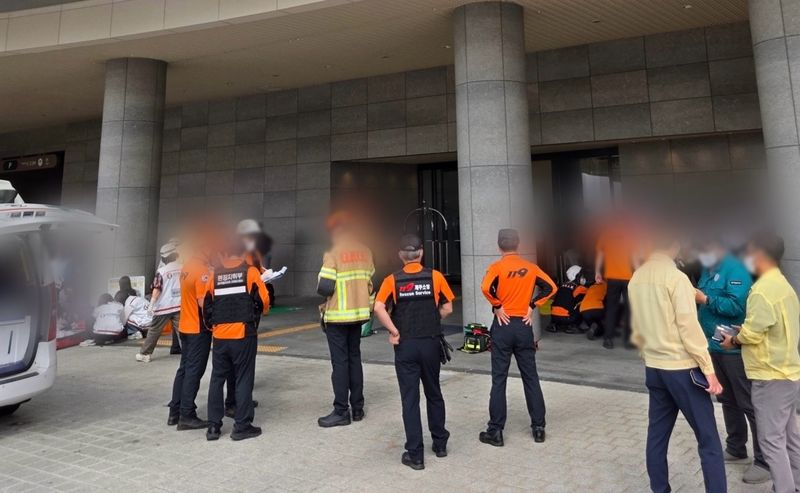
【Financial News, Jeju—Reporter Jeong Yong-bok】 The chlorine gas accident at Grand Josun Jeju, which sent 59 people including guests and staff to hospitals, has prompted a comprehensive review of chemical safety management at swimming pools and water-play facilities across Jeju.
Jeju Special Self-Governing Province said on the 6th that, after completing on-site investigations by relevant agencies and handling the substances involved in the chlorine gas accident at the pool’s mechanical room at Grand Josun Jeju in Seogwipo on the 1st, it would pursue measures to prevent a recurrence across four areas: chemicals and the environment, tourism, health, and disaster and safety management.
The cause of the accident has also become clearer. Jeju Province determined that chlorine gas was produced when sodium hypochlorite was mistakenly put into a container for pH adjuster while pool disinfectant was being replenished, causing the two chemicals to mix and react.
Sodium hypochlorite is a chemical widely used to sterilize and disinfect swimming pool water. Since the accident resulted not from the use of the chemical itself but from different chemicals being accidentally mixed during handling, verification procedures at the chemical-dosing stage have emerged as a key management priority.
At the time of the accident, chlorine gas levels in the mechanical room temporarily rose to at least 50 ppm. After ventilation, no chlorine gas was detected in the outdoor pool area, guest rooms or other locations at around 2:30 p.m. that day. After the mixed chemicals had been collected and forced-air ventilation completed, a further measurement in the mechanical room at around 10 a.m. on the 2nd also showed 0 ppm.
The cleanup and treatment of the chemicals and pool water from the accident response have also entered their final stages. About 1,000 L of the mixed chemicals was transferred to a specialist contractor in accordance with procedures for designated waste, with the Yeongsan River Basin Environmental Office to verify its final treatment. About 400 t of pool water was tested for quality, then fully drained and treated in coordination with a sewage treatment plant.
The safety measures are focused on preventing the same kind of misdosing. Jeju Province will conduct special joint inspections by the departments responsible for swimming pools and water-play facilities that use chemicals across the province.
The inspections will cover chemicals used, storage locations, labeling, dosing methods, safety training for handlers, and initial response systems in the event of an accident. For chemicals that can produce toxic gas if mixed, the point of addition will be clearly marked, and guidance materials explaining the procedure for cross-checking before adding chemicals will be distributed at facilities.
Together with the Yeongsan River Basin Environmental Office, the province will also conduct a comprehensive survey of chemical-handling practices at recreational facilities that use water. It plans to investigate the chemicals handled, storage locations and responsible staff at each facility, and provide safety training for handlers.
The field response manual for chemical accidents will also be revised. It covers the sequence from reporting an accident through evacuating people, controlling the scene, measuring hazardous substances, handling pollutants and managing the aftermath. The Yeongsan River Basin Environmental Office plans to check whether any laws or regulations were violated in connection with the accident and take any necessary administrative measures.
Response procedures at tourist accommodations will also be improved. Jeju Province will expand safety and crisis-response training for tourism accommodation staff, covering safe chemical handling, initial response, guiding guests to evacuate, reporting to relevant agencies and arranging alternative accommodations.
Jeju will also establish an emergency interpretation system, taking into account the large number of foreign tourists who visit the island. It plans to link the tourist guide-interpreter network with the 1330 tourist interpretation call center and operate a standing contact network to provide urgent interpreting at accident scenes.
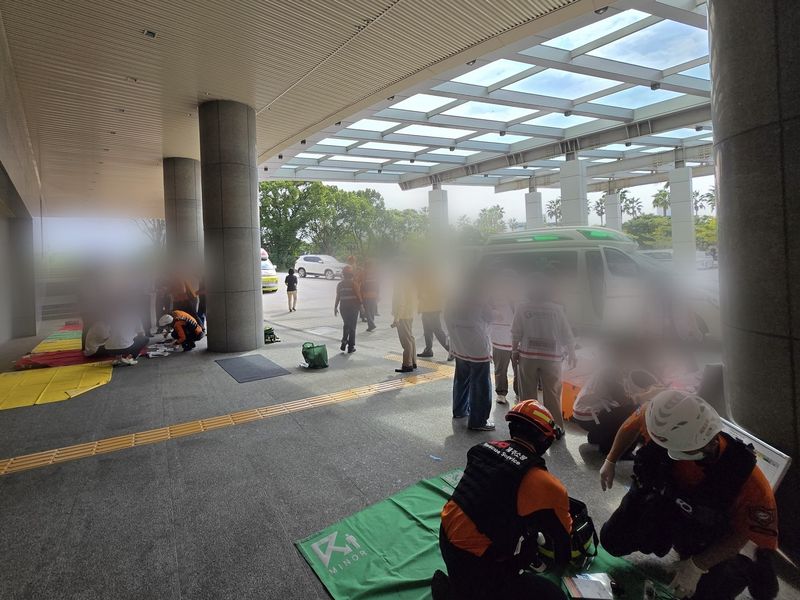
Medical response for incidents involving multiple patients will also be strengthened. Jeju Province is considering continuously leasing ambulances from private patient-transport companies and will update the emergency contact system linking rapid response teams at public health centers, medical institutions and fire services. It will also conduct on-site response drills based on scenarios involving multiple casualties.
The Gwangju Regional Employment and Labor Office plans to check how workplaces manage regulated hazardous substances and whether workers have received special safety training, and to investigate any violations.
The significance of these measures is that they extend oversight beyond inspections of a single hotel to swimming pools and water-play facilities across Jeju that use chemicals. Since the accident began with an error in the chemical-dosing process, the approach is to review not only facilities and equipment but also handling procedures, staff training and systems for evacuating guests.
Jeju Governor Wi Seong-gon said, “Facilities that handle chemicals need to be prepared both for routine management and for on-site response,” adding, “We will strengthen the system at every stage, from handling procedures to staff response capabilities.”
[email protected] Jeong Yong-bok Reporter