Jeju Governor Wi Seong-gon to Rework Food Strategy, Bundling Tourism with Agriculture, Fisheries and Livestock
- Input
- 2026-10-06 16:52:17
- Updated
- 2026-10-06 16:52:17
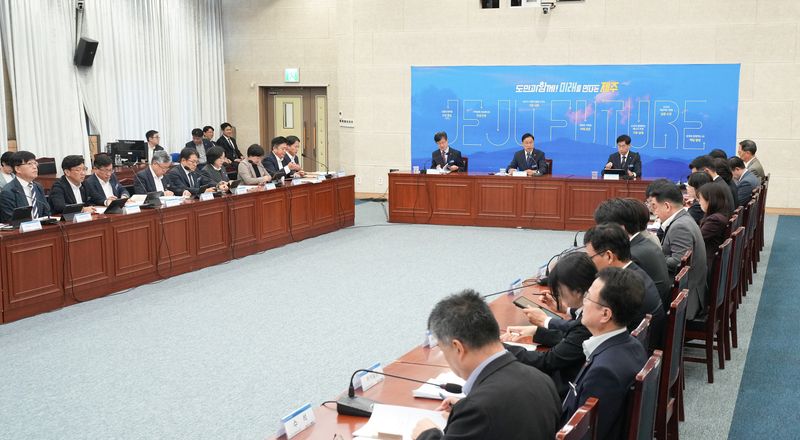
【Financial News, Jeju = Reporter Jeong Yong-bok】 Jeju is moving forward with a comprehensive plan for its food and food-products industry that brings together the preservation of local cuisine, tourism, consumption of agricultural, fisheries and livestock products, restaurant quality, and culinary workforce development. The aim is to combine culinary tourism and food policies, previously pursued separately, into an industry strategy linking ingredient production with restaurant consumption.
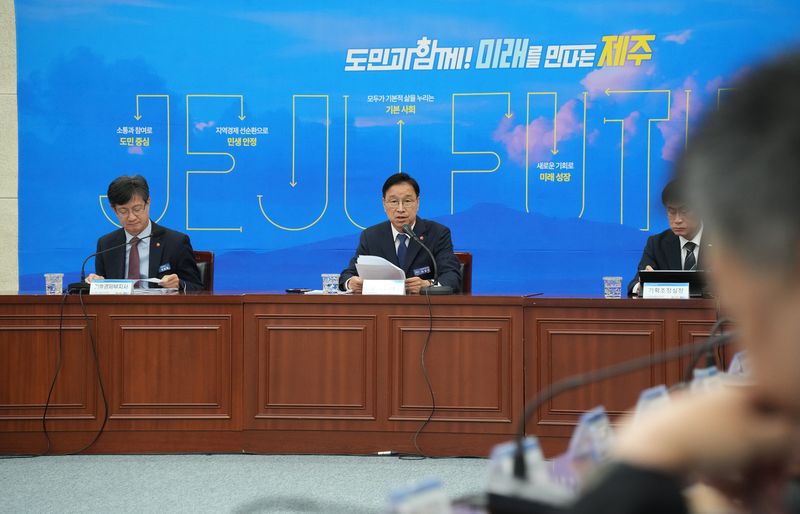
According to Jeju Special Self-Governing Province on the 6th, Governor Wi Seong-gon chaired a weekly policy meeting that day at Tamna Hall in the provincial government building and called for a comprehensive plan for the food and food-products industry, led by the Agriculture, Livestock and Food Bureau and involving departments responsible for tourism, oceans and fisheries, and health and sanitation, as well as the Jeju Tourism Organization.
The policy’s central aim is to expand the role of Jeju food beyond dining products consumed by tourists, creating a structure that connects the production, processing and distribution of local agricultural, fisheries and livestock products with restaurants and tourism.
Governor Wi emphasized that food-related policies should be brought together and pursued as a single strategy, saying, “Food itself is an important industry that draws tourists and connects local consumption of agricultural, fisheries and livestock products with the local economy.”
Proposals included a project provisionally titled the “Jeju Culinary Tourism Project” and a “30 Signature Jeju Dishes” selection. The idea is to identify, document and manage foods representative of Jeju, and link them with restaurant quality certification and follow-up management.
The province also plans to revise the food-ingredient supply structure so that restaurants in Jeju use more locally produced agricultural, fisheries and livestock products. It will consider connecting the preprocessing of ingredients—including washing, trimming and cutting—as well as their processing and distribution, with restaurant demand, and offering certification or support to restaurants that actively use Jeju-produced ingredients.
Culinary workforce development will also be included in the comprehensive plan. The approach is to identify competitive chefs and develop them into culinary professionals representing Jeju, while linking chefs and restaurants selected through cooking competitions and similar events with tourism promotion.
Jeju already has initiatives that use local cuisine as tourism content. Since June this year, Jeju Province and the Jeju Special Self-Governing Province Tourism Association have operated “Jeju Mihaeng,” an experiential culinary tourism program in which tourists and others explore traditional markets and Jeju ingredients and prepare local dishes themselves. The latest call for a comprehensive plan focuses on expanding beyond hands-on programs to address ingredient production and distribution, restaurant management and culinary workforce development within a single policy framework.
Preparations for the 107th National Sports Festival were also reviewed. Hosted by the Korean Sport & Olympic Committee and organized by Jeju Province, the Jeju Special Self-Governing Province Office of Education and the Jeju Special Self-Governing Province Sports Council, the festival will be held in Jeju from the 16th to the 22nd. The official participant count is 30,599, including athletes, officials and overseas Korean organizations, and 50 sports will be contested.
With 10 days to go before the opening, Governor Wi called for checks on the safety and convenience of athletes and visitors, as well as oversight of issues visitors encounter firsthand, such as price gouging at accommodations and country-of-origin labeling at restaurants. He also said Jeju needed to demonstrate its ability to manage a large-scale event smoothly, in connection with its bid to host the 2028 G20 Summit.
Regarding the fishing-vessel capsizing off Chagwido, officials were instructed to continue the search, examine the cause of the accident and the response system, and develop preventive measures. On the morning of the 5th, the 29-ton fishing vessel No. 7 Seongjin capsized about 65 kilometers northwest of Chagwido. Nine of the 11 people aboard were rescued and two went missing. After the meeting that day, the missing Korean captain was found aboard and taken to hospital, where he was pronounced dead. The Coast Guard is continuing to search for the one remaining crew member, an Indonesian national.
Under foreign-national policy, officials were asked to consider ways for seasonal workers and skilled workers in the fisheries sector to settle in Jeju securely. They will also examine possible improvements to relevant systems so that talent in technology and research can stay in Jeju long term with their families.
The meeting also discussed protective measures, including marine litter collection, to reduce incidents in which Nambangkeun-dolgorae dolphins become entangled in fishing nets or lines, as well as establishing a system for ongoing public-transport quality management with sustained participation from residents.
With the 100th day of the ninth popularly elected administration approaching, officials also called for shifting the focus of provincial administration from policy planning to implementation. Governor Wi directed officials to review whether the policies developed so far are being translated into actual projects and results, and whether residents’ views are being properly reflected in the 2027 budget.
[email protected] Jeong Yong-bok Reporter