109 Opposition Lawmakers Send Letter to Singapore International Film Festival Urging It to Drop ‘Assassin(s)’ as Opening Film
- Input
- 2026-10-06 16:26:16
- Updated
- 2026-10-06 16:26:16
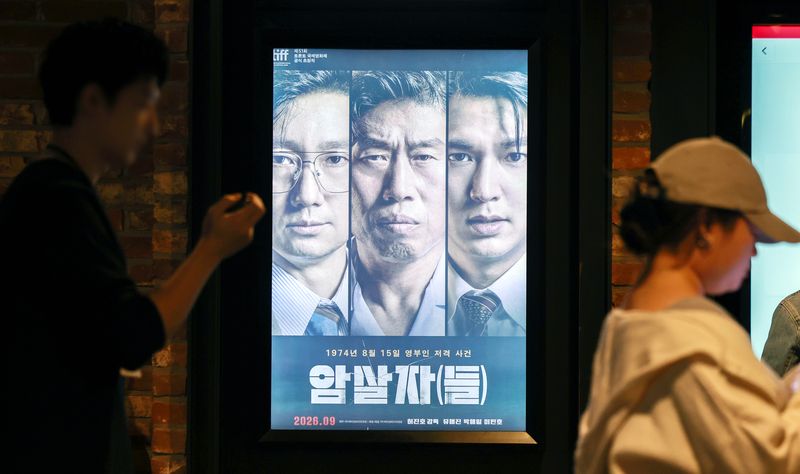
[Financial News] On the 6th, the People Power Party sent a letter to the Singapore International Film Festival, on behalf of all 109 of its lawmakers, demanding that the festival withdraw “Assassin(s)” as its opening film.
Floor Leader Jeong Jeom-sik said in a letter sent to the Singapore International Film Festival that day, “We express our deep regret that the Singapore International Film Festival selected the film ‘Assassin(s)’ as its opening film, and, speaking with the united voice of all 109 People Power Party lawmakers, urge the festival to reconsider its decision immediately.”
He noted, “Selecting an opening film to launch a festival calls for especially careful judgment and a strong sense of responsibility. ‘Assassin(s)’ is based on an actual event and raises the possibility that the powerful institutions of the time were involved. In particular, by leaving room for the interpretation that President Park Chung-hee, the victim’s spouse, may have been connected to the incident, it distorts history in a way that runs deeply counter to the sentiments of the South Korean public.”
Jeong said, “Artistic imagination and creative freedom should be respected. However, when a work about real people and actual events blurs the line between historical fact and fiction, and combines unverified suspicions with an incident involving real victims, that is a problem difficult to explain solely in terms of creative freedom.”
He added, “Park Ji-man, chairman of EG Group and the son of former President Park Chung-hee and Yuk Young-soo, said in a media interview that he found it difficult to understand the film’s renewed questioning of who was behind the incident. The Park Chung-hee Presidential Memorial Foundation and the Park Chung-hee Academic Institute, as well as the Yuk Young-soo Foundation, which commemorates Yuk Young-soo, also issued a joint statement calling for an official apology from the filmmakers and an end to the film’s screenings.”
Jeong argued, “In particular, several North Korean defectors who had lived in North Korea publicly testified, after watching the film themselves, that parts of its narrative and the way it raises questions reminded them of the ‘Park Chung-hee’ installment of North Korea’s prominent regime-propaganda film ‘Nation and Destiny.’ The very fact that they were reminded of a similar historical narrative in a propaganda film for the North Korean dictatorship and ‘Assassin(s)’ demonstrates the seriousness of the issue.”
He added, “Creative freedom does not mean freedom from responsibility for historical facts. Responsible judgment is also needed about what historical understanding ‘Assassin(s)’ will instill in audiences around the world.”
[email protected] Lee Hae-ram Reporter