[Exclusive] Alaska LNG Project seeks 73 trillion won in investment, yet has had 'zero' long-term contracts for a decade
- Input
- 2026-10-06 18:57:46
- Updated
- 2026-10-06 18:57:46
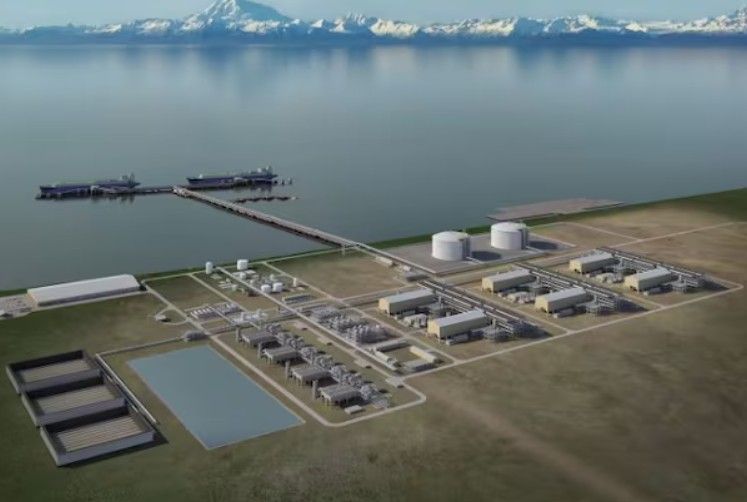
An analysis by Financial News on the 6th of documents from the U.S. Department of Energy (DOE), the Alaska Legislature and Glenfarne Group, the project’s main developer, found that no company has so far signed a final long-term export contract for Alaska LNG that carries a legally binding purchase obligation.
U.S. energy and infrastructure company Glenfarne, which currently leads the project, has been in talks on long-term LNG purchases with companies in Taiwan, Thailand, Japan, South Korea and France since March last year. CPC Corporation, Taiwan (CPC) is discussing purchases of 6 million metric tons per year; Thailand’s PTT, 2 million tons per year; and Japan’s JERA and Tokyo Gas and South Korea’s POSCO International, 1 million tons per year each. France’s TotalEnergies also joined the talks in February this year, with a proposed volume of 2 million tons per year.
However, most of these discussions have yet to reach the final-contract stage, which would create a legally binding purchase obligation. The letters of intent (LOIs) signed by CPC, JERA, Tokyo Gas and TotalEnergies are preliminary agreements confirming their intention to purchase LNG in the future. POSCO International has moved further, signing a heads of agreement (HOA) that sets out key terms, including purchase volumes. PTT, too, is at the cooperation-agreement stage, which allows the parties to consider future LNG purchases and other matters. Glenfarne has disclosed preliminary long-term purchase commitments totaling 13 million metric tons per year, but none of that volume has been secured under final contracts.
It is also uncertain whether the preliminary agreements will lead to actual long-term contracts. Citing industry estimates, an Alaska Legislature report noted that only 20% to 40% of LOIs develop into final-stage contracts with specific terms (fully termed agreements).
The preliminary purchase commitments Glenfarne has secured so far fall short even of the minimum needed to obtain financing. Alaska LNG’s planned production capacity is 20 million metric tons per year. Glenfarne aims to secure long-term contracts for 80% of that volume, or 16 million tons per year, to finance the project. Even if all of its current preliminary purchase commitments, totaling 13 million tons per year, become final contracts, the project would still be 3 million tons per year short of the volume required for financing.
The Alaska LNG Project began as a joint development effort in 2014 involving the state of Alaska and global energy companies including ExxonMobil, BP and ConocoPhillips, but the joint development arrangement ended in 2016. Starting in September that year, Alaska sought LNG buyers and investors across the Asia-Pacific region, including South Korea. The state-owned Alaska Gasline Development Corporation (AGDC) later took the lead on the project. In March 2025, it transferred a 75% stake in the project to Glenfarne, returning development to private-sector leadership. Glenfarne stepped up its efforts to secure buyers, but the project has still not reached a final long-term contract.
Despite U.S. President Donald Trump’s remark that “South Korea’s investment in the Alaska LNG Project is confirmed,” the South Korean government maintains that “nothing has been finalized yet.” The government’s policy is to continue consultations on the size and form of any investment, taking into account the project’s commercial viability and other factors.
[email protected] Song Ji-won Reporter