Korea Research Institute for Human Settlements: After 10 years of urban regeneration, results and post-project management are key for the next decade
- Input
- 2026-10-07 12:00:00
- Updated
- 2026-10-07 12:00:00
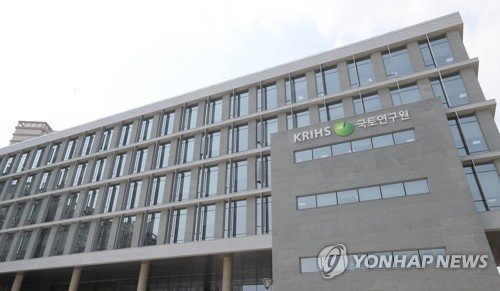
[Financial News] The Korea Research Institute for Human Settlements (KRIHS) has concluded that investment in physical facilities has produced results, but that operational and post-project management systems remain inadequate. The assessment followed a comprehensive review of results at 116 completed project sites, marking 10 years since the urban regeneration policy was introduced.
KRIHS said on the 7th that it had comprehensively assessed the achievements and limitations of the 10 years since the Urban Regeneration Special Act was enacted in 2013, in its Land Policy report, “Ten Years of Urban Regeneration Projects: Achievements and Future Challenges.” The study was conducted in response to the need for more sophisticated evaluations that reflect the characteristics of each project type and medium- to long-term spillover effects, as the number of completed project sites has grown.
The research team analyzed 116 project sites completed between 2021 and 2024, combining three methods: comprehensive performance evaluation reports, the difference-in-differences method (DID), and focus group interviews (FGI).
The analysis found clear differences in results by project type. A review of 1,754 individual projects across 85 sites found relatively tangible results in the physical and environmental sectors, including the provision of hub facilities and public rental housing. DID analysis showed that the economic-base type had the clearest positive changes in employment and settlement-related indicators, while the central urban-area and neighborhood regeneration types recorded negative changes in population-inflow indicators. However, inadequate operational and post-project management systems were cited across all types, revealing a structural limitation: investment in hardware has not translated into the capacity to operate the software.
The research team proposed three tasks based on these findings. First, it said the current one-size-fits-all approach should be replaced with performance indicator systems tailored to each project type—for example, a 5–10-year period and an urban-region scale for the economic-base type, and a 3–5-year period and administrative-dong and neighborhood-living-area scales for the central urban-area and neighborhood regeneration types. It also recommended institutionalizing data-driven performance management at every stage, from planning and implementation through post-project evaluation, and strengthening the post-project management functions of intermediate support organizations and operational governance so that results are sustained after projects end.
Research Fellow Im Sang-yeon stressed, “In an era of low growth, with low growth, population decline and reverse urbanization intensifying, urban regeneration is a key tool for urban management.” Im added, “To evaluate complex goals, we need to use multidimensional performance indicators covering areas such as population and society, the physical environment, and industry and the economy, and analyze them using a mixed-method approach that integrates quantitative and qualitative methods.”
[email protected] Jeong Gyeong-su Reporter