Rising Radish and Salted Shrimp Prices Fuel Concerns Over Winter Kimchi Costs Despite Stable Cabbage Prices
- Input
- 2026-10-07 10:59:49
- Updated
- 2026-10-07 10:59:49
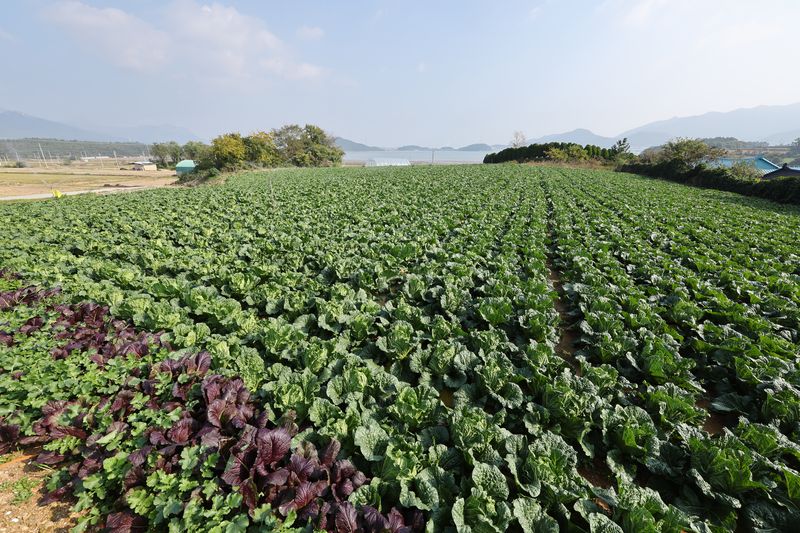
[Financial News] “I was relieved to hear that cabbage prices had fallen, but when I went to the market, I couldn’t bring myself to buy seasoning ingredients like radishes or salted shrimp. You can’t help feeling that the cost of the fillings is even more daunting than the cabbage itself.” (A homemaker surnamed Lee)With the kimchi-making season about a month away, prices of cabbage, the main ingredient, have stabilized, but rising prices for essential supplementary ingredients and seasonings such as radishes and salted shrimp are increasing the cost burden. A combination of reduced seafood catches due to unusual weather and delayed growth of summer crops is driving up the overall cost of making kimchi. Some say the government should move quickly to implement price-management measures, including steps to stabilize the supply of supplementary ingredients.
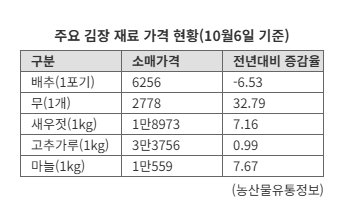
According to the Korea Agro-Fisheries & Food Trade Corporation (aT)’s Agricultural Products Distribution Information on the 7th, the retail price of cabbage was 6,256 won per head as of the previous day. That was 6.53% lower than a year earlier and 12.65% below the average in normal years. Last year, severe drought and high temperatures damaged the cabbage crop and sent prices soaring. This year, however, relatively favorable weather throughout the growing period has boosted production.
The overall decline in cabbage consumption, partly due to changes in dietary habits, is also believed to have helped keep market supply steady.
A household panel survey by the Korea Rural Economic Institute’s Agricultural Outlook Center found that this month’s cabbage purchase-intention index per household was 97.0, while the kimchi purchase-intention index was 91.2. An index below 100 indicates a decline in consumption, while a figure above 100 indicates an increase.
The problem is that prices for radishes, essential for making winter kimchi, and salted seafood used as seasoning are rising. As of that day, the retail price of a radish was 2,778 won, up 32.79% from a year earlier and 15.22% from a month earlier. This was directly affected by lower shipments of summer radishes after heatwaves and torrential rains delayed their growth this summer. Wholesale radish prices this month are also projected to rise year-on-year. The Korea Rural Economic Institute’s Agricultural Outlook Center forecast that the wholesale price of radishes (20 kg) would continue to rise from a year earlier as shipments of summer radishes decline.
The item that has risen sharply is salted shrimp, a key seasoning that gives kimchi its umami flavor.
The retail price of salted shrimp was 18,973 won per kilogram, surging 23.36% from a year earlier and 7.16% from a month earlier. This was because unusual weather, including rising sea-surface temperatures, changed marine ecosystems and sharply reduced catches of the small shrimp used to make salted shrimp. The decline in supply itself is pushing up prices across the salted seafood market.
Chili powder, another essential seasoning, also edged up 0.99% year-on-year to 33,756 won per kilogram. Peeled domestic garlic rose 7.67% to 10,559 won per kilogram.
Despite stable cabbage prices, the cost burden of making winter kimchi for consumers is expected to grow as prices for supplementary ingredients and seasonings also rise. This is because making winter kimchi requires large quantities of various ingredients, including not only cabbage but also radishes, garlic, chili powder, salted seafood and green onions.
An industry official said, “If supply-and-demand imbalances for supplementary ingredients worsen between late October and November, when demand for winter kimchi-making picks up in earnest, overall kimchi-making costs could become unstable once again.” The official added, “Price-management measures, including steps to stabilize the supply of supplementary ingredients, need to be implemented early.”
[email protected] Kim Seo-yeon Reporter