Three Korea Aerospace University CubeSats Headed to Space Aboard Nuri's Fifth Launch... A Fruit of University-Industry Collaboration
- Input
- 2026-10-06 14:18:37
- Updated
- 2026-10-06 14:18:37
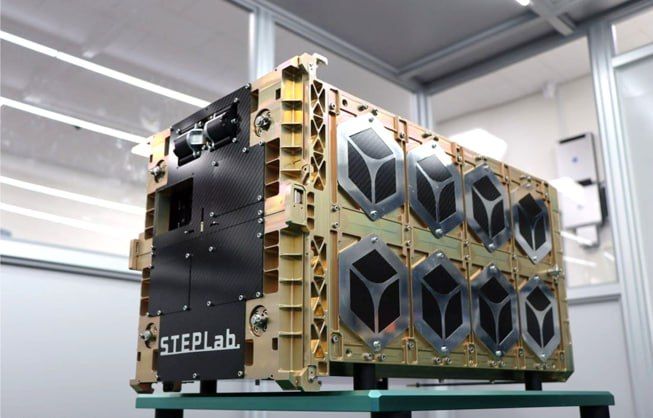
According to Korea Aerospace University on the 6th, three CubeSats developed by its professors and students will be carried aboard Nuri (KSLV-II) on its fifth launch, scheduled for the 7th from the Naro Space Center in Goheung-gun, Jeollanam-do. The mission will carry a record 15 satellites—the largest number on any Nuri launch to date—including five ultra-small constellation satellites and 10 CubeSats. Three of the 10 CubeSats were developed with the participation of Korea Aerospace University.
Beyond simply reaching orbit, the satellites will carry out specific industrial and academic missions, including in-orbit demonstrations of Korean technologies, marine monitoring, and space-radiation measurements.
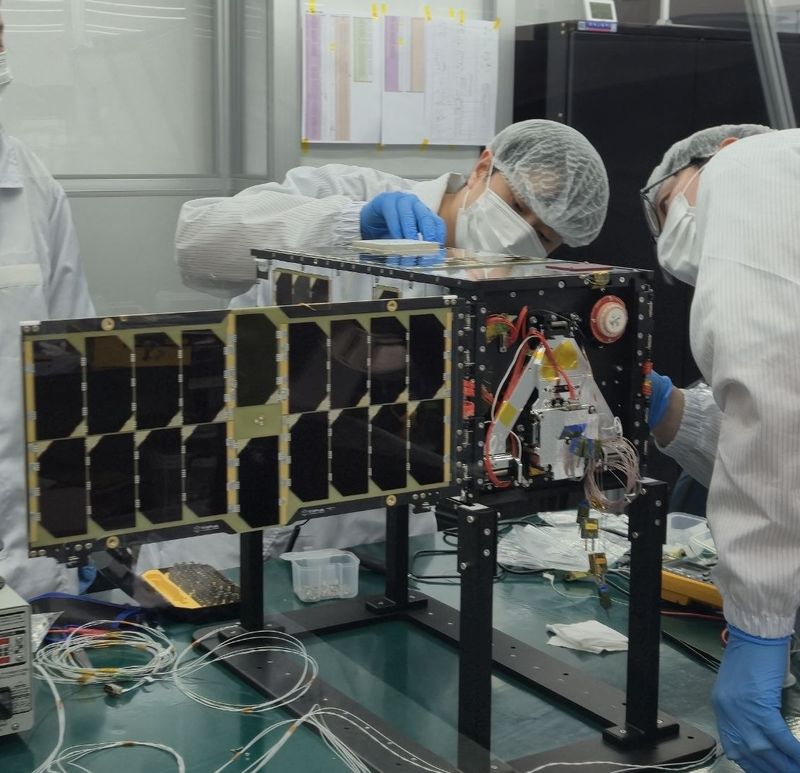
QUATERNION, founded by Professor Song Yong-kyu of aerospace engineering with his students, will launch PERSAT-2. This marks the company's second consecutive payload, following Nuri's fourth launch last year. Weighing 3.25 kg, the satellite will monitor marine debris off the coast of Jeju for six months from a 550-km orbit. It has domestically developed key avionics, including the mainboard, power system, and communications board, while its communications system and power capacity have been significantly upgraded from the previous version.
The efforts of young entrepreneurs and university students have also borne fruit. A university student consortium involving Junyoung Yang of Korea Aerospace University, who is the CEO of VF Space, will measure space radiation, including high-energy solar protons, with the GBSAT CubeSat. The team members, all alumni of Gyeonggibuk Science High School, completed development after entering university, using CubeSat competitions organized by the Korea AeroSpace Administration (KASA) and the Korea Aerospace Research Institute (KARI) as a catalyst.
After entering orbit, the satellites will confirm whether they are operating normally through communications with ground stations before beginning their respective missions. A university official explained, "This is a good example of the virtuous cycle in the space industry, in which technologies developed in research laboratories lead to startups, whose capabilities are then demonstrated through the country's launch vehicle."
[email protected] Kim Man-gi Reporter