Amid AI-driven surge in power demand, Japan to keep aging thermal plants slated for closure operating
- Input
- 2026-10-06 14:17:09
- Updated
- 2026-10-06 14:17:09
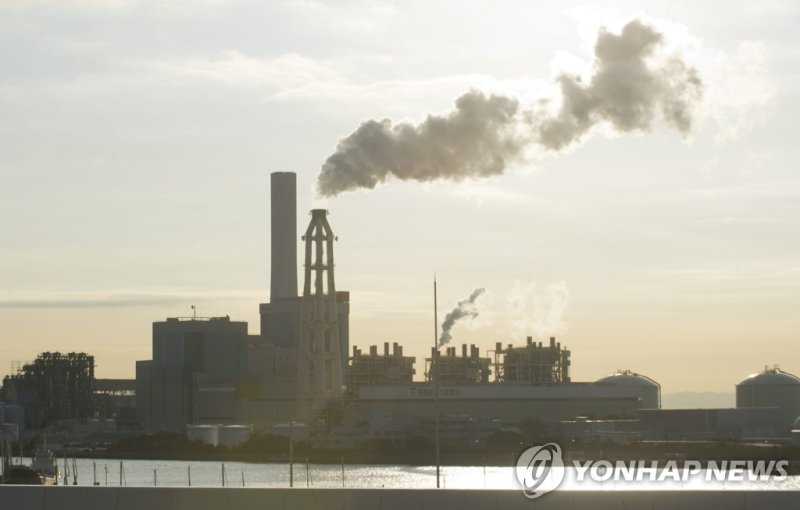
[Financial News, Tokyo—Correspondent Seo Hye-jin] Japan is considering measures to allow aging thermal power plants nearing closure to operate for longer. As electricity demand rises with the expansion of artificial intelligence (AI) and data centers while plant closures reduce supply capacity, the plan aims to maintain existing facilities and prepare for potential power shortages.
According to Nihon Keizai Shimbun (The Nikkei) on the 6th, Japan's Ministry of Economy, Trade and Industry (METI) is considering a new system that would use the capacity market to secure maintenance and repair funds for aging thermal power plants. The ministry plans to draw up detailed measures by the end of this year.
The capacity market trades not electricity that has already been generated, but the ability to supply power in the future. Generators receive funding in return for securing supply capacity, and the market in Japan is operated by the Organization for Cross-regional Coordination of Transmission Operators (OCCTO).
The existing market trades supply capacity four years ahead, while the new system would focus on securing capacity one to three years ahead from thermal power plants scheduled to suspend operations or close. Generators would use the funds to maintain and repair their facilities and operate the plants when electricity supplies become tight. The plan would also allow multiyear contracts so that maintenance costs can be secured over several years. Retail electricity providers would effectively bear the cost.
As Japan's thermal power plants age, more facilities are being suspended or closed than newly built. As a result, the country's power supply capacity is expected to decline through fiscal 2030.
Demand, however, is increasing. In a forecast issued in January, OCCTO projected that electricity demand in fiscal 2030 would reach 824.2 billion kilowatt-hours, up 3% from fiscal 2025. The expansion of AI and the construction of additional data centers are driving the increase.
A heat wave could further heighten concerns about supply and demand. Assuming a heat wave of a severity expected once every 10 years, the power reserve margin in the service areas of TEPCO and Tohoku Electric Power is projected to fall to just 1.6% in the summer of 2029. That would be below the 3% considered the minimum level needed for stable supply. The reserve margin in the service areas of Chubu Electric Power, Hokuriku Electric Power, and Kansai Electric Power is also expected to be 3%, leaving little room to spare.
Japan cannot address immediate supply-demand concerns solely by restarting nuclear reactors and expanding renewable energy. Nuclear plants are operated at relatively constant output, limiting their ability to respond flexibly to short-term changes in demand. Solar and wind generation varies with weather conditions. The assessment is that thermal power plants capable of supplying additional electricity when needed must be maintained for the time being.
Extending the lives of aging thermal power plants conflicts with emissions-reduction targets. Older facilities operate less efficiently, requiring more fuel to produce the same amount of electricity and resulting in higher carbon dioxide emissions.
The system under consideration by METI is a temporary measure to prevent supply shortages until Japan can expand nuclear and renewable power and switch to high-efficiency thermal power plants. The aim is to reduce carbon emissions over the medium to long term while securing operable facilities in the immediate future to prepare for power shortages.
Thermal power accounted for 67.5% of Japan's electricity generation in fiscal 2024. Renewables accounted for 23.1%, while nuclear power made up 9.4%. Although nuclear reactor restarts and the deployment of renewable energy are progressing, thermal power remains the core of the country's electricity supply.
In the Basic Energy Plan finalized last year, the Japanese government set a goal of raising the share of renewable energy to 40%–50% and nuclear power to 20% by fiscal 2040. However, with electricity demand rising rapidly in the AI era, Japan faces a situation in which even aging thermal power plants must support the supply until sufficient decarbonized power sources are secured.
[email protected] Seo Hye-jin Reporter