Mayors, County Governors and District Heads: "Funding for Local Allocation Taxes Must Not Be Cut Even if a Future Response Fund Is Created"
- Input
- 2026-10-06 14:11:13
- Updated
- 2026-10-06 14:11:13
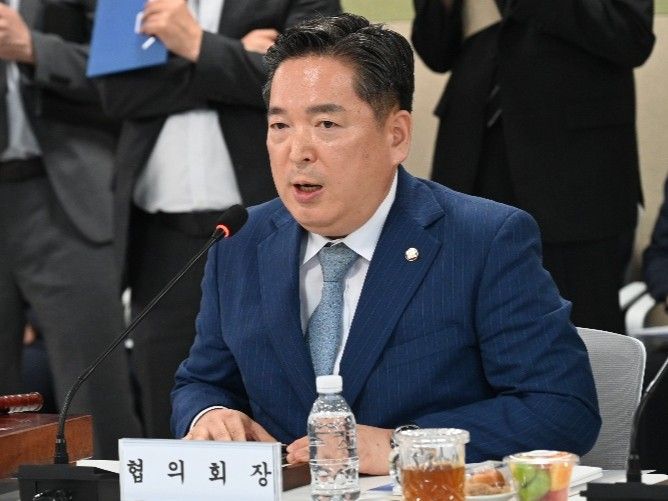
[Financial News] Mayors, county governors and district heads nationwide called on the government and the National Assembly to maintain the current ordinary local allocation tax funding system even if a Future Response Fund is created. They said excluding some domestic tax revenue from the calculation of ordinary local allocation taxes would reduce total funding, and called for measures to preserve local government finances, such as delaying implementation by one year and gradually raising the local allocation tax rate each year if changes to the calculation method are unavoidable.
The Korea Association of Mayors, County Governors and District Heads announced on the sixth that it had adopted its first recommendation since the launch of the ninth popularly elected local-government term, titled "A Recommendation for a Full Review of Ordinary Local Allocation Tax Reform Following the Establishment of the Future Response Fund."
The association argued that excluding some domestic tax revenue from the calculation of ordinary local allocation taxes to create the fund would inevitably reduce total ordinary local allocation tax funding. It said this could undermine not only the stability of local government finances but also their autonomy and predictability.
It also emphasized that ordinary local allocation taxes are a key source of funding for guaranteeing residents' basic administrative services and supporting locally led balanced growth. The association said it was also necessary to examine whether the proposed reform was consistent with the government's stated policies of "fiscal preference for local governments," a "local governments first" policy and the national policy agenda for fiscal decentralization.
The association called for the current ordinary local allocation tax funding system to be maintained regardless of whether the Future Response Fund is established. If the calculation method must be changed, it asked the government to delay implementation by one year and establish measures to offset the reduction in local government finances, including gradually raising the local allocation tax rate each year.
Kim Byeong-nae, chair of the association and head of Nam District, Gwangju, said, "Using excess tax revenue as a source of funding for future investment is necessary, but the weak fiscal foundations of basic-level local governments must not be undermined." He added, "For locally led balanced growth to produce tangible results, own-source revenues must be guaranteed and fiscal autonomy strengthened in line with the expanded role of local governments."
The association also asked the pan-government fiscal decentralization task force (TF) to discuss ordinary local allocation tax reform and fiscal decentralization together and develop specific alternatives.
Kim said, "We ask the government and the National Assembly to carefully reconsider the ordinary local allocation tax reform plan related to the Future Response Fund, fully reflect the views of local governments, and promptly develop a visible alternative that firmly guarantees fiscal decentralization through the currently operating pan-government fiscal decentralization TF."
The association plans to deliver the recommendation to the government and the National Assembly and work with relevant organizations, including the four major local-government associations, to respond.
[email protected] Lee Bo-mi Reporter