IMF Calls Korea an 'Excessive-Surplus Country'... BOK: "A Statistical Illusion That Ignores Demographic Realities"
- Input
- 2026-10-06 12:00:00
- Updated
- 2026-10-06 12:00:00
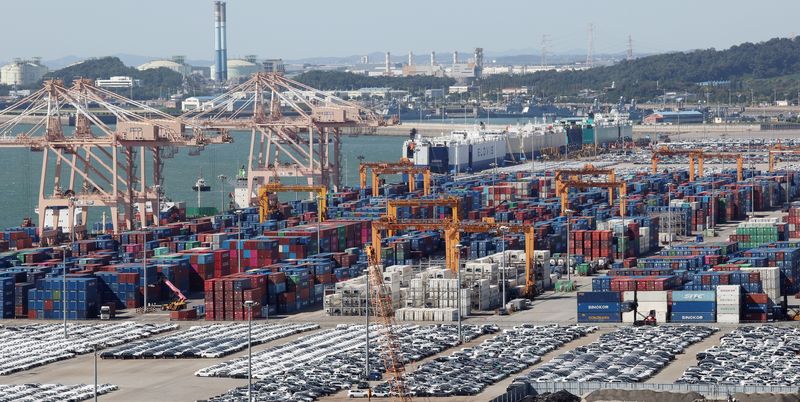
[Financial News] The Bank of Korea's analysis found that statistical illusions stemming from revisions to models incorporating demographic structure, rather than changes in the underlying economic fundamentals, played a decisive role in the International Monetary Fund's two-level upgrade of Korea's current-account surplus assessment in its external-sector evaluation. As a result, concerns are growing that Korea could be judged to have an excessive current-account surplus compared with other major economies and become a target of mounting exchange-rate and trade pressure.
According to the report titled "The Impact of Revisions to the IMF External Balance Assessment (EBA) Model on Korea's Current-Account Assessment," released by the BOK on the 6th, Korea's current-account gap (current-account excess) in the recently released External Sector Report (ESR) 2026 expanded by 2.3 percentage points from the previous year.
About 60% of the increase stemmed not from a rise in the actual surplus but from a decline of 1.4 percentage points in the current-account norm. Most of that decline was attributed to a revision to the demographic-structure model, which reduced the figure by 1.1 percentage points.
Korea has maintained its status as a net foreign asset country after recording current-account surpluses for many years. In particular, amid a semiconductor export boom, this year's current-account surplus is projected to reach about 20% of gross domestic product (GDP), or approximately $450 billion.
Min Kim, manager of the BOK's International Finance Team and the report's author, explained, "Among the 26 countries covered by the analysis, Korea was found to have been affected the most by this model revision."
If next year's planned revision to excess-adjusted net foreign assets (NFA), to be introduced in ESR 2027, is added to the equation, accumulated past surpluses will act fully as downward pressure on the current account. Under all three scenarios for Korea's current account in 2026, measured as a share of GDP—△23.3% (optimistic), △20.0% (baseline), and △16.0% (pessimistic)—Korea's current-account gap, after subtracting the 2.2% current-account norm, is projected to range from 13.8% (pessimistic) to 21.1% (optimistic), making entry into the "substantially above" range all but certain.
The BOK therefore stressed that, when interpreting the IMF's external-sector assessment, it is necessary to closely examine which factors caused the gap to widen rather than focusing solely on the size of the increase in the current-account gap.
The challenges and implications for the Korean economy differ depending on whether the change in the current-account gap resulted from a genuine increase in the current-account surplus or from an artificial reduction in the current-account norm caused by a model revision.
In particular, the current-account norm was artificially lowered without adequately reflecting Korea's rapid population aging and the distinctive features of its savings and employment structures.
The BOK's analysis is that, as the IMF adjusted the formulas and variables used to capture demographic changes, those changes were reflected in the model differently from actual economic realities, distorting and inflating Korea's current-account gap.
Yongo Kwon, head of the BOK's International Finance Team, advised, "Prompt, meticulous communication and a well-reasoned response focused on underlying factors such as demographic structure—going beyond the headline gap figure—are urgently needed to prevent Korea from being mistaken for a country with excessive external imbalances because of a mere statistical illusion and the limitations of the model."
[email protected] Jung Sang-gyun Reporter