"Enduring the Pain Can Lead to a Sudden Tear"... Why Ji Yeon-soo Regrets Seeking Medical Care So Late [Health Talk]
- Input
- 2026-10-06 13:56:46
- Updated
- 2026-10-06 13:56:46
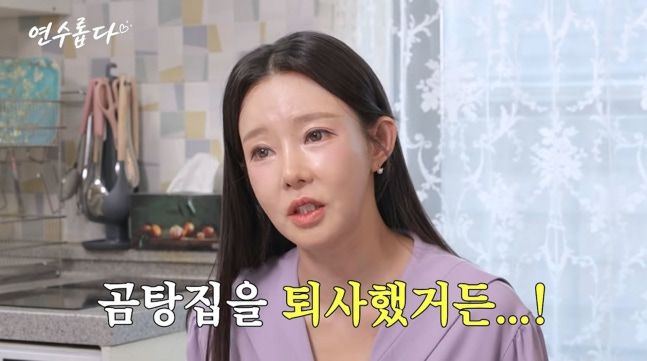
[Financial News] Broadcaster Ji Yeon-soo, 46, said she had stopped working at a restaurant after suffering a torn arm muscle. Her case is raising awareness of repetitive upper-extremity overuse syndrome, which commonly affects people in daily life, during household chores and at work. Experts point out that it is a typical example of how treating pain as simple muscle soreness and relying only on physical therapy or pain-relief patches can allow the condition to worsen into structural damage.
Ji Yeon-soo said through her YouTube channel on the fifth, "Even though the pain in my right arm persisted, I continued working while receiving only basic physical therapy. After a detailed examination, I was diagnosed with badly torn muscles and told that I had to stop working." She added that she had recently quit her job at a gomtang restaurant.
She attributed the injury to cumulative strain from work that placed excessive stress on her upper body, including pulling hard with her arms while fitting heavy dresses at a bridal shop in the past and serving customers at a restaurant.
Repeated use of the arm and shoulder muscles frequently causes 'cumulative trauma disorders'
Orthopedic and rehabilitation medicine specialists warn that, as in Ji Yeon-soo's case, 'cumulative trauma disorders' are very common among people whose jobs require repetitive use of their arms and shoulders, as well as among household workers.
Repeatedly lifting heavy objects or pulling and twisting the arm beyond its normal range of motion over a long period can cause recurring microdamage to the muscles and tendons. If people rely on symptomatic treatments that only relieve pain, such as simple heat therapy, pain-relief patches or painkillers, without getting enough rest, weakened tissue can easily progress to a partial or complete tear. Common examples include rotator cuff tears, which affect the shoulder muscles used to raise or pull the arm, as well as injuries to the biceps and triceps brachii.
The arms and shoulders receive relatively limited blood flow, making natural healing difficult if immediate rest is not taken after microdamage occurs. If pain lasts for more than two to three weeks or is accompanied by weakness in the arm during certain movements or nighttime pain, people should suspect tendinitis or a muscle tear rather than simple muscle tightness.
Experts: "Early-stage tears can recover without surgery... Complete tears require repair surgery"
Experts advise, "Pain is a limit signal sent by the joints and muscles. When pain persists, people should first determine the extent of the damage through detailed examinations such as ultrasound or MRI, rather than hastily getting a massage or doing strenuous stretching."
In the early stages of a tear, recovery is possible through nonsurgical treatments such as extracorporeal shock-wave therapy, medication and injections, appropriate immobilization, and exercise therapy. However, if a person continues working through the pain and the injury progresses to a complete tear, repair surgery becomes unavoidable, increasing the risk of secondary conditions such as arthritis.
If avoiding work that heavily uses the arms is not possible, people should make a habit of doing light dynamic stretches before and after work to release tension in the muscles around the joints. Taking frequent short breaks is also important to avoid remaining in the same position for more than 30 minutes at a time.
[email protected] Moon Young-jin Reporter