Jeju Migrants and Multicultural Families Learn About the Local Community in Gotjawal
- Input
- 2026-10-06 10:02:32
- Updated
- 2026-10-06 10:02:32
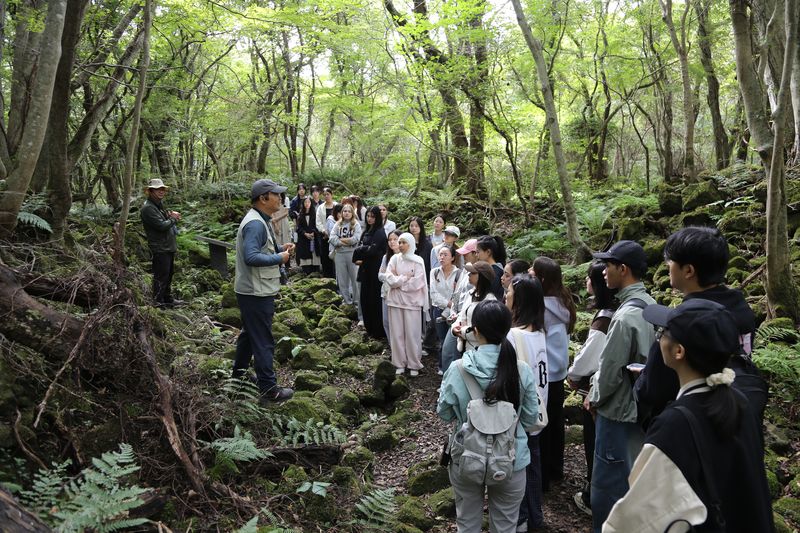
【Financial News, Jeju—Reporter Jung Yong-bok】 A program has begun in which foreigners and multicultural families living in Jeju Province walk through Gotjawal and learn about the region's natural environment and ecological value.
According to the Jeju Gotjawal Public Ownership Foundation on the 6th, the foundation began operating the 2026 Jeju Global Citizen Gotjawal Ecological Experience—Gotjawal Hand in Hand on the 2nd. The first program was attended by 23 international students from the JNU Office of International Affairs.
The program was created as part of a residents' support project by the Jeju Free International City Development Center (JDC). It will be held 10 times in October and November at Gyorae Natural Recreation Forest and Jeju Gotjawal Provincial Park for Jeju Province residents, multicultural families and migrants living in Jeju Province.
The program's distinctive feature is that it includes foreigners and multicultural families as direct participants in Gotjawal ecological education. As the number of foreign residents living in Jeju Province grows, understanding Jeju's nature, history and culture is becoming as important for settling into the local community as adapting to administrative procedures and daily life.
Gotjawal is one of Jeju Province's defining natural environments, but foreign residents may find it difficult to learn about its ecological significance because of language barriers and a lack of information. Taking this into account, the foundation provides multilingual educational materials and interpretation services so participants from various language backgrounds can take part.
The education is not centered on lectures. Participants walk through Gotjawal, observe its vegetation and natural environment, and listen to on-site commentary. They also take part in hands-on activities, including a permeability experiment to examine how water seeps through the ground and “Create Your Own Gotjawal,” which uses discarded plastic to make a personal Gotjawal model.
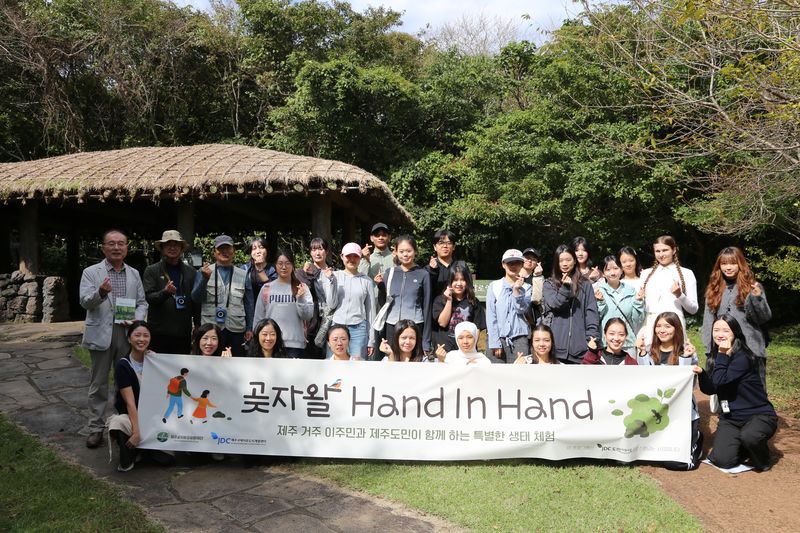
Rather than simply observing Gotjawal, the program is designed to help participants understand the characteristics of the ecological environment by seeing, touching and experimenting with it.
The international students from JNU who joined the first program also experienced both an on-site exploration and ecological education.
Weronika Wolna, a student from Poland, said, "I learned how Gotjawal was formed and how it created its ecosystem. Learning more deeply about Jeju Province's unique natural environment also helped me understand Jeju Province."
The program is significant because it connects environmental education with foreign residents' understanding of the local community. Even when living in Jeju Province, people who organize their lives around school, work or their residences may have limited opportunities to experience the region's distinctive natural environment. Through on-site education in Gotjawal, the foundation is focused on helping migrants understand Jeju Province not only as a place to live but also as a region that must be preserved together.
As Jeju Province presents itself as a free international city, another challenge is how to involve residents of various nationalities and cultural backgrounds as participants in local environmental conservation. The approach expands participation beyond explaining the need for environmental conservation only to Korean nationals to include foreign residents and multicultural families living in Jeju Province.
Kim Beom-hun, chairman of the Jeju Gotjawal Public Ownership Foundation, said, "Preserving Gotjawal, Jeju Province's unique environmental asset, is an important value in the Jeju Free International City. I hope this will be an opportunity for global citizens living in Jeju Province to share an appreciation of Jeju Province's value."
[email protected] Jung Yong-bok Reporter