Groundwater Levels in Western Jeju Fall 1.6 Meters in a Year... Alternative Water Resources to Be Expanded
- Input
- 2026-10-06 09:36:07
- Updated
- 2026-10-06 09:36:07
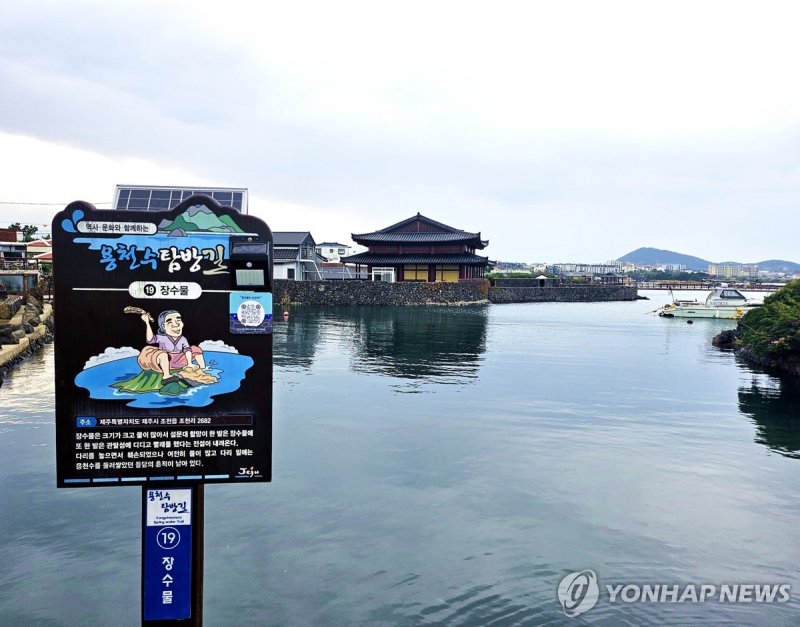
【Financial News Jeju=Jeong Yong-bok】 Groundwater levels in western Jeju have fallen 1.6 meters from a year earlier. Although the average groundwater level across Jeju remains above the threshold, Jeju Special Self-Governing Province is expanding alternative water resources, including groundwater storage dams, rainwater-use facilities and agricultural water storage facilities, as rainfall shortages become especially pronounced in the northern and western regions.
According to Jeju Special Self-Governing Province on the 6th, cumulative rainfall in Jeju from January through August this year stood at 88.3% of the average for the past 30 years.
Regional differences were even greater. Rainfall in western Jeju reached only 76.7% of normal, while the northern region recorded 67.3%.
The rainfall shortage was also reflected in groundwater levels. From January through August this year, the groundwater level in western Jeju was 7.26 meters, down 1.6 meters from the same period last year. However, the average groundwater level across Jeju was 12.9 meters during the same period, above the threshold of 10.4 meters. This means Jeju as a whole is not yet facing an immediate water shortage.
The key issue is the change in each region, rather than the average for Jeju as a whole. Rainfall and groundwater levels are moving differently across the island, making it difficult to assess water conditions based solely on the provincial average. Jeju Special Self-Governing Province continuously monitors regional changes through 151 groundwater-level observation networks across the province.
Jeju relies heavily on groundwater for water needed in daily life and agriculture. A short-term decline in rainfall does not immediately lead to a water shortage, but prolonged dry conditions can reduce groundwater recharge and increase pressure on agricultural water supplies. This is why Jeju Special Self-Governing Province is moving beyond separate management of groundwater, tap water and agricultural water and strengthening integrated water management.
On September 30, Jeju Special Self-Governing Province held its first integrated water management meeting of the year, chaired by Deputy Governor for Climate and Economy Lee Chang-heum. Eight departments and organizations, including the Water Policy Division, the Natural Disaster Division, the Eco-friendly Agricultural Policy Division, the Waterworks Division, the Sewerage Division, the two administrative cities and the Korea Rural Community Corporation, took part in a joint review of measures concerning groundwater, agricultural water, tap water and alternative water resources.
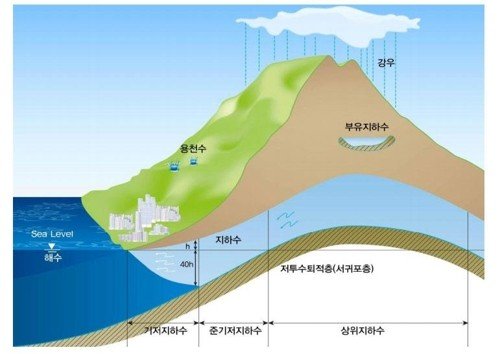
The province will first secure alternative water resources to diversify a water supply structure that is heavily dependent on groundwater. Detailed surveys are under way in Oedo, Jeju City, and Daejeong, Seogwipo City, for the introduction of groundwater storage dams.
A groundwater storage dam is a facility that traps and stores groundwater flowing underground with structures such as underground cutoff walls, allowing it to be used when needed. Because it uses underground space instead of building a large dam on the surface, it is being considered as one of the new ways to secure water resources on islands.
The province will also expand the use of rainwater. It will continue supporting small-scale rainwater-use facilities installed at farms and elsewhere, while consulting with the central government on plans to install medium-scale facilities capable of storing 3,000–4,000 tons in multiple locations.
Jeju will also review how reservoirs that collect water during floods are used. Of the 354 reservoirs across the province, facilities that have lost their function, such as those where rainwater does not flow in properly, will be surveyed. Facilities that are difficult to restore may be converted into agricultural reservoirs following deliberation.
The province will also increase agricultural water storage capacity. It plans to expand the capacity of water tanks installed at public agricultural wells from the current level of about 100 tons to 200–500 tons.
The area supplied with water from Seongeup Reservoir will also be expanded from three villages to seven. Jeju is also working to connect regional water supply networks through a project to establish an integrated, wide-area agricultural water supply system.
Jeju will also expand waterworks facilities supplying water for daily use. Under the 2045 Waterworks Maintenance Plan and the Comprehensive Water Demand Management Plan, the province plans to renovate Eoseungsaeng No. 1 Reservoir and secure an additional supply capacity of 2,100 tons per day through new groundwater development.
Five new distribution reservoirs will be installed to increase storage capacity by 1,800 tons. The province is also pursuing the construction of a new water treatment plant with a capacity of 15,000 tons per day and the modernization of aging water treatment plants.
The province will also work to reduce the amount of tap water lost through leaks and establish smart water production and supply systems. The non-revenue water rate refers to the proportion of water produced at a treatment plant that reaches customers without leaking and is actually billed.
The decline in groundwater levels in western Jeju does not immediately mean that groundwater is being depleted. However, with rainfall at only 67.3% of normal in the north and 76.7% in the west, and groundwater levels in the west down 1.6 meters in a year, the need to manage long-term changes in regional water supply and demand has grown.
The success of water management policy will depend less on how many facilities are built than on how precisely regional rainfall, groundwater levels, and agricultural and domestic water demand are linked.
Lee Chang-heum, Jeju Special Self-Governing Province's deputy governor for climate and the economy, said, "As the climate crisis could push Jeju's water shortage to a concerning level, we must begin securing alternative water resources and establishing response systems now." He added, "We will make the integrated water management department meetings a regular, ongoing practice and pursue water management policies accordingly."
[email protected] Jeong Yong-bok Reporter