Former Munhwa Broadcasting Corporation (MBC) President Choi Seung-ho: "The Screen Differs from the Director's Intent in 'Assassin(s)' ... We Need to Discuss Standards for Filming History"
- Input
- 2026-10-06 09:24:54
- Updated
- 2026-10-06 09:24:54
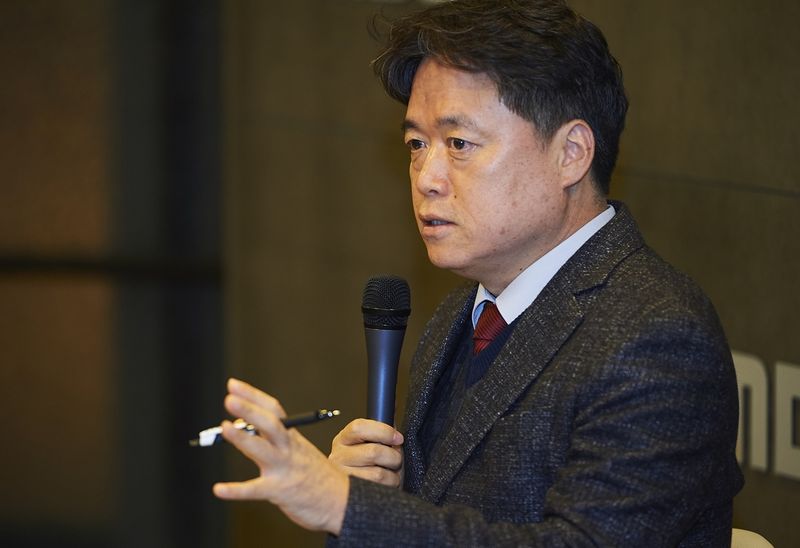
[Financial News] Former MBC president Choi Seung-ho, a NEWSTAPA producer, said he opposed calls from political circles to halt screenings of the film 'Assassin(s)' and pressure on its filmmakers over the controversy surrounding the movie. However, he said criticism was necessary regarding how the film handles a historical event. Responding to claims that his criticism of the film contradicted his past coverage of the Four Major Rivers Restoration Project, he stressed, "A journalist's standard should be facts and the public interest, not political camps."
'Assassin(s)' Controversy Spreads
Released on the 23rd of last month, 'Assassin(s)' follows a fictional journalist and detective as they investigate the 1974 shooting of First Lady Yuk Young-soo. Investigators at the time concluded that Mun Se-gwang, acting under orders from North Korea and the pro-North Korean General Association of Korean Residents in Japan, had killed Yuk Young-soo while attempting to shoot former President Park Chung Hee. The film became embroiled in controversy over historical distortion after adding unverified theories and indirectly raising the possibility that an accomplice and powerful government agencies were involved.
Choi, who previously served as MBC president, had warned that imagining former President Park or the Korean Central Intelligence Agency (KCIA) as being behind the shooting of First Lady Yuk could further deepen the left-right divide in society. He said questions may remain because the investigation and trial proceeded quickly at the time, but criticized linking them to suspicions that the Park Chung Hee administration had killed the First Lady, calling it "a matter of basic human decency."
He also recalled the funeral of First Lady Yuk, which he remembered from childhood, and images of former President Park Chung Hee looking distraught in front of his wife's hearse. He said Park's wrongdoing and achievements in contributing to economic development should be assessed together. He also urged elder figures in progressive circles to draw a clear line, calling the film's theory "an overly far-fetched imagination."
As criticism of him continued and the controversy intensified, he posted a follow-up statement on his social media. Referring to director Hur Jin-ho's interview on JTBC Newsroom, he raised as issues creative freedom, responsibility toward historical facts, and the partisan logic demanded of the media.
Political Bickering: Criticism or Pressure?
First, he voiced concern over People Power Party politicians' calls to halt screenings, complaints filed against the filmmakers, demands that the director appear as a witness at a parliamentary audit, and claims that the investment process of a state-run bank should be investigated. He also said he opposed moves to attack the actors who appeared in the film.
He said, "When political power questions the investment and production process of a particular film and summons its director to the National Assembly, that is pressure, not criticism," adding, "If this keeps happening, no creator will want to address sensitive history in the future." He continued, "Disagreeing with a work and saying that the work should not exist are entirely different matters."
However, he drew a clear distinction between opposing political pressure and criticizing the film's premise. He argued that, unlike the director's intent, scenes in the film could lead viewers to believe that former President Park was behind the incident.
Choi first discussed the content of MBC's 'Now We Can Tell the Story' and SBS's 'Unanswered Questions,' which dealt with the same incident that Hur cited as the reason he began the film. According to Choi, both programs pointed out flaws in the investigation but did not completely rule out the possibility that First Lady Yuk had been struck by Mun Se-gwang's bullets. He said it would be difficult to establish the facts based solely on the reporting of current-affairs programs at the time and that a more rigorous investigation was needed. He assessed that the film went much further than that material.
He agreed with Hur's explanation that he had initially considered the KCIA's higher-ups and former President Park separately. Choi said a theory that an absolute ruler had plotted a conspiracy that put even his own life at risk, while Mun Se-gwang was actually firing at Park, lacked plausibility.
He said, "I do not think the director believed the theory that someone was behind the incident when he made the film," but added, "The issue is not what the director believed; it is what the film showed on screen."
Pointing Out What the Film Shows on Screen
Choi argued that the possibilities Hur presented—including an internal power struggle within the KCIA, the agency's own planning of the incident, and a 'farce' in which things grew larger than expected—did not match the film's concrete depictions. He interpreted the film as portraying the Presidential Security Service and the KCIA as jointly creating and covering up the incident.
He cited scenes in which a section chief in the Presidential Security Service assaults the chief detective who tries to prevent Mun Se-gwang from entering the ceremony venue, the chief detective is threatened while tracking an accomplice, and the podium is replaced with a bulletproof one on the day of the incident. In his view, the depiction of the two powerful agencies moving as one could lead viewers to think of the president above them. Regarding the replacement of the bulletproof podium, he pointed out that records show the actual podium had been bulletproof from the outset and was not specially replaced that day.
He said, "The director said he considered Park Chung Hee separately, but that separation did not come through on screen." He added that the setup—in which the podium is changed in advance, the detective blocking entry is subdued, and an accomplice monitors the investigation—looks like a meticulously planned operation rather than a chain of coincidences in a commotion.
He sympathized with Hur's concern about creators' self-censorship, while emphasizing that creative freedom and criticism should be distinguished.
He also questioned the film's structure, which links historical events. The Declaration for the Practice of Free Press, a key premise of the film, is unrelated to the Mun Se-gwang incident. Yet by tying the two events together, he worried that viewers might take them as having had a causal relationship in actual history.
He also mentioned the example of Hur's previous film 'The Last Princess,' which included fictional scenes related to the independence movement. Choi said criticism of fact and fiction in historical films had not led to sufficient discussion in the film industry, adding, "What standards should we apply when turning historical events into films? I think we should use this opportunity to ask that question."
The Media Should Prioritize Facts and the Public Interest, Not Political Camps
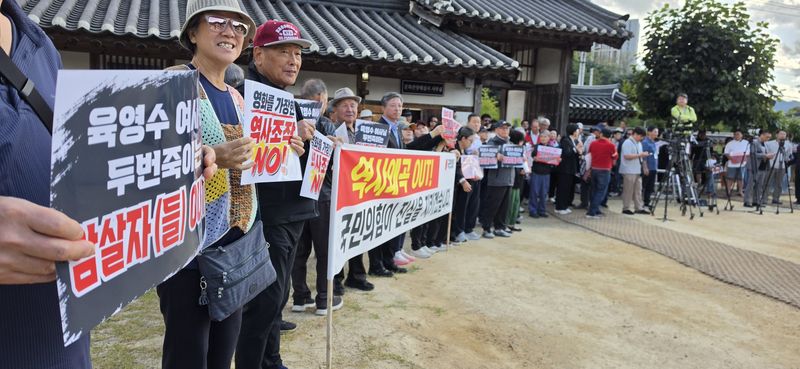
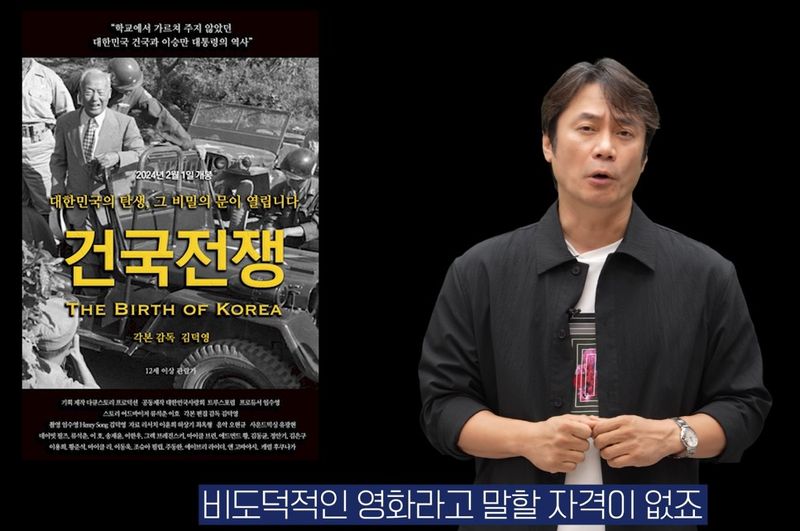
He also shared his thoughts on the reactions to his remarks. Responding to claims that it was contradictory for a journalist who had criticized the Four Major Rivers Restoration Project to assess former President Park's achievements or criticize 'Assassin(s)', he countered that standards of judgment should not change according to political camp.
He cited MBC's 2010 coverage of the Four Major Rivers Restoration Project on 'PD Note' and its coverage of Professor Hwang Woo-suk's stem cell fraud during the Roh Moo-hyun administration, asking, "Why should we view it as strange for a journalist to criticize conservatives at one time and progressives at another?" He continued, "The moment the media first asks which camp the facts favor, it ceases to be the media," and added, "The more such demands grow, the more deeply the media will be divided along partisan lines, and facts will lose that much more ground."
Meanwhile, criticism and attacks have spread beyond the film to its cast. VAST ENTERTAINMENT, Yoo Hae-jin's agency, said it would gather evidence and take all possible measures to respond to the spread of false information, personal attacks, and threats to the actor's safety.
Film Artists' Solidarity, joined by the Directors Guild of Korea, the Korean Film Cinematographers Guild, and 19 other organizations, also stressed that criticism and discussion of the work should be respected but must not escalate into attacks threatening the daily lives, livelihoods, or safety of individual creators and actors.
[email protected] Shin Jin-a Reporter