Support for Self-Employed Workers and Freelancers Who Cannot Take Time Off Even When Sick... Applications for Seoul-Style Hospitalization Living Expenses Rise 21%
- Input
- 2026-10-06 11:15:00
- Updated
- 2026-10-06 11:15:00
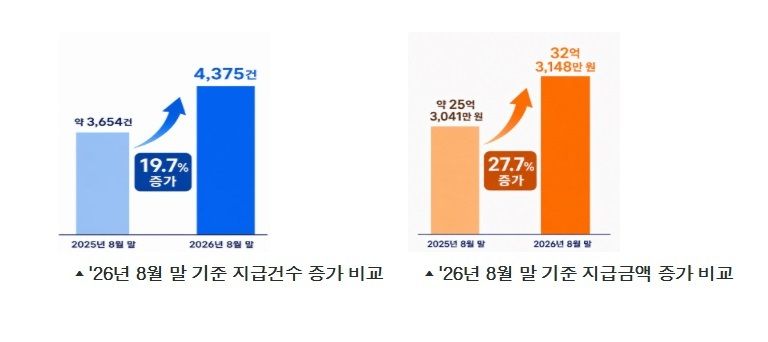
[Financial News] Applications for Seoul Metropolitan Government support for hospitalization living expenses have increased by more than 20% this year among self-employed workers and freelancers who find it difficult to stop working even when they are sick because they need to make a living. The daily benefit was increased, while the asset and work-related eligibility criteria were eased, leading to increases in both the number of actual recipients and the amount paid. Seoul Metropolitan Government said on the 6th that 5,132 applications for the 'Seoul-style Hospitalization Living Expenses Support Program' were filed from January through August this year, up 21.1% from 4,237 during the same period last year. The number of actual payments rose 19.7% from 3,654 to 4,375, while support payments totaled 3.23148 billion won, an increase of 27.7% from the previous year.
The Seoul-style hospitalization living expenses program was established to offset income losses during treatment for one-person self-employed workers, freelancers, day laborers and mobile workers who have difficulty receiving paid sick leave. Introduced by Seoul Metropolitan Government in 2019, the program provides support not only for hospitalization and outpatient treatment linked to hospitalization, but also for national general health screenings.
The scale of the program has expanded every year. The number of payments rose from 2,675 in its first year, 2019, to 4,891 in 2023, 5,333 in 2024 and 5,969 last year. Since the program began, living-expense benefits paid through August this year have totaled 24.66 billion won, covering 40,950 cases in all.
Starting this year, the daily benefit was raised from 94,230 won to 96,960 won to reflect the increase in Seoul's living wage. Up to 13 days are recognized for hospitalization and related outpatient treatment, with one additional day for a national general health screening, allowing support for up to 14 days a year, or a maximum of 1,357,440 won.
The eligibility range was also expanded in March, when the asset limit was eased from 350 million won or less to 400 million won or less. Eligible applicants are Seoul residents who are local subscribers to the National Health Insurance Service (NHIS), have earned income from work or business activities, and have income at or below 100% of the standard median income.
The way the work-period requirement is calculated has also changed. Previously, eligibility was based on work or business activity during the three months preceding hospitalization, including the month before admission. Now, work performed during the month of hospitalization up to the day before admission is added to the calculation. This allows residents who did not meet the requirements under the previous method to receive support based on their actual work period.
Seoul Metropolitan Government is also expanding outreach to reduce the number of people who fail to apply because they are unaware of the program. In cooperation with the NHIS, it is mailing information about the program to approximately 73,000 residents with records of hospitalization or health screenings. Relevant information is also available at about 500 locations, including medical and screening institutions, underground shopping arcades and temporary staffing offices.
Mobile workers, freelancers and part-time workers are receiving separate notifications through online platforms such as Tmoney GO, Kakao Mobility, Kmong, Baemin Sanghoe and Albamon. An AI chatbot has also been introduced to the online application system so applicants can check their eligibility and required documents.
Park Kyung-hwan, director of Seoul Metropolitan Government's Livelihood and Labor Bureau, said, "The Seoul-style hospitalization living expenses program is a livelihood safety net that helps citizens who find it difficult to take time off work even when they are sick avoid giving up treatment because they are worried about making a living. We will continue to strengthen support so citizens know about the program and can use it easily when they need it, while providing more comprehensive support for the health rights and livelihood stability of working citizens."
[email protected] Seong Cho-rong Reporter