Supreme Court National Assembly Audit Today... Cheong Wa Dae's Request for a Fresh Recommendation of a Supreme Court Justice to Be Key Issue
- Input
- 2026-10-06 09:06:39
- Updated
- 2026-10-06 09:06:39
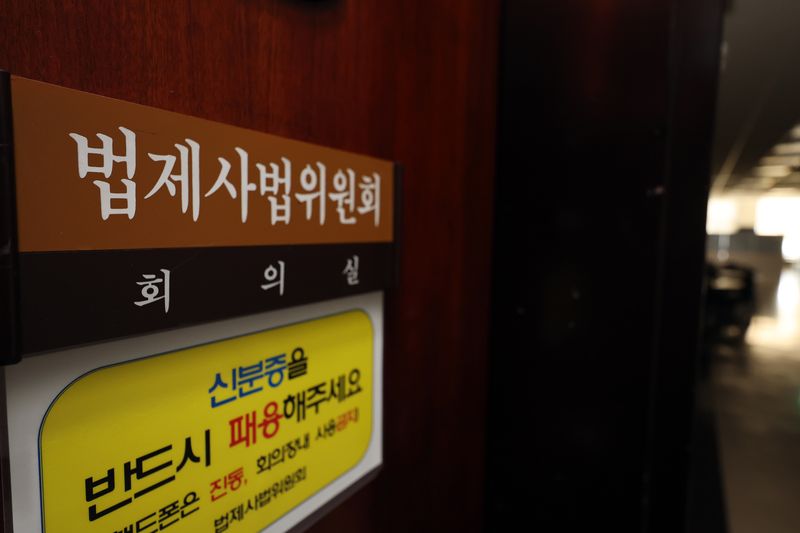
The Legislation and Judiciary Committee of the National Assembly will conduct a National Assembly audit at 10 a.m. today in Yeouido, Seoul, of the Supreme Court of Korea, the National Court Administration, the Sentencing Commission and the Judicial Policy Research Institute (JPRI). With the Democratic Party of Korea and other ruling-bloc parties taking the lead, the committee selected Chief Justice Cho as a general witness. However, he submitted a written explanation for nonattendance on the 2nd.
Chief Justice Cho's side cited judicial independence as the reason. According to committee chair Seo Young-kyo, his side submitted a written opinion stating that although the National Assembly may demand his attendance under Article 121 of the National Assembly Act, he has no obligation to attend, take an oath or testify. However, appearing as a witness and attending as head of the institution are separate matters. As a result, there is speculation that Chief Justice Cho may, as he did last year, state his position on the request for a fresh recommendation in opening remarks at the National Assembly audit.
The ruling and opposition parties clashed over whether he should attend. The Democratic Party of Korea demanded, "Do not hide behind a flimsy opinion that does not even accord with legal interpretation. Appear before the National Assembly audit as a witness with your head held high and explain yourself directly to the public." Committee Chair Seo said, "The chief justice is not untouchable," and even mentioned the possibility of issuing an order compelling attendance. The People Power Party responded, "Calling the chief justice, one of the leaders of the three branches of government, to a National Assembly audit is parliamentary tyranny and bullying against the judiciary that violates the separation of powers," adding, "If the chief justice is called as a witness, then the president should also appear as a witness at the National Assembly audit of the executive branch."
The root of the conflict is the vacancy on the Supreme Court of Korea. After former Supreme Court Justice Rho Tae-ak retired on March 2, the vacancy became a reality as the recommendation of his successor was delayed. Six months later, on August 18, Chief Justice Cho recommended Judge Son Bong-gi of the Daegu District Court and Judge Kim Sung-soo together. However, on August 28, 10 days later, Cheong Wa Dae requested a fresh recommendation without submitting to the National Assembly the bill seeking consent to appoint nominee Son, saying there had been no substantive consultation between the president and the chief justice. On the 22nd of last month, Chief Justice Cho stated that he would not comply with the request for a fresh recommendation. In an additional statement the following day, he countered that it was difficult to accept the claim that the process contained procedural defects.
Article 104, Paragraph 2 of the Constitution stipulates, "A Supreme Court justice shall be appointed by the president with the consent of the National Assembly upon the recommendation of the chief justice." The authority to make the recommendation itself is exclusively vested in the chief justice. However, the government has handled the forwarding of the recommendation to the National Assembly. A former Ministry of Government Legislation official explained that Article 52 of the Constitution grants the power to submit bills only to National Assembly members and the government, leaving the judiciary with no channel to submit documents directly to the National Assembly. As a result, a practice has become established in which the government submits recommendation letters and other documents from the judiciary to the National Assembly on its behalf. In other words, even if the chief justice makes a recommendation, the process comes to a halt at that point if the government does not forward it.
Even if Chief Justice Cho avoids answering questions, the questioning is expected to continue. The ruling bloc plans to question Noh Kyung-pil, head of the National Court Administration, and others about the circumstances behind the refusal to make a fresh recommendation and responsibility for the prolonged vacancy.
Questions regarding President Lee Jae Myung's criminal trial are also expected. The Democratic Party of Korea has criticized the Supreme Court for moving too quickly last May 1 in overturning and remanding the final appeal in President Lee's case involving allegations of violating the Public Official Election Act, with a finding indicating guilt.
Meanwhile, the Legislation and Judiciary Committee will conduct a National Assembly audit of the Ministry of Justice on the 8th. Key issues are expected to include whether the system involving the Public Prosecution Office and the Serious Crime Investigation Agency, launched after the abolition of the Prosecutors' Office, will take root, as well as the controversy over the withdrawal of the prosecution in President Lee's case.
[email protected] Kim Dong-gyu Reporter