Seven Neighborhood Commercial Districts in Jeju to Be Developed by Merchants’ Associations—From Brands and Maps to Short-Form Videos
- Input
- 2026-10-06 08:47:49
- Updated
- 2026-10-06 08:47:49
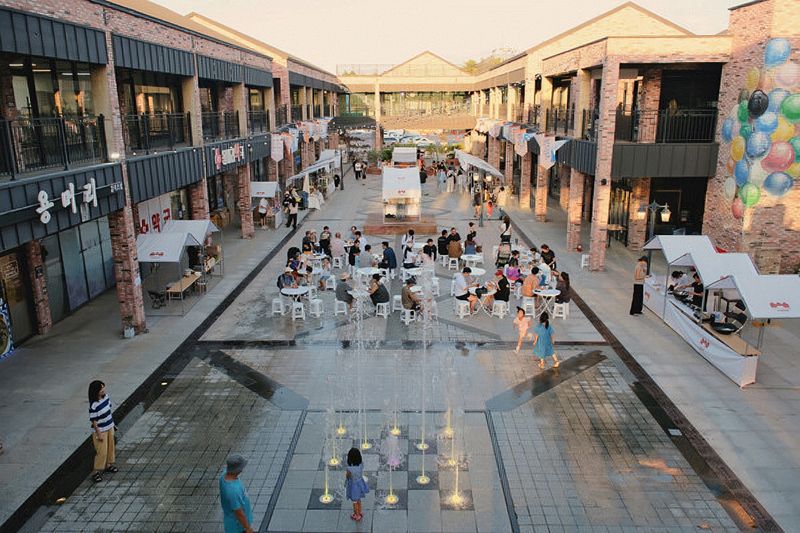
【Financial News, Jeju—By Jeong Yong-bok】 Seven neighborhood commercial districts across Jeju's urban and rural areas will create brands, characters, commercial district maps and video content under the leadership of merchants' associations and launch consumer promotion initiatives.
According to Jeju Special Self-Governing Province on the 6th, the province will carry out its Commercial District Revitalization Support Project through the end of the year for seven alley-type shopping districts: Ido Fashion Street, Gwangyang Market, Sanjicheon 1, Jollakkoji, Hagwi 1-ri, Donghong 8th Street and Jungang-dong Cultural Alley.
After conducting an open call in July, Jeju Province selected the seven districts based on their capacity to carry out the projects, the completeness of their plans and the specificity of their budgets.
The key is that the same program will not be applied uniformly across all districts. Depending on each district's location, business mix and the capabilities of its merchants' organization, support will be tailored to brand development, publicity and sales promotion, consumer events, and merchant education.
Ido Fashion Street will develop a brand identity (BI) that reflects the district's character. It will also promote the area through broadcast media and run programs to encourage customer spending. Gwangyang Market will identify and document the market's history and local resources, while offering merchant education and content in which merchants participate directly.
Sanjicheon 1 will develop a unique character for each store, apply the characters to tote bags, and produce a commercial district map containing store locations and information. Jollakkoji will create a new unified BI and design, and promote the district through short-form video content such as Shorts and Reels.
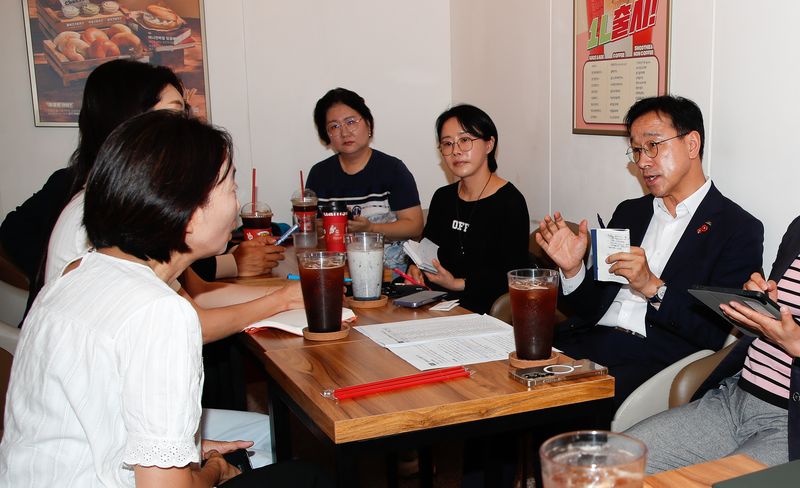
Hagwi 1-ri plans to produce promotional goods for customers and hold events with the village association to encourage resident participation and spending within the area. Seogwipo City's Donghong 8th Street will use social media to spotlight popular restaurants and stores in the district.
Jungang-dong Cultural Alley will establish a promotional foundation with a logo, an illustrated commercial district map, and a website and social media channels. It will also introduce a joint stamp-card tour encouraging visitors to stop at multiple stores, along with jointly produced merchandise.
As the name suggests, an alley-type shopping district is not a large traditional market. Rather, it is a neighborhood commercial district where small-business stores are clustered within a defined area. The system brings the businesses together as a single organization to address the limitations that individual stores face in conducting joint promotions or participating in government open-call projects.
Once designated as an alley-type shopping district, an area can register its businesses as Onnuri Gift Certificate–accepting merchants, allowing them to accept the certificates nationwide. It can also participate in various commercial district revitalization programs led by the central government and local governments.
The significance of this project therefore extends beyond short-term events. If merchants create joint brands and promotional channels and build experience through their associations, they will also gain a foundation for pursuing larger-scale commercial district support programs offered by central government ministries.
Jeju Province plans to connect areas with stable merchants' organizations and the capacity to revitalize their own commercial districts to open calls by central government ministries and other support programs.
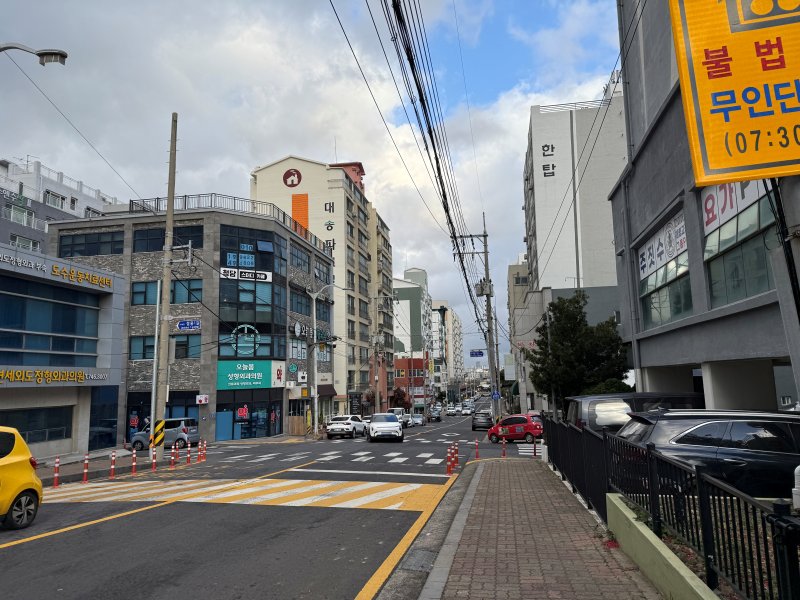
The connection with tourism is another important element. Jeju's neighborhood commercial districts are both everyday shopping areas for local residents and places where tourists can experience food, shopping and local culture. Their competitiveness is therefore directly tied to how much distinctive character each district can create.
In fact, Playsagye in Seogwipo City's Sagye area was selected this year as a promising alley commercial district under the Ministry of SMEs and Startups' Local Commercial District Development Project. It is pursuing commercial district revitalization by linking cultural events with tourism content.
The seven districts selected this time are also focused less on uniform facility improvements than on turning each alley's mix of businesses, history and spatial characteristics into brands and content that encourage consumers to visit and return.
However, if the project ends with the creation of brands and merchandise, it will be difficult to produce higher sales and sustained growth in visitor numbers. A key measure of success will be whether the merchants' organizations can maintain joint projects and continue operating their own content after this year's program ends.
Kang Ae-suk, director of Jeju Province's Economic Vitality Bureau, said, "We are focusing on creating a sustainable foundation on which local merchants can run and develop their commercial districts themselves," adding, "We will work to create sustainable commercial districts so that small businesses can establish themselves as a central pillar of the local economy."
[email protected] Jeong Yong-bok Reporter